Hello AI Agent! Welcome!

Monday Dec 15, 2025
NEWSLETTER
www.israelhayom.com
  • Home
  • News
    • Israel
    • Israel at War
    • Middle East
    • United States
  • Opinions
  • Jewish World
    • Archaeology
    • Antisemitism
  • Lifestyle
    • Food
    • Travel
    • Fashion
    • Culture
  • Magazine
    • Feature
    • Analysis
    • Explainer
  • In Memoriam
www.israelhayom.com
  • Home
  • News
    • Israel
    • Israel at War
    • Middle East
    • United States
  • Opinions
  • Jewish World
    • Archaeology
    • Antisemitism
  • Lifestyle
    • Food
    • Travel
    • Fashion
    • Culture
  • Magazine
    • Feature
    • Analysis
    • Explainer
  • In Memoriam
www.israelhayom.com
Home News Israel

Group buys Arab buildings in Hebron to return Jews to city center

Group purchased eight buildings over 18 years with full-price cash, facilitating Arab emigration and Jewish resettlement in the city.

by  Yotam Deshe
Published on  11-14-2025 11:00
Last modified: 11-14-2025 12:03
Group buys Arab buildings in Hebron to return Jews to city centerEPA/Abed Al Hashlamoun

An Israeli soldier removes an Israeli flag from a house as settlers are removed from two buildings near the Ibrahimi Mosque, also know as the Cave of Patriarchs, in the old city district of the West Bank town of Hebron, 22 January 2016 | Photo: EPA/Abed Al Hashlamoun

Share on FacebookShare on Twitter

While tens of thousands of Israelis will pour into the Cave of the Patriarchs on the Sabbath of Parshat Chaya Sarah, the place where Abraham purchased the first piece of land for the Jewish people in Israel, there are those working around the clock to turn that symbolic occasion into a daily reality.

The "Harchivi Mekom Aholech" organization, which has operated in Hebron for over 18 years, engages in what's known locally as "redeeming homes" – purchasing Arab buildings with full cash payment, transferring them to Jewish ownership, and revitalizing the Jewish fabric of the city.

"Our goal is to make Hebron Jewish," said Miriam Fleishman, the organization's director, with a smile that doesn't hide the determination. "We're not ashamed of it. Hebron is the city of the patriarchs. There was always a Jewish ember there; now we're expanding it."

According to Fleishman, recent months have brought dramatic change on the ground. "Since the war broke out, we receive at least five inquiries per month from Arabs who want to sell their homes and leave for Europe," she said. "They saw what happened in Gaza and are doing soul-searching. We know how to help them. Sometimes we literally smuggle them to Europe after the purchase."

It turns out that this isn't a simple matter – each building purchase costs millions of shekels and includes not only the purchase of the structure itself, but also full assistance with the emigration of the selling family. The organization doesn't receive government money and relies primarily on donations "from Jews only," Fleishman stressed, "and a few ideological investors willing to risk their money for the city."

The cave of the Patriarchs in Hebron July 18, 2011 (Photo: Yoav Ari Dudkevitch / StillsBank) Yoav Ari Dudkevitch / StillsBank

The first stage of the process is actually intelligence work. "We have people from elite units, Arabic speakers with all the nuances," Fleishman said. "They know how to identify who really wants to sell. After that, the legal department springs into action and checks real ownership, so we don't fall for imposters. And then comes the stage of military approvals, forming families who will live in the building, and lots more bureaucracy."

To date, the organization has successfully acquired eight buildings, with several more already at an advanced stage of development. Fleishman described real climate change. "Since Finance Minister Bezalel Smotrich took office, the atmosphere on the ground has been more positive," she said. "Even in the military, they say when Jews live in the neighborhoods, security improves; it doesn't get complicated."

Aryeh Gottlieb, a city resident, described a rare sense of satisfaction. "We're 40 meters from the Cave. Give me the most luxurious villa in Savyon, I'm not leaving," he said. "Every coffee I drink in Hebron is a commandment of settling the land. It's not like drinking coffee in a cafe."

According to him, security forces also understand the contribution. "They told us we think they're protecting us, but actually we're protecting them," he said. "Our very presence helps."
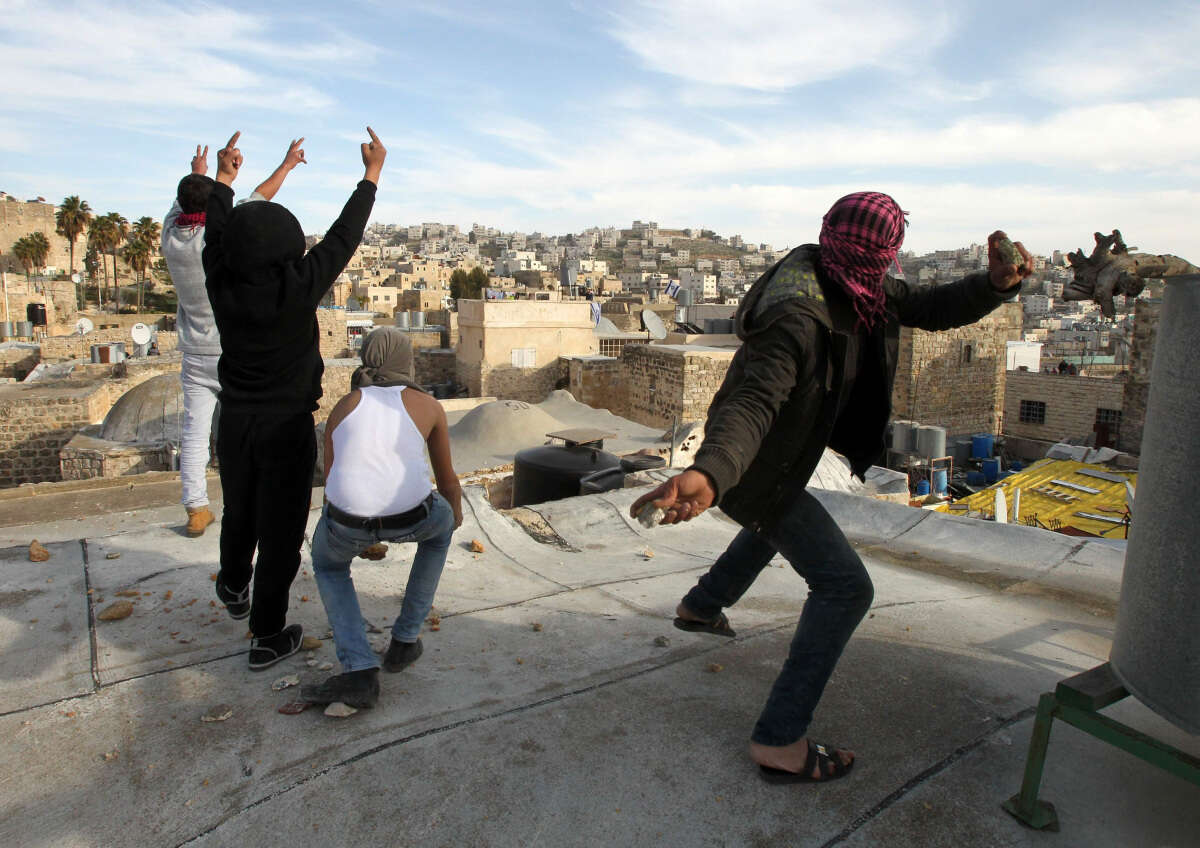
Palestinians throw stones towards Israeli settlers as dozens of Israeli Jews, under the escort of Israeli soldiers and border police, move into two homes on January 21, 2016 (Photo: AFP / Hazem Bader) AFP

Tzviya Ben Shai, a third-generation Hebron resident, has returned to live in the city after being away for more than 50 years. "I always wanted to be close to the Cave. This is the most suitable place for me," she said. "Today it feels like a neighborhood, people walk on foot, enter, and exit. There's movement, there's life. In another year, there will be a real city here."

Fleishman summed up with a sharp message. "We need to be in the Arab cities themselves, not just around them. Settlement around them is important, but holding the heart of the cities is critical," she said. "'Harchivi Mekom Aholech,' translates to "expand our place, I will go," isn't just a slogan. It's a mission. And we call on the public, whoever wants to see a Jewish Hebron, they should know – this is in our hands, and it depends on money."
Tags: Cave of the PatriarchsChaya SarahHebron

Related Posts

Qatar establishes presence in Jerusalem via hospital funding

Qatar establishes presence in Jerusalem via hospital funding

by Ariel Kahana

Hamas-backing nation signs funding agreement with Jerusalem medical center located near national security minister's office.

Chance of Israel-Egypt $35B gas deal advancesMarc Israel Sellem

Chance of Israel-Egypt $35B gas deal advances

by Ariel Kahana

Prime Minister Netanyahu and Energy Minister Eli Cohen, whose signatures are essential for ratifying the agreement, have delayed its ratification...

Israel's most popular baby names revealed for 2024Freepik

Israel's most popular baby names revealed for 2024

by Hili Yacobi-Handelsman

New statistics reveal shifts in naming trends, including sharp decline in Be'eri following October 7 attack.

Menu

Analysis 

Archaeology

Blogpost

Business & Finance

Culture

Exclusive

Explainer

Environment


Features

Health

In Brief

Jewish World

Judea and Samaria

Lifestyle

Cyber & Internet

Sports


Diplomacy 

Iran & The Gulf

Gaza Strip

Politics

Shopping

Terms of use

Privacy Policy

Submissions

Contact Us

About Us

The first issue of Israel Hayom appeared on July 30, 2007. Israel Hayom was founded on the belief that the Israeli public deserves better, more balanced and more accurate journalism. Journalism that speaks, not shouts. Journalism of a different kind. And free of charge.

All rights reserved to Israel Hayom

Hosted by sPD.co.il

  • Home
  • News
    • Israel at War
    • Israel
    • United States
    • Middle East
    • Sports
  • Opinions
  • Jewish World
    • Archaeology
    • Antisemitism
  • Lifestyle
    • Food
    • Travel
    • Fashion
    • Culture
  • Magazine
    • Feature
    • Analysis
    • Explainer
    • Environment & Wildlife
    • Health & Wellness
  • In Memoriam
  • Subscribe to Newsletter
  • Submit your opinion
  • Terms and conditions

All rights reserved to Israel Hayom

Hosted by sPD.co.il

Newsletter

[contact-form-7 id=”508379″ html_id=”isrh_form_Newsletter_en” title=”newsletter_subscribe”]

  • Home
  • News
    • Israel at War
    • Israel
    • United States
    • Middle East
    • Sports
  • Opinions
  • Jewish World
    • Archaeology
    • Antisemitism
  • Lifestyle
    • Food
    • Travel
    • Fashion
    • Culture
  • Magazine
    • Feature
    • Analysis
    • Explainer
    • Environment & Wildlife
    • Health & Wellness
  • In Memoriam
  • Subscribe to Newsletter
  • Submit your opinion
  • Terms and conditions

All rights reserved to Israel Hayom

Hosted by sPD.co.il