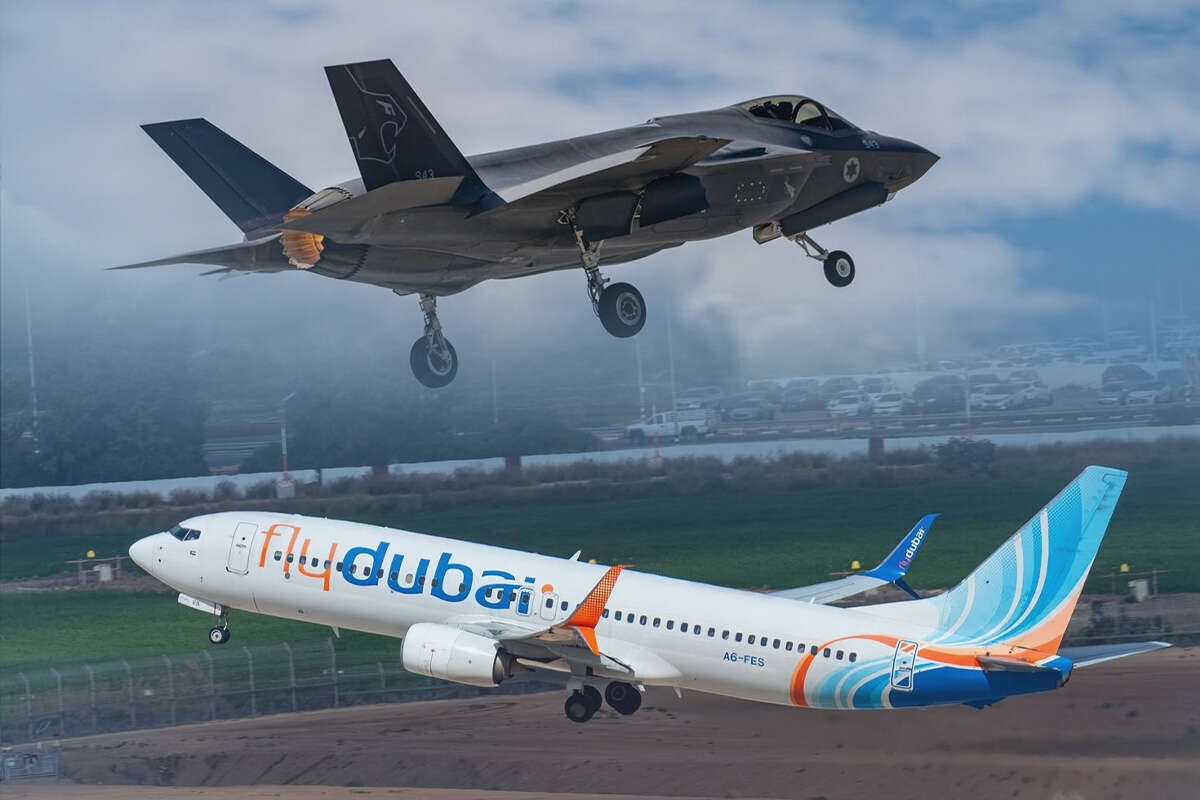
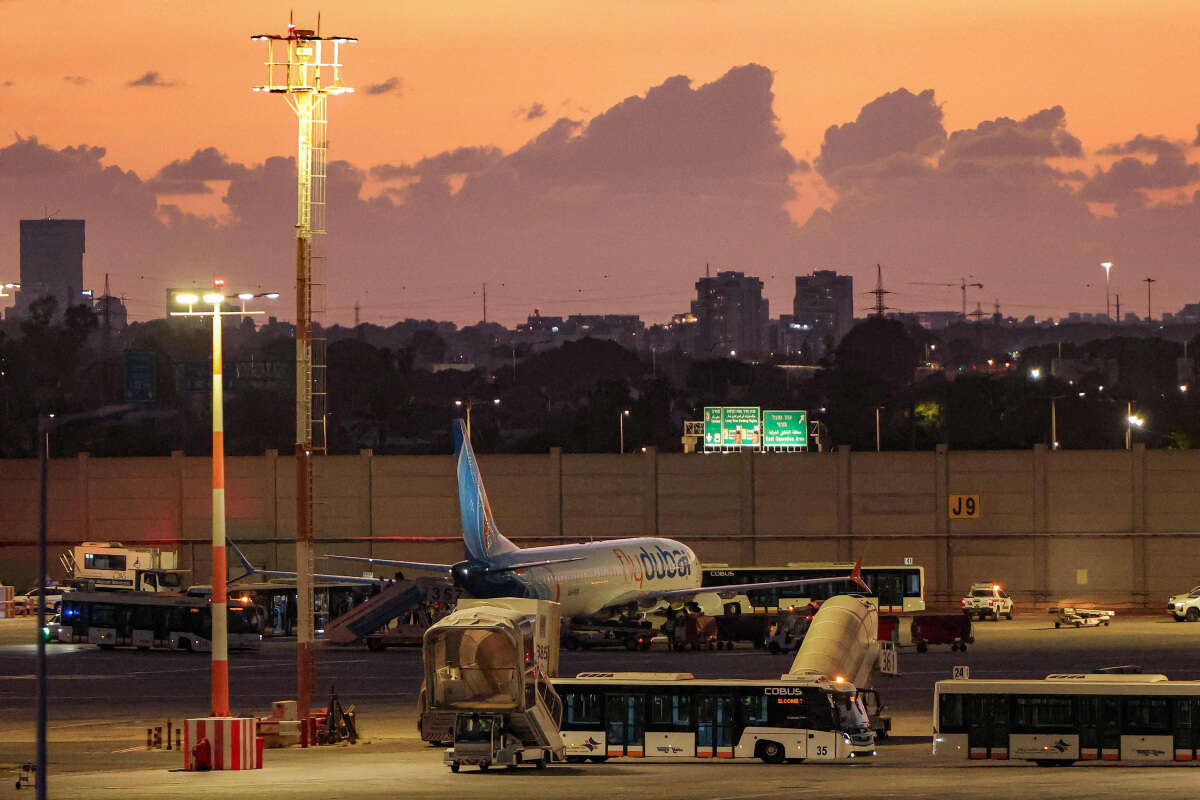
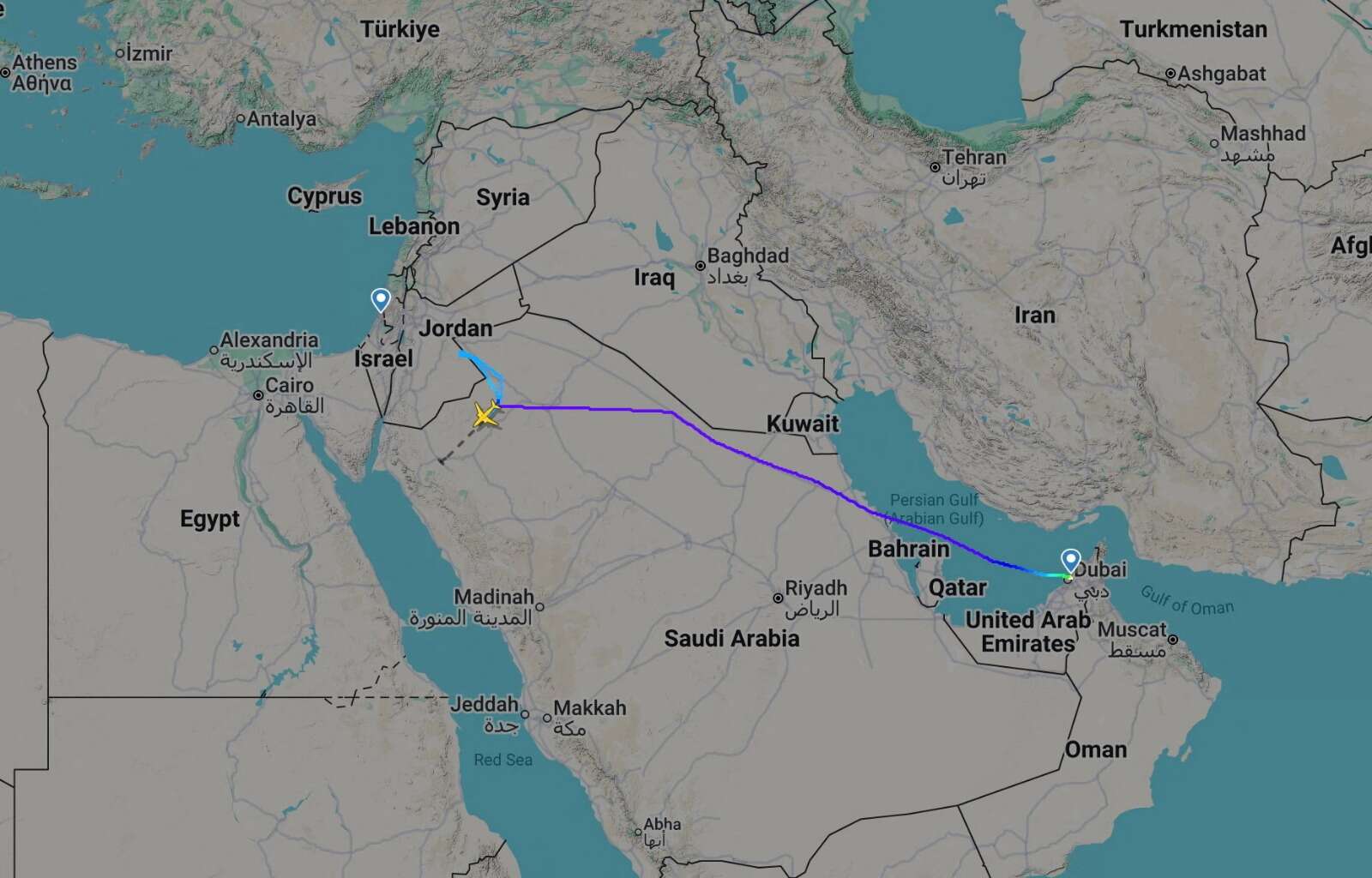
It will take several more days of investigation to piece together the full picture of Wednesday's dramatic incident aboard a flydubai flight from Dubai to Tel Aviv.
Some details, particularly those involving the passengers' resourcefulness, are already known. The fact that a relief flight crew happened to be aboard also helped save the passengers. It is doubtful they would otherwise have been able to land the aircraft, whose maneuverability was severely impaired after it plunged sharply toward the ground.
Other aspects will require a deeper and more methodical investigation. Israeli authorities are questioning passengers to learn more about what happened, but the main investigation is currently taking place among Saudi Arabia, the United Arab Emirates and Oman.
Saudi Arabia is questioning the co-pilot, who stabbed the captain and attempted to crash the aircraft. Once the captain recovers from his injuries, he too will be questioned in an effort to complete the picture of what happened before the flight and during its early stages, up until the attack.
Despite being incapacitated, the captain played a significant role in saving the aircraft. By transmitting the distress signal and opening the door separating the cockpit from the passenger cabin, he enabled passengers to overpower the attacker.

Background checks
Authorities in the UAE will examine the co-pilot's background and the process by which he was hired. It is likely that other members of the airline's flight crews will also be scrutinized to ensure there are no additional individuals who raise concerns.
Oman will examine the co-pilot's personal and family background in an effort to determine who or what may have influenced him. Although the sultanate has taken an increasingly hostile stance toward Israel in recent years, it is likely to cooperate with all those involved in the investigation, since it has no interest in being seen as a breeding ground for terrorists.
Israeli authorities examined whether the co-pilot, who became an attacker, acted alone or on behalf of a terrorist organization or state. According to all the information and indications reviewed so far, the incident appears to have been the work of a lone actor, with no advance warning signs.
The possibility of an attack of this kind had also not come up in discussions in recent days surrounding security warnings. Had it done so, Israel would almost certainly have taken a series of measures in advance to reduce the danger.
Such measures are now necessary to thwart or mitigate similar threats in the future. Israel and the UAE will have to review and update aviation procedures between the two countries, including how passengers are secured both on the ground and in the air.
Israel could demand that foreign airlines provide the names of all crew members on Israel-bound flights in advance, allowing Israeli authorities to conduct background checks and ensure they pose no threat. Israel could also demand that crew members from countries with which it has no diplomatic relations not be assigned to flights to Israel.
Concern over copycat attempts
Israel should, however, avoid humiliating the UAE. The Gulf state has suffered a serious blow to its image, to the reputation for security it seeks to project and to its airlines, which are considered among the best in the world.
Israel has few friends as good as the UAE, either in the region or beyond. The incident is not a reason to distance itself from the Emirates, as could happen if some proposals made by government ministers are adopted. On the contrary, it offers an opportunity to strengthen ties, based on mutual need at a moment of crisis.
Naturally, the chief concern now is the possibility of copycat attempts. That was also a central concern following the Sept. 11, 2001, terrorist attacks in the US, after other cases in which pilots deliberately crashed aircraft and after incidents, mainly in the more distant past, in which Israeli airlines or flights carrying Israeli passengers were targeted.
The seemingly endless list of scenarios, from a crash to a hijacking, including the possibility of being diverted to Iran or Yemen, naturally sent shares of Israeli airlines higher Wednesday, although they too are not immune to attack.
Precisely because Wednesday's drama was so extraordinary, it made those who sought to exploit it for political purposes seem small by comparison. Only a narrow margin, along with resourcefulness, composure and a great deal of luck, separated the positive outcome from tragedy.
The lessons that must be drawn from the incident are professional, diplomatic and intelligence-related. It is regrettable that both the event and its heroes were cynically exploited for Israel's election campaign.