
How the US persuaded Israel to hold back on Iranian oil targets
Sources reveal that Israel and the US orchestrated sanctions offensive as alternative to military strikes, cutting Tehran's oil revenue by 40 billion USD.

Sources reveal that Israel and the US orchestrated sanctions offensive as alternative to military strikes, cutting Tehran's oil revenue by 40 billion USD.

Beyond disrupting Hezbollah's financing and destabilizing its military operations, the Israeli strikes on Al-Qard al-Hasan aim to break the financial dependence of Lebanese citizens on the terror organization.

The catastrophic failure preceding the Oct. 7 massacre was the billions squandered on a fence that crumbled against thousands of terrorists infiltrating Israel.

Vice president names Iran, not China, as top US threat, yet fails to demonstrate resolve on Tehran challenge.

The atrocities witnessed in southern Israel a year ago – the cold-blooded murder of infants, women, and the elderly, beheadings, rape of women and corpses, and other unspeakable acts – were merely a fraction of what was planned. Sinwar and Hamas's meticulously crafted strategy aimed at Israel's complete annihilation within a mere two years.
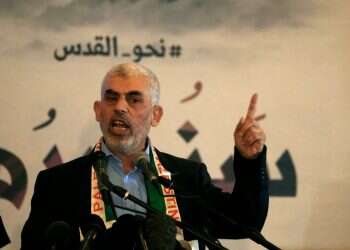
Unlike other issues, such as the future of Hamas and its leadership or the fate of Gaza and its residents, the hostage situation allows no time for deliberation. It is painfully evident that the captives are dying in captivity, and Sinwar's elimination potentially exacerbates their risk. Israel must prioritize their safe return – the war's primary objective – before becoming entangled in other matters and fronts.

The United States, too, once set out on October 7 to battle in the Middle East in the fight against terrorism. But then, things got complicated.

Hezbollah’s terror empire was built right under UNIFIL’s nose along Israel’s border; UNIFIL knew about it and did nothing. Everyone heard the sounds of tunnel digging and knew about the weapons stored in civilian homes in villages facing Israel.

If commentators like Ta-Nehisi Coates continue to impose their own racial and social frameworks onto the conflict, they will only perpetuate a misguided understanding of the region's complex history and the realities its people face.

The investigations into CBS's conduct show how far this media network has strayed from basic journalistic principles.