Prime Minister Benjamin Netanyahu on Monday called early elections for April 9, setting the stage for a three-month campaign clouded by a series of corruption investigations against the long-serving Israeli leader.
The general elections were not due until November.
Announcing the elections, a confident Netanyahu listed his government's accomplishments and said he hoped his current religious, nationalistic coalition would be the core of Israel's next government as well.
"We will ask the voters for a clear mandate to continue leading the state of Israel our way," he said.
Coalition insiders on Monday tried to downplay the role the conscription bill – controversial legislation that has threatened the government's stability multiple times – played in the decision.
"It's time. Between the legal issues [plaguing the prime minister] and the difficulties in the coalition, we could all see it coming," one source said. "Netanyahu decided to call early elections and that's it. The conscription bill has nothing to do with it. We all felt he [Netanyahu] wants an election."
Moments after the coalition faction heads' meeting ended on Monday, an official statement was released saying, "Exercising national and budgetary responsibility, the heads of the coalition parties have unanimously decided to dissolve the Knesset and call for early elections at the beginning of April. The partnership in the Knesset and the government will continue during election time."
The government will officially introduce a bill calling for the dissolution of the Knesset on Wednesday.
Netanyahu, who also served a term in the late 1990s, has been prime minister for the past decade.
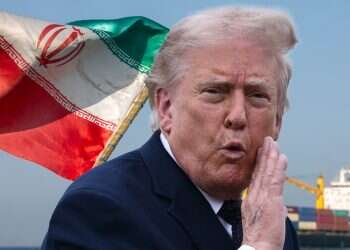
His supporters point to a humming, high-tech economy, his handling of security issues, particularly countering the threat of Iranian influence in the region, and his gains on the diplomatic stage, including a close alliance with President Donald Trump that has paid important dividends.
Trump's recognition of Jerusalem as Israel's capital and his withdrawal from the international nuclear deal were both welcomed by Netanyahu. The Israeli leader also has quietly forged ties with Sunni Arab states, further sidelining the Palestinians, who have severed ties with the U.S. because they believe Trump is biased against them.
The White House still has not released a long-awaited peace plan, and Monday's announcement could further delay its release.
But critics say these gains have come at a deep price to Israel's democratic ideals.
Netanyahu's hardline government has promoted a series of laws that critics say are aimed at muzzling liberal critics and sidelining the minority Arab population. They point to wide socio-economic gaps and the high cost of living and say that by neglecting the Palestinian issue and continuing to build settlements in Judea and Samaria the country is on the path to becoming an apartheid-like binational state.
Former Prime Minister Ehud Barak called the election "the most fateful" since the assassination of then-Prime Minister Yitzhak Rabin in 1995.
"If we all act properly, on April 10 we will part with Netanyahu," he told Israeli media on Monday. "Israel will get on a different path instead of this nationalist, racist, dark vision."
Barak called for the country's dovish and centrist parties to band together in a unified bloc in a bid to topple Likud.
Yair Lapid, leader of the centrist Yesh Atid party, said the election was a battle for the "soul of the country."
For now, there does not appear to be anyone with the popularity or gravitas to topple Netanyahu.
One wild card is former IDF Chief of Staff Benny Gantz, who is flirting with the idea of entering politics. Opposition parties have been aggressively courting Gantz but for now, he has not committed to joining any party.
The first public opinion poll after the announcement of early elections predicted another solid victory for Netanyahu and Likud.
The Panels Politics poll published Tuesday said Likud was likely to win 30 seats in the 120-seat parliament, followed by Gantz's hypothetical party with 13 seats.
Yesh Atid was projected to win 12 seats, followed by Habayit Hayehudi and the Joint Arab List with 11 seats each, Zionist Union (9), United Torah Judaism (7), Meretz (6), Yisrael Beytenu (5) and Shas (4).
Former Yisrael Beytenu MK Orly Levy-Abekasis' party, which has yet to be named, is expected to win five seats.
The survey polled 500 Israelis and had a margin of error of 4.3 percentage points.
Still, the biggest threat appears to be posed by Attorney General Avichai Mendelblit, who must soon decide on whether to indict the prime minister.
Netanyahu has denied any wrongdoing and said he is the victim of a media-fueled witch hunt. At Monday's Likud meeting, Netanyahu brushed off a reporter's question and said he expected the investigations to lead nowhere.
Mendelblit has not said when he expects to make a decision. The Justice Ministry announced Monday that deliberations were continuing and were "not dependent on political events."
Israeli law is unclear about whether a sitting prime minister must resign if charged with a crime, and Netanyahu has hinted that he will remain in office to fight any indictment.
But criminal charges and the distraction of a protracted legal battle could fuel calls for him to step aside.
Kulanu leader Finance Minister Moshe Kahlan, a key ally, said Monday that a prime minister "cannot serve" if he is indicted following a required hearing.
Reuven Hazan, a political scientist at Israel's Hebrew University, said the campaign would be dominated by "a discussion of whether Netanyahu should stay after, if he is prosecuted."
He said Netanyahu had settled on the April election, roughly seven months ahead of schedule, in part to "pre-empt" an indictment. The thinking is that it would be politically difficult for Mendelblit to indict, and potentially topple, a popular, newly re-elected prime minister.
"He wants to turn around to the attorney general and say 'before you decide to prosecute me pay attention. The people of Israel have re-elected me for a fourth time,'" Hazan explained.
An electoral victory would send a message that "you cannot overturn the results of a democratic election," he said.