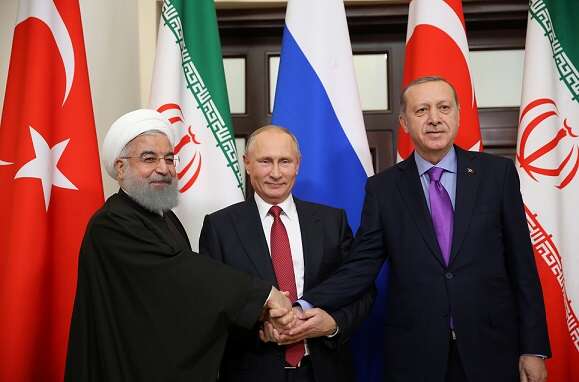
Turkish President Recep Tayyip Erdogan and Iranian President Hassan Rouhani agreed on Tuesday to maintain the cooperation between Turkey, Iran and Russia for a political solution to the conflict in Syria, according to a source in Erdogan's office.
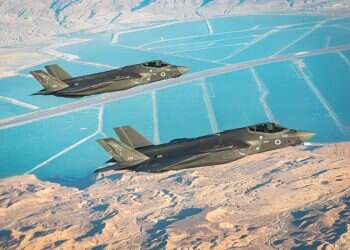
Erdogan also told Rouhani in a telephone call that actions to increase tensions in the region should be avoided, after U.S., British and French forces carried out airstrikes on Syria over the weekend.
Meanwhile, Saudi Arabia says it would be prepared to send troops into Syria as part of the U.S.-led coalition if a decision was taken to widen it, Foreign Minister Adel al-Jubeir said on Tuesday.
"We are in discussion with the U.S. and have been since the beginning of the Syrian crisis about sending forces into Syria," Jubeir told a news conference in Riyadh with U.N. Secretary General Antonio Guterres.
He said Riyadh had expressed its readiness during the presidency of Barack Obama to send ground forces into Syria if the United States added an on-the-ground component to the U.S.-led coalition fighting Islamic State insurgents.
Jubeir was responding to a question about a Wall Street Journal report that the administration of U.S. President Donald Trump is seeking to assemble an Arab force to replace the U.S. military contingent in Syria.
"There are discussions regarding ... what kind of force needs to remain in eastern Syria and where that force would come from, and those discussions are ongoing," Jubeir said.
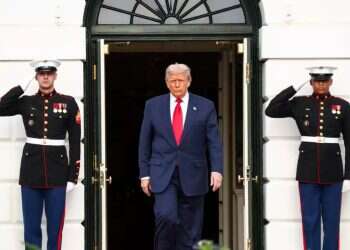
Trump wants to bring U.S. troops home from Syria but has not set a timeline, White House spokeswoman Sarah Sanders said on Monday, two days after Western allies bombed Syrian targets over an April 7 chemical weapons attack on the rebel-held town of Douma.
One U.S. official said the United States is looking at which forces might be able to follow on in areas of Syria formerly under Islamic State control, if the United States leaves or reduces its force dramatically. But no decisions have been made to do this.