Iran warned the United States on Thursday of "unpleasant" consequences if Washington pulls out of the multinational nuclear deal, Iranian state TV reported.
"Iran has several options if the United States leaves the nuclear deal. Tehran's reaction to America's withdrawal of the deal will be unpleasant," TV quoted Iranian Foreign Minister Mohammad Javad Zarif as saying.
Under Iran's 2015 accord with the United States, France, Germany, Britain, Russia and China, Tehran agreed to curb its nuclear program to satisfy the powers that it could not be used to develop atomic bombs. In exchange, Iran received relief from sanctions, most of which were lifted in January 2016.
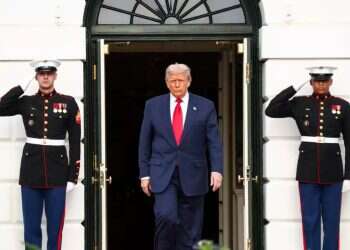
U.S. President Donald Trump has given the European signatories a May 12 deadline to "fix the terrible flaws" of the 2015 nuclear deal, or he will refuse to extend U.S. sanctions relief on Iran.
Iran has said it will stick to the accord as long as the other parties respect it, but will "shred" the deal if Washington exits the deal.
U.N. nuclear inspectors have since repeatedly verified Iranian compliance with the deal and sanctions were rescinded.
U.S. disarmament ambassador Robert Wood said Washington had been having "intense" discussions with its three major European allies ahead of the May 12 deadline.
He said Washington wanted to address the Iranian ballistic missile program, 10-year "sunset" clauses for limits on its nuclear activity and Tehran's "destabilizing behavior in the Middle East," as well as to toughen inspections by the International Atomic Energy Agency in Iran.
"These issues have to be dealt with. We are hopeful that an agreement can be reached that the president can feel comfortable with," Wood told a news conference in Geneva.
"We want the IAEA to get access to all the sites they need to. The Iranians obfuscate and deny, say they'll offer access and then deny it. It's important for the IAEA to go anywhere it needs to, including military sites," he said.
European officials said after their latest round of talks on April 12 they were making headway toward an agreement, though remain unclear whether a deal could be struck on the sunset clauses and if Trump would embrace their efforts.
While Trump has often lambasted the deal struck under his predecessor Barack Obama, the other big power signatories have said the accord is crucial to reducing the risk of wider war in the Middle East and urged Washington to stick by it.
Speaking ahead of French President Emmanuel Macron's trip to Washington next week, an aide to the leader said there had been progress in talks with the United States, but Paris was being prudent as the "moment of truth" approached.
"We know that President Trump hasn't made his decision yet so we are continuing to exchange and defend our arguments," the aide said. "But we must be very cautious and we shouldn't expect a breakthrough on this issue during the visit to Trump."