Russia's ambassador to Israel on Wednesday downplayed tensions between the countries over Israeli attacks in Syria, saying they were not the reason for Moscow's proposed supply of an advanced air defense system to Damascus.
Since intervening in Syria's civil war on behalf of President Bashar Assad in 2015, Russia has generally turned a blind eye to Israeli airstrikes there against convoys transferring weapons to the Shiite terrorist group Hezbollah in Lebanon and against deployments by his Iranian allies.
But Russia was quick to blame Israel for an April 9 raid on the T4 air base in the Homs province that killed seven Iranian military personnel, and which came as the United States, France and Britain faced off with Damascus and Moscow over a gas attack on the rebel-held town of Douma.
Asked whether Russia would now curtail Israel's freedom of action in Syria, Ambassador Alexander Shein sounded circumspect.
"It is of course in our interest that these actions not take place, because they worsen the Syria situation," he told Israeli media, adding, "We, of course, understand the reasons for Israel deciding to carry out actions of this kind, and would of course also prefer that these reasons not exist."
Israel has repeatedly warned that it would not tolerate Iran's attempts to entrench itself militarily in Syria, from where it could easily link with its regional proxy, Hezbollah, to form a broad front against the Jewish state.
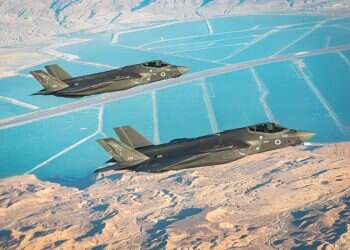
Russia has said it might provide Syria with the S-300 missile defense system, which could clip the wings of the Israeli Air Force. Israel has warned against any such deal.
"If anyone shoots at our planes, we will destroy them," Israeli Defense Minister Avigdor Lieberman told Ynet on Tuesday.
A Russian official warned of "catastrophic consequences" to any Israeli strike against S-300 systems in Syria.
Shein said the idea of the S-300 delivery, on which Russia has yet to decide, was a result of the punitive April 14 missile strikes by U.S., British and French forces on Syria.
"I emphasize that the question arose in the context of Western aggression against Syria, and has nothing to do with Israel," he said.
The ambassador also downplayed the risk of a physical confrontation between Russia and Israel over Syria.
"I can't imagine any such scenario," he said in response to Lieberman's threat. "We are mutually coordinating and updating about Syria. So far, there have been no incidents between us, nor even hints at incidents, and I hope there will not be."