"And ye shall know the truth and the truth shall make you free" (John 8:32) is the Central Intelligence Agency's motto.
Last week, for the first time, this became the motto of President Donald Trump's administration, as former CIA Director and now Secretary of State Mike Pompeo gave one of the harshest foreign policy speeches the United States and the world have heard in years, a speech in which he implored Iran to be forthright with the world and embark on a new path.
Pompeo effectively declared a cold war with Iran, issuing a veiled threat that unless it meets 12 U.S. demands, its future does not bode well.
These demands included providing the International Atomic Energy Agency with unfettered access to all sites throughout the entire country; giving the IAEA a full account of the prior military dimensions of its nuclear program and permanently and verifiably abandoning such work in perpetuity; halting any and all plutonium processing, including closing Iran's heavy-water reactor; ending its proliferation of ballistic missiles and halting the development of nuclear-capable missile systems; releasing all U.S. citizens as well as citizens of U.S. partners and allies held in Iran, and ending its support to Middle Eastern terrorist groups, including Hezbollah, Hamas and Islamic Jihad.
Other demands include pledging to respect the sovereignty of the Iraqi government and permit the disarming, demobilization and reintegration of Shiite militias; ending Iran's military support for the Houthi rebels in Yemen; withdrawing all forces under Iran's command throughout the entirety of Syria; ending Iran's support for the Taliban and other terrorist groups in Afghanistan and the region and ceasing its harboring of senior al-Qaida leaders; ending the support lent by the Quds Force – the Revolutionary Guards' black-ops arm – for terrorists groups worldwide; ending Iran's threatening behavior against its neighbors, many of whom are U.S. allies, in the Persian Gulf and the Middle East, including its threats to destroy Israel, and ending malign Iranian cyber activity.
Pompeo's speech incorporated many carrots and sticks. If Iran complies with these demands, he said, the U.S. will facilitate its acceptance into the international community, guarantee Iran's access to advanced technology that can improve its stagnant economy, and even acknowledge Iran's unique standing as a Shiite republic in the heart of the Middle East. But if Iran continues lying to the world, it will never be free, he warned.
Failure to comply will see Iran suffer "the strongest sanctions in history," he said, and the U.S. will be "fully prepared to respond" to any provocation.
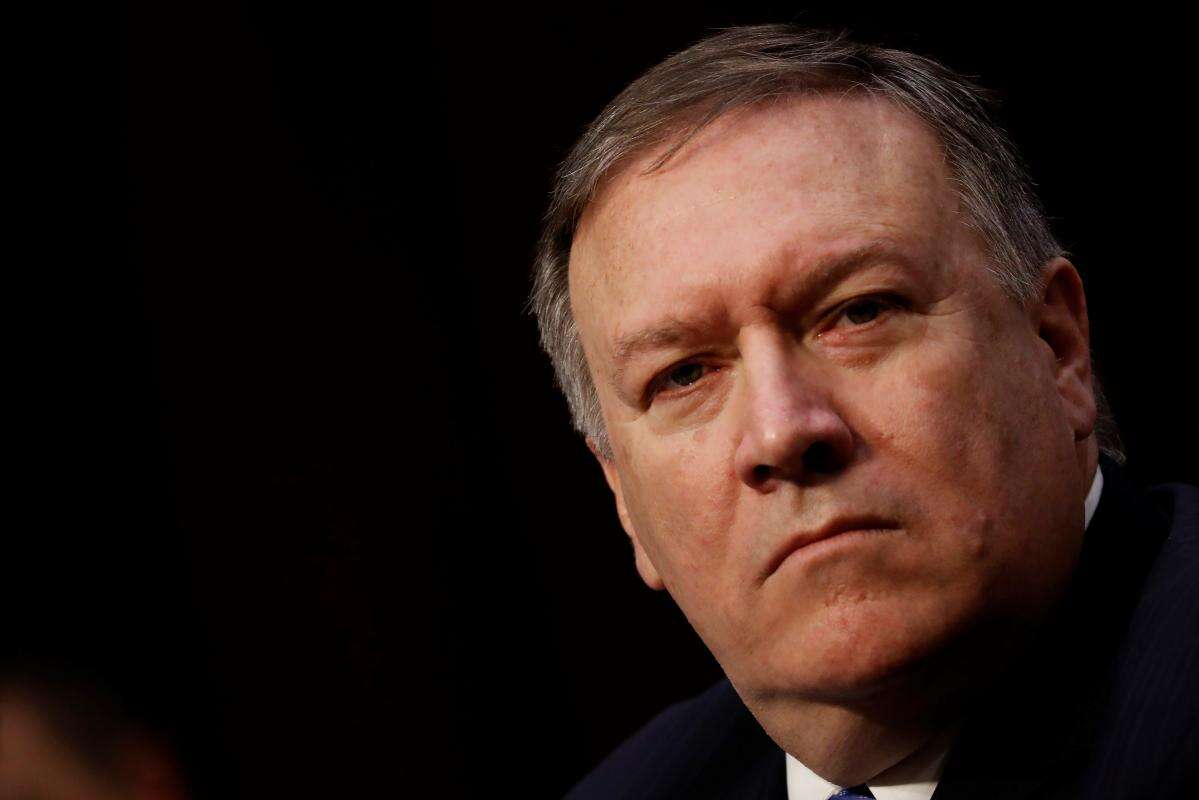
This was Pompeo's first speech as secretary of state but from the Trump administration's viewpoint it represented the mood that has been prevalent in the Oval Office since January 2017.
Pompeo, in the role of the godfather of dismantling the 2015 nuclear agreement, made Iran an offer it cannot refuse: Shelve the insane idea of "exporting" the Islamic Revolution, with everything that this implies; renounce the nuclear program; relinquish the idea of having Quds Force bases in Syria and Yemen, and shutter the ballistic missile program, and in return, Iran will receive a robust international and American embrace.
Since the nuclear agreement was reached in July 2015, Iran has believed it could have it both ways, namely be considered one of the "good guys" in the global arena while continuing to agitate in the Middle East as if that were just another Iranian province.
For Europe and the Obama administration, turning the nuclear agreement into a regional springboard for Iran was part of an orderly plan. The Islamic republic was perceived as a rising power that could put an end to the upheavals that followed the 2011 Arab Spring, and the agreement reflected this perception.
After all, as President Barack Obama made clear to anyone who would listen, as far as his administration was concerned, the Middle East was a lost cause and should be allowed to stew in its own juices, which gave Iran and Russia free rein to do what they want in the region.
Obama may have wanted to create an endless Sunni-Shiite struggle to keep the Middle East occupied, but for the Trump administration, Obama's approach was a recipe for increasing regional instability and exporting terrorism across the globe. Worse, it was a recipe for a nuclear arms race in the Middle East. Trump believes that the vacuum Obama left for Russia and Iran is a failure that must be rectified and pulling out of the nuclear agreement was the first stage.
The position of strength
Any other country facing the distress Iran is experiencing would jump at the chance to take Pompeo up on his offer. But Iran is no ordinary country.
Tehran still believes the U.S. is not really interested in regaining its foothold in the Middle East and that Germany, France and Britain – the European signatories to the 2105 accord – will come up with a way to salvage it.
As expected, the speech evoked the usual mix of condemnations and defiant statements from Iran. Foreign Minister Mohammad Javad Zarif called Pompeo's comments "untrue," saying they were based on "old illusions" and that Washington had become "a hostage to pressure groups."
The "U.S. diplomacy sham is merely a regression to old habits: Imprisoned by delusions and failed policies – dictated by corrupt special interests – it repeats the same wrong choices and will thus reap the same ill rewards," Zarif warned.
Iranian President Hassan Rouhani challenged Pompeo, saying, "Countries are independent. ... Who are you to decide for Iran and the world?"
Unfaltering facade aside, Tehran is feeling the pressure of the American determination to erase any trace of the nuclear agreement. Zarif himself admitted a few days ago that Europe is actually a broken reed and complained it was not "doing enough to save the agreement." By chance or circumstance, mass demonstrations have been popping up in various parts of Iran and the Iranian rial is rapidly eroding.
Among the many rebukes Pompeo hurled at the ayatollahs' regime and the nuclear deal's architects from the previous administration was a small, revolutionary message in which the Trump administration extended an olive branch to its foe.
"We are happy … to re-establish full diplomatic and commercial relationships with Iran. And we are prepared to allow Iran to have advanced technology. If Iran makes this fundamental strategic shift, we, too, are prepared to support the modernization and reintegration of the Iranian economy into the international economic system," he said.
It is hard to remember one instance in which the Obama administration, which Trump believes handed the Middle East to Iran on a silver platter, publicly offered to make peace with Tehran.
This is where the difference between the two presidents lies. Obama had formulated the nuclear deal with Iran because he thought it would bolster the moderate forces and foster the type of dynamics that would lead Iran to relinquish its problematic issues of its own accord within a decade. Trump, on the other hand, believes that the agreement will achieve the exact opposite and he is ready to exert heavy pressure to get Iran to a point where it will have no choice but to change its ways.
Both presidents were prepared to reconcile with Iran, but while Obama placed his faith in Iranian reforms, the latter believes peace is struck from a position of power.
After replacing nearly all of his senior staff, including the secretary of state, national security adviser and chief of staff, Trump is walking the path he has championed since the first day of his presidential campaign, the path of "America First" not the one saying "America leads from behind."
Just as Trump successfully ran the 2016 campaign via Twitter and turned all the theories of getting one's message across on their head, he now hopes to fundamentally change the way the world is dealing with Iran.
It is hard to believe that Iran will comply with the demands set by Pompeo in part or in full, but the speech has placed Tehran on the defensive and it is now engaged in containment efforts to stop Europe from abandoning it as well.
Iran is at a crossroads and its leaders are the only ones who know how to get to the other side. The success – or lack thereof – of Pompeo's speech will be gauged on the ground in the coming months and years.
If Iran allocates more resources to domestic issues instead of for fighting in Syria and Yemen, then the speech will have succeeded and if it asks to negotiate a new and upgraded nuclear agreement, it will be a knockout for the Trump administration. But if Iran resumes its nuclear program and provoke the U.S., Trump will see this as a pretext for an American strike. After Pompeo's speech, no one will be able to say that Trump had not warned Tehran in advance.