Iran has no plans to extend the range of its missiles since their 2,000-kilometer (1,200-mile) reach is enough to protect the country, the Revolutionary Guards commander said on Tuesday, amid mounting U.S. pressure over Tehran's missile program.
Iran's government again ruled out negotiations with U.S. President Donald Trump over Tehran's military capabilities and regional influence, saying such talks would be against the values of the Islamic republic.
Trump withdrew the United States last month from the 2015 accord between Iran and world powers that curbed Tehran's nuclear activity in exchange for sanctions relief.
He said the deal was deeply flawed as it had not curbed Iran's ballistic missile programme or reined in its support for proxies in conflicts in Syria, Iraq and Yemen, and said Washington would reimpose tough sanctions on Tehran.
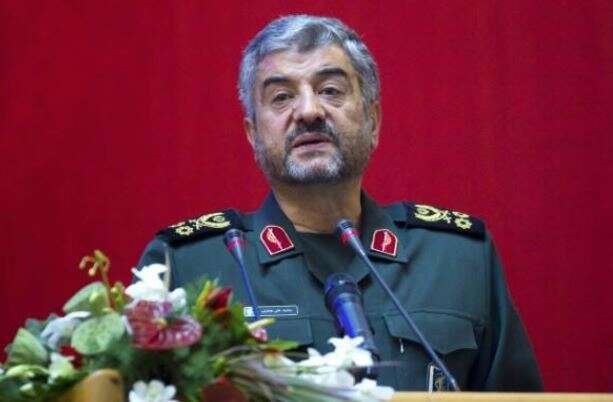
"We have the scientific ability to increase our missile range but it is not our current policy since most of the enemies' strategic targets are already within this 2,000-kilometer range. This range is enough to protect the Islamic republic," Maj. Gen. Mohammad Ali Jafari was quoted as saying by Tasnim news agency.
Jafari said on Tuesday that previous negotiations with the United States about Iran's nuclear program were "an exception," and called Iranian politicians and activists who have favored fresh talks with Trump "traitors and anti-revolutionaries."
On Saturday, over 100 activists associated with the moderate and reformist camps in Iranian politics welcomed Trump's deal with North Korean leader Kim Jong Un envisaging a complete denuclearization of the Korean peninsula.
In a statement published by Iranian media, the activists urged Tehran to start direct negotiations with Washington "with no preconditions" to resolve decades of enmity between the two countries dating to Iran's 1979 Islamic Revolution.
Jafari rejected their call. "The North Korean leader was a revolutionary but a communist, not an Islamic one. That is why he surrendered, but we will not do the same," he was quoted by the semiofficial Fars news agency as saying.
Iranian government spokesman Mohammad Bagher Nobakht echoed Jafari's remarks.
"There are no grounds or logic to talk to such a person [Trump]. Public opinion would not welcome that either," he told local media.
Since U.S. withdrawal from the deal, European signatories France, Britain and Germany have been scrambling to ensure Iran retains enough economic benefits to persuade it not to pull out of the accord.
The head of Iran's Atomic Energy Organization, Ali Akbar Salehi, had met with United Nations Secretary General António Guterres and made clear Iran's dissatisfaction with European proposals to save the nuclear deal.
Referring to Iran's regional role, Salehi was quoted as saying, "If it continues like this, all sides will lose."
Salehi said on Tuesday that Europe's proposals to salvage the deal were not satisfying for Tehran, warning that all sides would lose if Iran is sidelined by the West.