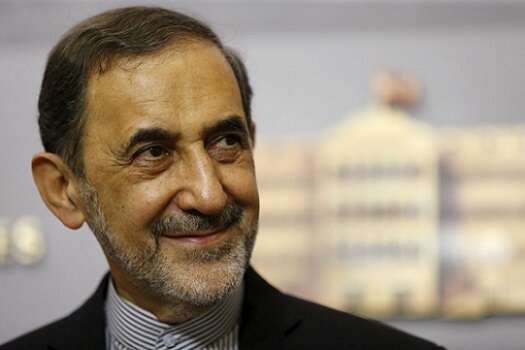
A top adviser to Iran's Supreme Leader Ayatollah Ali Khamenei hailed his country's "strategic relationship" with Russia on Wednesday during a visit to Moscow, part of a diplomatic offensive by Tehran as it braces for renewed U.S. sanctions.
Ali Akbar Velayati, who was due to meet with Russian President Vladimir Putin Thursday, also took a swipe at U.S. President Donald Trump, saying his "unreliable" actions made Tehran's close ties with Moscow all the more necessary.
In May, the U.S. pulled out of a multinational nuclear agreement, under which crippling economic sanctions on Iran were lifted in exchange for curbs on Iran's controversial nuclear program. Washington intends to re-impose sanctions on Iran and has threatened other countries with sanctions if they continue to import oil from Iran starting Nov. 4.
Prime Minister Benjamin Netanyahu, who views Iran as Israel's arch-enemy and strongly backs Trump's decision to quit the nuclear deal, was also visiting Moscow on Wednesday.
Asked about Netanyahu's visit, Velayati said, "His presence or absence in Russia has no effect on our strategic mission in Moscow."
Israel has waged an unrelenting campaign to prevent Iran from establishing a military presence in neighboring Syria, where Iranian and Iran-affiliated forces have been supporting Syrian President Bashar Assad in a yearslong war against rebels. Part of Israel's efforts have included attacks on Iranian targets there.
Hossein Amir-Abdollahian, a special adviser on international affairs to the speaker of Iran's parliament, said Velayati would discuss ways to confront U.S. policy in the Middle East region in his meeting with Putin. He said further that Netanyahu was likely to ask for Putin's help to push Iran's military advisers out of Syria but added that this was an issue that could only be decided between Tehran and Damascus.
Amir-Abdollahian was quoted by Iranian state media as saying Wednesday that a "frank dialogue with Russian leaders at the highest levels and exchanging views can lead to the views of the two countries moving closer and help in finding ways to increase stability and security in the region and confront the improper policies of America and its allies."
Upon arriving in Moscow, Velyati asserted that "The relationship between Iran and the Russian Federation is a strategic relationship and in recent years the collective, bilateral and regional relations have expanded."
He said he would deliver messages to Putin from Iran's Supreme Leader and President Hassan Rouhani and that they would discuss the "very sensitive" global situation.
Velayati was also due to meet Russian Energy Minister Alexander Novak in Moscow.
A U.S. State Department official said this month that Washington's goal was to get as many countries as possible down to zero Iranian oil imports. However, U.S. Secretary of State Mike Pompeo said on Tuesday that Washington might consider requests from certain countries to be exempted from sanctions.
After the U.S. withdrawal, the other world powers involved in the 2015 Iran nuclear deal – Russia, China, Germany, France and Britain – have said they still support the accord.
But European firms are reluctant to risk far-reaching U.S. financial penalties they would face for doing business in Iran.
Trump and Putin are expected to discuss Iran's regional role and the Syrian conflict at a summit in Helsinki next Monday.