Friday Dec 5, 2025
NEWSLETTER
www.israelhayom.com
  • Home
  • News
    • Israel
    • Israel at War
    • Middle East
    • United States
  • Opinions
  • Jewish World
    • Archaeology
    • Antisemitism
  • Lifestyle
    • Food
    • Travel
    • Fashion
    • Culture
  • Magazine
    • Feature
    • Analysis
    • Explainer
  • In Memoriam
www.israelhayom.com
  • Home
  • News
    • Israel
    • Israel at War
    • Middle East
    • United States
  • Opinions
  • Jewish World
    • Archaeology
    • Antisemitism
  • Lifestyle
    • Food
    • Travel
    • Fashion
    • Culture
  • Magazine
    • Feature
    • Analysis
    • Explainer
  • In Memoriam
www.israelhayom.com
Home Archaeology

3,000-year-old human remains discovered in Yemen

Archaeologists report that Stone Age remains found in cave outside Yemeni capital Sanaa appear to have been damaged by looters.

by  Reuters and Israel Hayom Staff
Published on  09-02-2019 18:30
Last modified: 09-03-2019 10:16
3,000-year-old human remains discovered in YemenReuters/Mohamed al-Sayaghi

Parts of ancient human remains, dating back more than 3,000 years, are seen at a site outside Sanaa, Yemen, Aug. 26 | Photo: Reuters/Mohamed al-Sayaghi

Share on FacebookShare on Twitter

Ancient human remains were found in caves on the outskirts of the Yemeni capital, Sanaa, but the scattered bones which date back more than 3,000 years, are said to have been damaged by looters looking for treasures.

Inside the mountain ranges of Shamlan, archaeologists say that the jawbones, thigh bones and other remains that were found belong to two bodies that were most likely mummified.

Follow Israel Hayom on Facebook and Twitter

The bones were found in a hole dug in a cave in the mountain range. According to the Houthi-aligned Culture Minister Abdullah Al Kibsi, the remains belong to settlers who resided in the area at the end of the Stone Age.
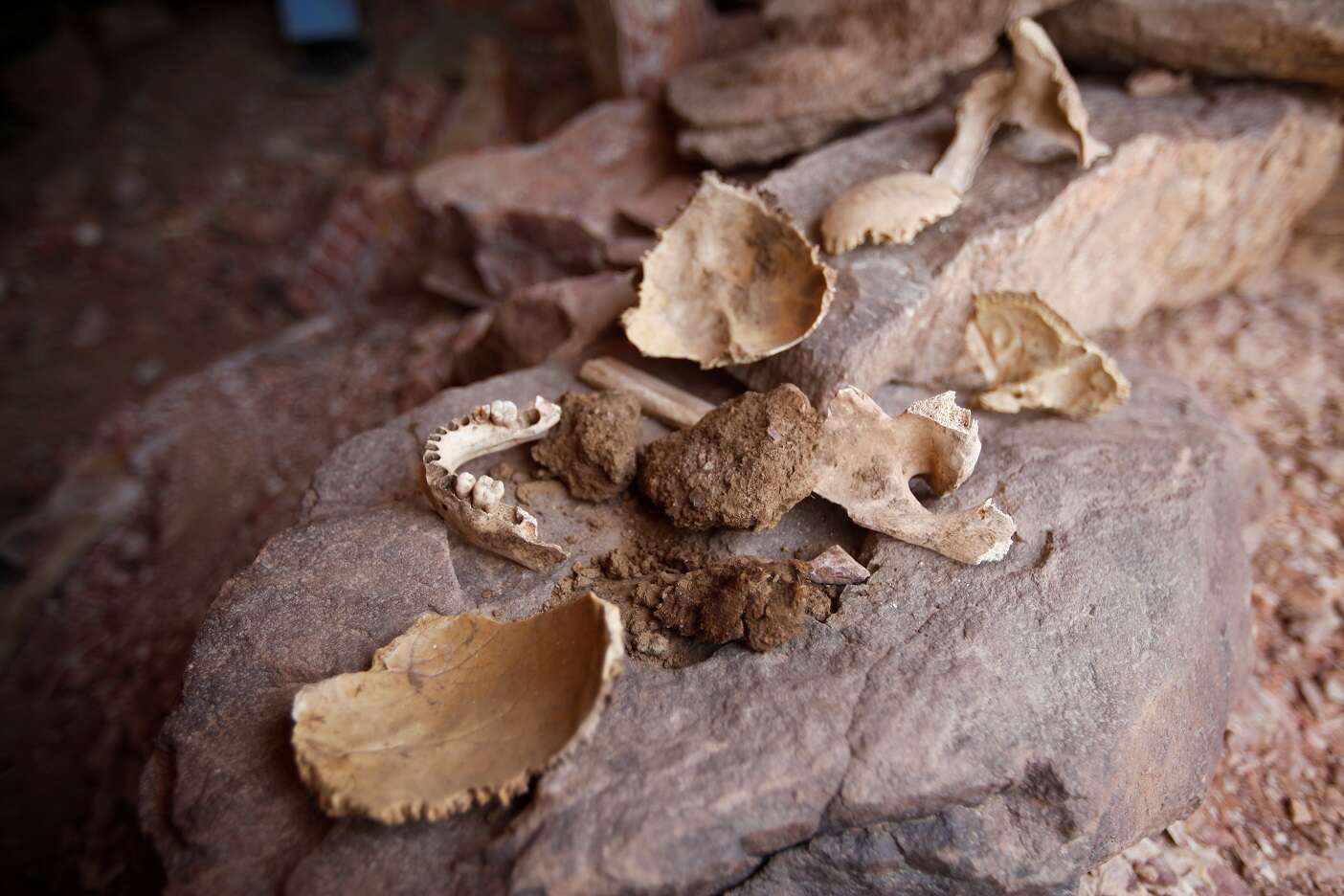
The Stone Age human remains that were discovered in a cave outside Sanaa Reuters/Mohamed al-Sayaghi

The mummies were extracted by looters looking for gold, he added.

The remains are believed to be the first of other potential discoveries in the area.

Sanaa is said to have been founded two and half millennia ago and its old heart once bustled with traders and drew tourists in calmer times.

Sheba and other Yemeni kingdoms once provided the frankincense and myrrh hauled by desert caravans to perfume the temples of the Holy Land and ancient Rome.
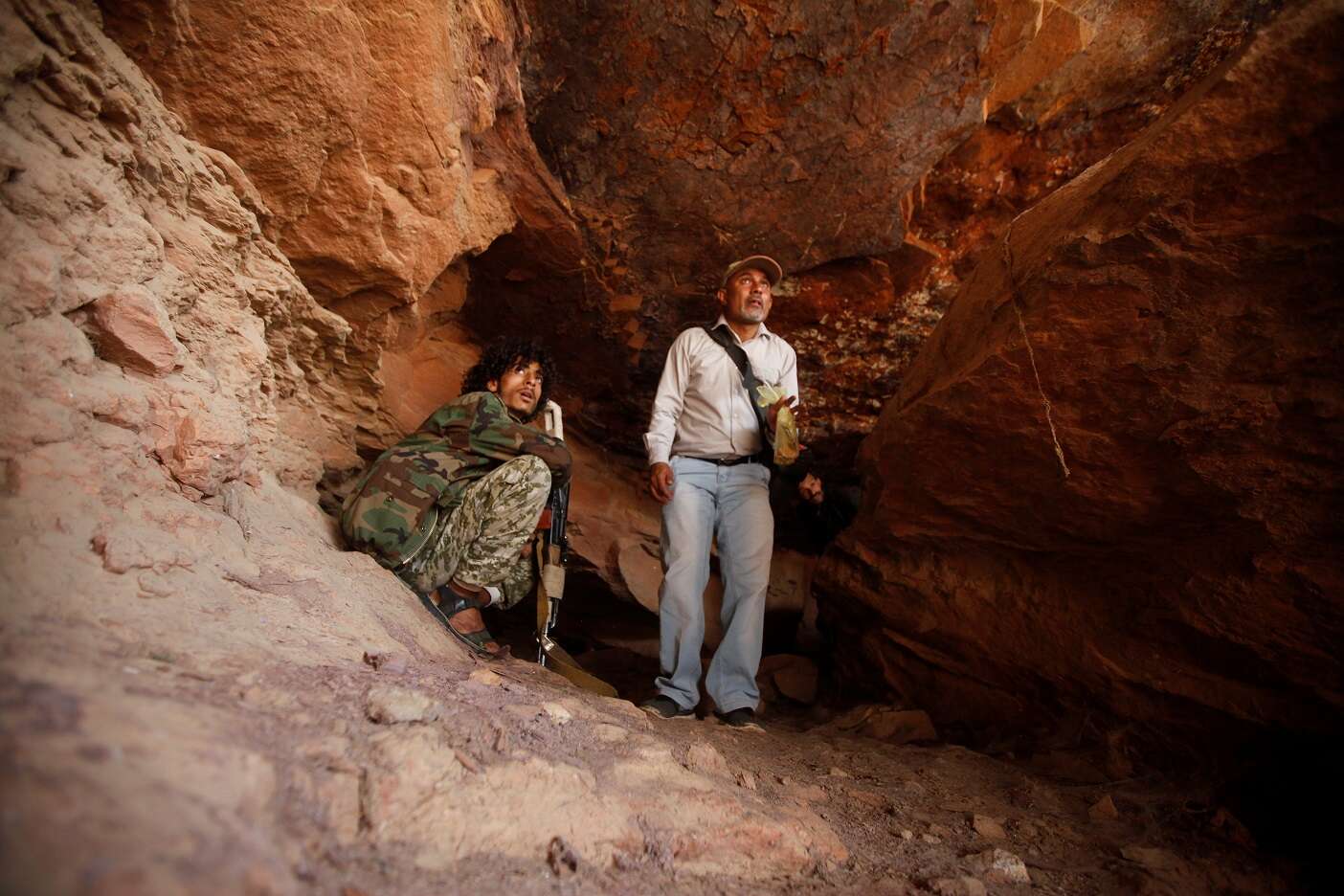
Archaeologist Abdul-Karim al-Barakani inspects the site where the remains were found Reuters/Mohamed al-Sayaghi

Modern combat, however, is disfiguring important cultural treasures. Airstrikes have leveled medieval mudbrick towers in Sanaa's old quarter, a medieval mosque and an Ottoman fort.

Al-Qaida terrorists have dynamited Sufi shrines and armed attacks in Houthi-held lands have sent packing many members of a Yemeni Jewish community dating from the time of King Solomon around 1,000 BCE.

Folklore calls Yemen the cradle of the Arabs but its ancient heritage has been threatened by years of war.

A Saudi-led military coalition has carried out thousands of airstrikes in a bid to dislodge Yemen's armed Houthi movement from the capital. The conflict has killed at least 10,000 people and unleashed a humanitarian crisis.

Tags: archaeologycavehuman remainsYemen

Related Posts

$20B shipwreck: Legal war erupts over legendary treasure(Falklands Maritime Heritage Trust/National Georgraphic via AP

$20B shipwreck: Legal war erupts over legendary treasure

by Miri Weissman

The ship, which carried approximately 11 million gold and silver coins, was estimated by Sky News to be worth about...

King Tutankhamun's tomb at risk of collapse

King Tutankhamun's tomb at risk of collapse

by ILH Staff

The 3,300-year-old tomb is currently in its most fragile state since its discovery in 1922. Experts believe the cause lies...

Ancient underground synagogue discovered in GolanDr. Mechael Osband

Ancient underground synagogue discovered in Golan

by Roi Bet Levi

The Golan region, where the synagogue is located, was formerly a Jewish area during the Roman and Byzantine periods –...

Menu

Analysis 

Archaeology

Blogpost

Business & Finance

Culture

Exclusive

Explainer

Environment


Features

Health

In Brief

Jewish World

Judea and Samaria

Lifestyle

Cyber & Internet

Sports


Diplomacy 

Iran & The Gulf

Gaza Strip

Politics

Shopping

Terms of use

Privacy Policy

Submissions

Contact Us

About Us

The first issue of Israel Hayom appeared on July 30, 2007. Israel Hayom was founded on the belief that the Israeli public deserves better, more balanced and more accurate journalism. Journalism that speaks, not shouts. Journalism of a different kind. And free of charge.

All rights reserved to Israel Hayom

Hosted by sPD.co.il

  • Home
  • News
    • Israel at War
    • Israel
    • United States
    • Middle East
    • Sports
  • Opinions
  • Jewish World
    • Archaeology
    • Antisemitism
  • Lifestyle
    • Food
    • Travel
    • Fashion
    • Culture
  • Magazine
    • Feature
    • Analysis
    • Explainer
    • Environment & Wildlife
    • Health & Wellness
  • In Memoriam
  • Subscribe to Newsletter
  • Submit your opinion
  • Terms and conditions

All rights reserved to Israel Hayom

Hosted by sPD.co.il

Newsletter

[contact-form-7 id=”508379″ html_id=”isrh_form_Newsletter_en” title=”newsletter_subscribe”]

  • Home
  • News
    • Israel at War
    • Israel
    • United States
    • Middle East
    • Sports
  • Opinions
  • Jewish World
    • Archaeology
    • Antisemitism
  • Lifestyle
    • Food
    • Travel
    • Fashion
    • Culture
  • Magazine
    • Feature
    • Analysis
    • Explainer
    • Environment & Wildlife
    • Health & Wellness
  • In Memoriam
  • Subscribe to Newsletter
  • Submit your opinion
  • Terms and conditions

All rights reserved to Israel Hayom

Hosted by sPD.co.il