
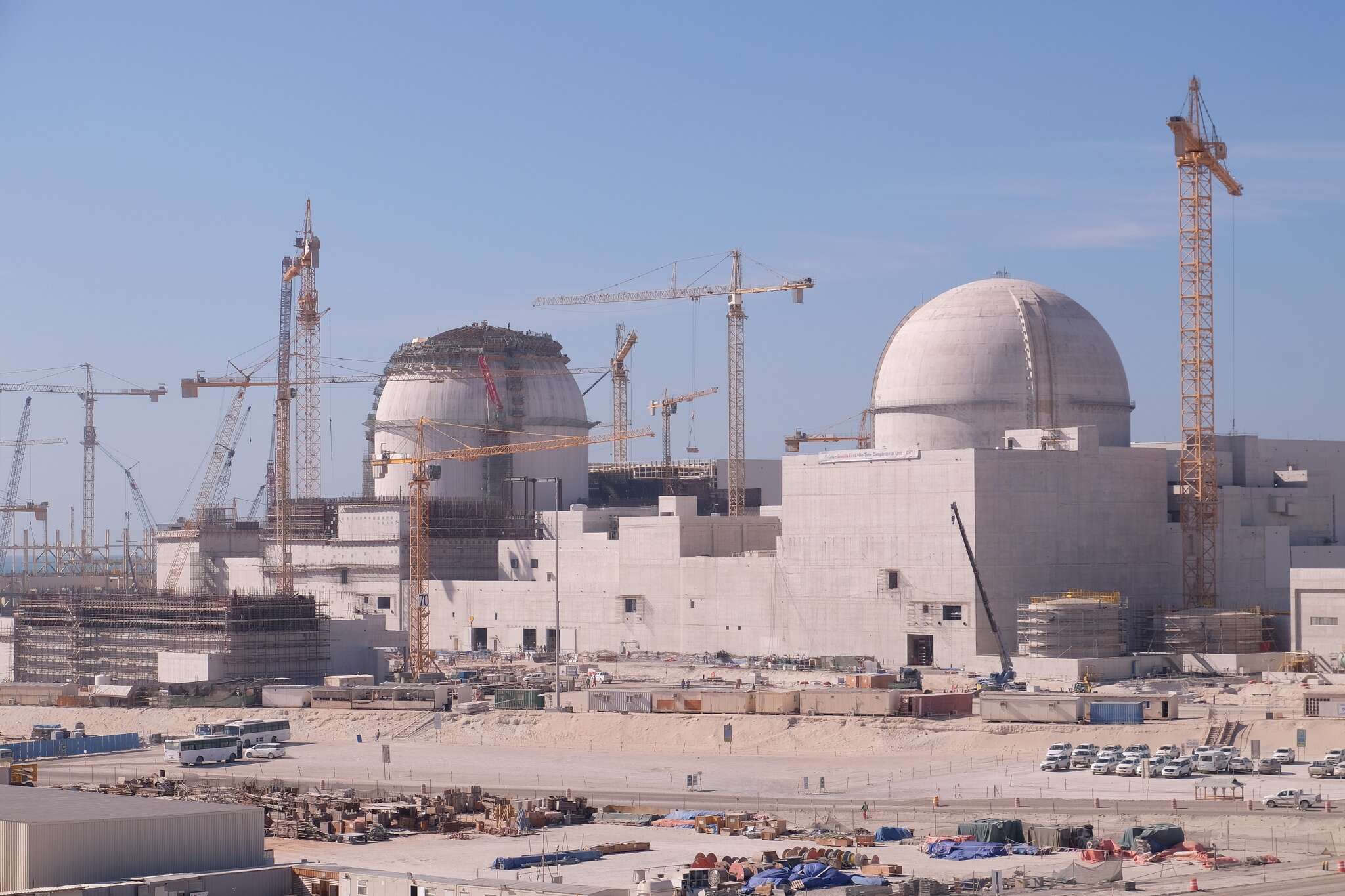
The United Arab Emirates on Monday announced it has issued an operating license for a reactor at its Barakah nuclear power plant, the first in the Arab world, hailing it as a "new chapter."
The UAE has substantial energy reserves but Abu Dhabi has opted to make a considerable investment in developing alternative power sources, including solar energy.
Follow Israel Hayom on Facebook and Twitter
"Today marks a new chapter in our journey for the development of peaceful nuclear energy with the issuing of the operating license for the first Barakah plant," Abu Dhabi Crown Prince Mohammed bin Zayed Al-Nahyan said in a tweet, according to French news agency AFP.
"As we prepare for the next 50 years to safeguard our needs, our biggest strength is national talent."
The Barakah plant, located west of the capital Abu Dhabi, was originally slated to go online in late 2017 but faced delays attributed to safety and regulatory issues.
UAE representative to the International Atomic Energy Agency Hamad al-Kaabi said the his country's nuclear regulator approved the construction of the first of four reactors at Barakah.
"The full operation of Barakah plant in the near future will contribute to the UAE's efforts for development and sustainability," he reportedly said, adding that the operator would "undertake a period of commissioning to prepare for commercial operation."
It is being built by a consortium led by the Korea Electric Power Corporation at a cost of some $24.4 billion, he said, according to AFP. When fully operational, the four reactors will generate 5,600 megawatts of electricity – 25% of the UAE's needs.
The Barakah nuclear power plant is a regional first. Saudi Arabia, the world's top oil exporter, has announced plans to build a dozen nuclear power plants, but the project has yet to materialize.
According to the report, the UAE hopes the nuclear power plant will elevate its regional status and further its goal of establishing itself as a center for tourism, banking, and services in the Gulf.
The UAE has repeatedly said its nuclear ambitions are for "peaceful purposes" and moved to dispel any concerns over safety.
It says it has welcomed more than 40 international missions and reviews from the IAEA and World Association of Nuclear Operators since 2010, as proof of its commitment to transparency.


