For years, Irving Bienstock avoided the story of what he endured as a child during the Holocaust. Only after he retired did he realize he needed to pass on to the young generation of Americans what he and the rest of the Jewish people had endured, with the goal of educating on tolerance and containing anti-Semitism.
Follow Israel Hayom on Facebook and Twitter
Bienstock, 93, is a Holocaust survivor who lives in North Carolina. He takes every opportunity to speak out against contemporary anti-Semitism, and does not mean to let it win. Recently, he visited Israel, and while here contributed to the Yad Vashem Holocaust Memorial's project "Picking Up the Pieces," which invites the public to donate Holocaust-era items that carry personal stories of Jews who were rescued. Like Bienstock's own.
"I was born in 1926 in Dortmund, Germany, to my parent, Wolf and Ada. After Hitler rose to power in 1933, my father, who was an accountant, applied for a visa to the US, where we had family. He had a foreboding about what was going to happen," Bienstock says.
As a child, Bienstock was abused and humiliated by his schoolmates for being Jewish, and his family suffered from the policies of the Third Reich.
Passing trains
In September 1938, Bienstock's father, who was wanted by the Gestapo, fled to Belgium. After Kristallnacht in November 1938, Bienstock was not allowed to remain in school.
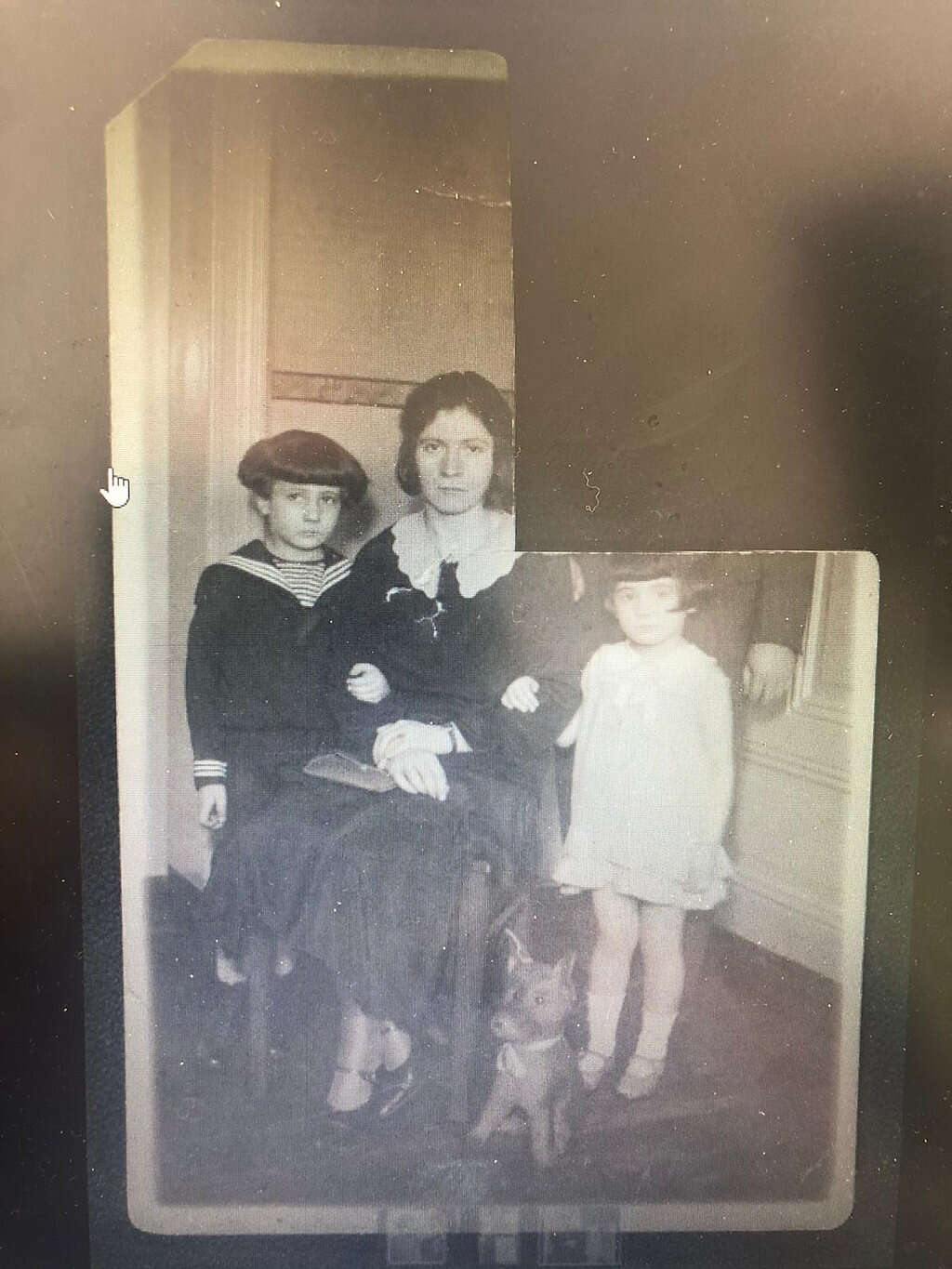
"In 1938, the Nazis passed laws saying that Jews could not own businesses. The Nazis destroyed our apartment in Germany and arrested 30,000 Jewish men. That was the start of the Holocaust. The Gestapo came and looked for my father. My mother told them he had gone to work, and to protect him and the family, cut his face out of the family pictures so they wouldn't be able to identify him. We were forced to leave most of our belongings behind in Germany, but I was one of the lucky ones who got away, when no country was willing to take us in," he says.
In June 1938, Bienstock's father managed to secure a visa to the US. Once there, he arranged visas to bring his family over.
In January 1939, as things became more dangerous and life became insufferable, Bienstock's mother got him and his sister, Sylvia, out of Germany and into Belgium, and joined them. Having no other choice, she appealed to passersby to help her put her children on trains to the Netherlands. Bienstock traveled to the border with his mother, where she left him. Shortly thereafter, Bienstock – who didn't have the necessary papers – was taken off the train. He waited for hours, with trains passing him on their way back to Germany.
"I said I was going to visit a relative in Amsterdam, but the customs officer at the Netherlands border took me off the train and I thought they'd send me back to Germany," Bienstock recalls. "He told me to wait on the platform, and thanks to his goodwill I wasn't put on any of those trains. He took me to a little hotel, where I spent two nights until some anonymous Jew from the community in Arnhem collected me. With his help, I reached an orphanage in Amsterdam. My sister Sylvia made it there, too.
"While I was there, I asked to go to the synagogue. I spoke to the rabbi and told him I wanted to be bar mitzvahed. They sent someone to teach me to read from the Torah, and I had a bar mitzvah even though I was 12. The only one of my family who was there was my sister Sylvia."
Bienstock and his sister joined their mother on a ship to the US, which sailed only four weeks before the Nazis invaded the Netherlands.
The Bienstock family was reunited in the US. All their extended family had been deported to Poland and were eventually murdered in the Holocaust.
At age 18, Bienstock enlisted in the American army, over his mother's objection. "I saved you once, I don't mean to lose you again," she told him. But he insisted. He was sworn in on Nov. 9, 1944, the sixth anniversary of Kristallnacht. He was motivated by a desire to serve the US, which had saved him from the Nazis and their helpers. He served in the infantry in Europe. On April 5, 1945, he crossed the Strait of Gibraltar, five years to the day after he left Europe. A month before the war ended he was sent to Italy, but was never sent into battle.
But Bienstock will never forget the sight of the soldiers from the Jewish Brigade, who became a dream and a symbol for him.
"It was amazing for me. To see a Jewish soldier fighting for the Jewish state that was to come," he says, his voice choked by tears.
'Anti-Semitism is returning'
After his army service, Bienstock completed his high school studies, married Lillian, who died a few months ago, and moved to Charlotte, North Carolina, in the 1970s. They were both beloved figures in the local Jewish community, but only after he retired did he decide to share his story about living through the 1930s as a Jew under the Third Reich. He has continued to speak to American high school students ever since.
"I don't have children, and I was afraid that after I'm gone, no one would remember me," Bienstock explains. "It's important to me that the next generals know what the Nazis did to us while the world stood by. Germany was a cultured place before Hitler rose to power, but it committed the worst atrocities in history. It happened because of anti-Semitism in Europe, and because no one spoke up or stopped them. I tell the students that when they see anti-Semitism or any discrimination, they must speak up. We must not stay silent."
Moreover, Bienstock is worried about the increase in anti-Semitism worldwide.
"Anti-Semitism is coming back, and it scares me. We must not allow it to stay. We must fight it. The Holocaust could happen again if we don't oppose it, that's what happened in Germany. There is anti-Semitism here, today, too. I am playing a role in educating the next generation, and I'll keep doing it as long as I can."