The prospect of Israel extending its sovereignty to the Jordan Valley, and parts of Judea and Samaria, has raised questions over what the response by the Palestinian Authority and Jordan would be as both would be directly affected by such a move.
Michael Milstein, head of the Palestinian Studies Forum at the Moshe Dayan Center at Tel Aviv University, said that as long as Israel's announcement is "only declarative," the PA and Jordan "will be very angry but won't do anything."
Follow Israel Hayom on Facebook and Twitter
If Israel introduces legislation on the matter, Milstein acknowledges that there may be demonstrations in the PA, as well as a threat by Jordan to recall its ambassador. If Israel actually extends sovereignty on the ground, Milstein said there would likely be an escalation in the PA, and Jordan will officially recall its ambassador back to Amman.
Milstein added that it's even possible that Jordan would go as far as to "change the status of diplomatic relations" between the two nations.
On Monday, Israel's Defense Minister Benny Gantz ordered IDF Chief of Staff Aviv Kochavi to "step up preparations" for the military ahead of the sovereignty plans in case of an outbreak in Palestinian violence.
Speaking on a Zoom call arranged by the Israel Policy Forum, PLO Ambassador to the United Kingdom and former Head of the Palestinian Mission to the United States Husam Zomlot provided his perspective on the Palestinian leadership's response.
"We consider annexation to be the smoking gun and an end to the two-state paradigm," he said. "It doesn't only represent a change, but rather a transformation. It is a statement. It would be a point of no return."
'We want to change the calculus'
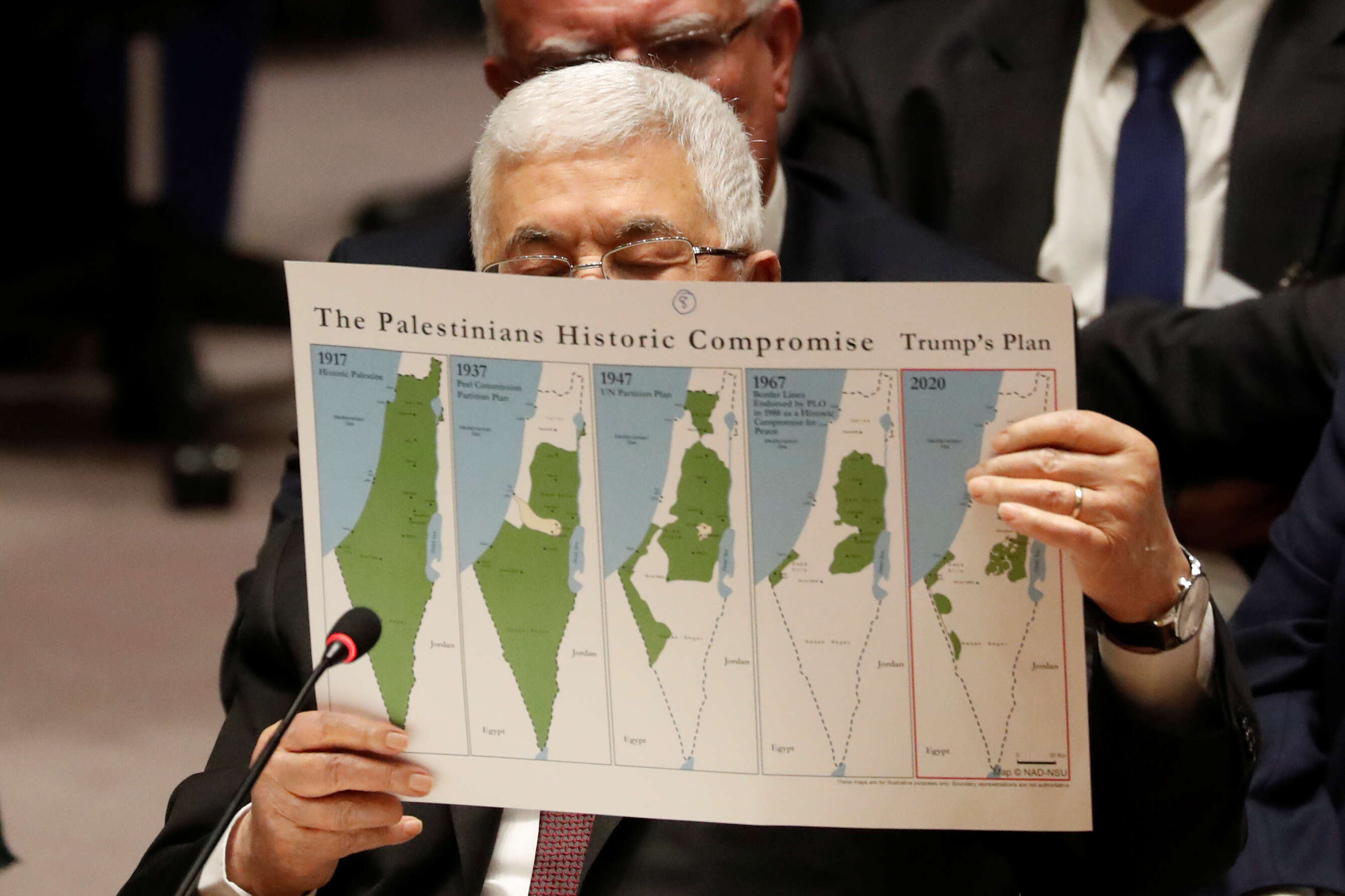
Last week, PA leader Mahmoud Abbas announced an end to all agreements with Israel after Israeli Prime Minister Benjamin Netanyahu announced that he intended to move forward with the sovereignty plan presented by the Trump administration.
Zomlot said that from a Palestinian perspective, sovereignty is moving forward no matter how hard they fight it, and that the day after will be "a new universe" with no chance of peace.
"We believe Netanyahu is serious," he said. "He wants to do it. He has every reason to. Therefore, we want to change the calculus. We must tell the Israeli public, the region and the world that the train is leaving the station."
Asked about the Palestinian approach to 2020 Democratic presidential candidate and former Vice President Joe Biden, and whether or not that would change if he wins in November, Zomlot expressed his frustration.

He complained that the Palestinians "are not seeing any new policy on the part of the Biden campaign that would help in changing the calculus."
He also said "so far, what Biden is saying does not qualify and would not dissuade Netanyahu from going ahead with annexation. Frankly, I do not see a US partner right now who is capable of stopping Netanyahu."
For Zomlot, the US administration is "part of the problem rather than part of the solution," adding that if the Palestinians cannot prevent it now, "after annexation, there will be a new dawn."
If Biden were to try and restart the peace process if he is elected president, emphasized Zomlot, "the same terminology and discourse will be over. After annexation, it will not be an issue of what we do, but of what we do not do."
He emphasized that no Palestinian leader could accept the offer of restarting talks "on the basis of the old formula. It cannot happen," he said.
Subscribe to Israel Hayom's daily newsletter and never miss our top stories!
However, he contradicted himself when he said that "we will judge on the fundamentals—the permanent-status issues. If any administration goes back to the fundamentals without dictating these terms, of course, we will engage."
So it remains unclear whether or not the Palestinians would indeed be willing to restart negotiations with Israel if Biden were to suggest it.
'Arab states are unlikely to make a fuss'
In an interview published by the German newspaper Der Spiegel, Jordan's King Abdullah warned of a "massive conflict." He said Israel's plans to extend sovereignty would cause more chaos and extremism in the region, though he stopped short of saying that he would cancel the peace treaty with Israel.
Gershon Hacohen, a senior research fellow at the Begin-Sadat Center for Strategic Studies rejected the idea that Israel must be held hostage to Jordan and refrain from rocking the boat.
Writing in Israel Hayom, Hacohen said that while Jordan "plays an important and welcome role in keeping the peace along the Israeli-Jordanian border," when experts recommend that because of that, Israel should "refrain from taking action on behalf of its own interests in the Jordan Valley," over the risk of "losing the peace deal," this borders on "extortion."
Contrary to popular belief, others say that extending Israeli law would not cause chaos and extremism, but rather, the opposite.
Saudi writer Abdulhameed Al-Ghobain stated in a recent interview on BBC Arabic TV that the Saudi public no longer cares about the Palestinian cause, and that Saudi Arabia can benefit from establishing relations with Israel.
Jerusalem Institute for Strategy and Security President Efraim Inbar, in a recent article in Al-Monitor, said that "most Arab states are unlikely to make a fuss. The whole Arab world has adjusted to Israel's control and sovereignty of Jerusalem."
"Despite formal statements," he wrote, "Jordan prefers an Israeli permanent presence in the Jordan Valley, fearing a neighboring Palestinian political entity that could develop into another Hamas-controlled Gaza. Since the signing of the peace agreement in 1994, Jordan's dependence on Israel has increased."
Inbar has also said that "Palestinian opposition to an extension of Israeli law to the Jordan Valley is irrelevant. The lengthy negotiations with the Palestinians have led nowhere, and there is Israeli consensus that the Palestinian national movement is not ripe for accepting a historical compromise with the Jewish state."
"In the long run," he said, "this will improve our relations with Jordan because it does not want to be neighbors with the next 'Hamastan.' "
Reprinted with permission from JNS.org