Tuesday Feb 24, 2026
NEWSLETTER
www.israelhayom.com
  • Home
  • News
    • Israel
    • Israel at War
    • Middle East
    • United States
  • Opinions
  • Jewish World
    • Archaeology
    • Antisemitism
  • Lifestyle
    • Food
    • Travel
    • Fashion
    • Culture
  • Magazine
    • Feature
    • Analysis
    • Explainer
  • In Memoriam
www.israelhayom.com
  • Home
  • News
    • Israel
    • Israel at War
    • Middle East
    • United States
  • Opinions
  • Jewish World
    • Archaeology
    • Antisemitism
  • Lifestyle
    • Food
    • Travel
    • Fashion
    • Culture
  • Magazine
    • Feature
    • Analysis
    • Explainer
  • In Memoriam
www.israelhayom.com
Home Archaeology

Ancient seal sheds light on post-First Temple era Jerusalem 

The researchers said "discovering these artifacts in an archaeological context which can be dated with a high probability is very rare."

by  Yori Yalon , JNS and ILH Staff
Published on  07-01-2020 12:38
Last modified: 07-01-2020 13:37
Ancient seal sheds light on post-First Temple era Jerusalem Israel Antiquities Authority

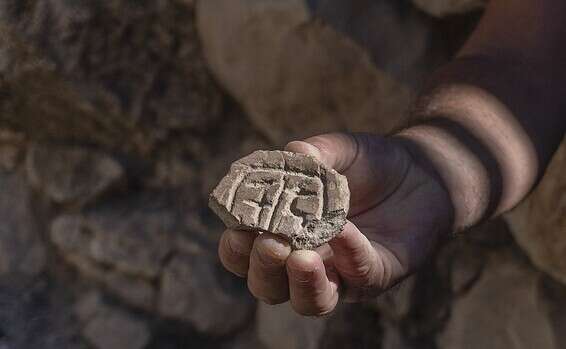
The seal | Photo: Israel Antiquities Authority

Share on FacebookShare on Twitter

A double stamp impression on a bulla and a seal made of used pottery shreds discovered in the City of David may indicate that despite the plight of Jerusalem after the destruction of the First Temple, efforts were made to restore the stature of the administrative authorities.

The archeological evidence revealed in excavations by the Israel Antiquities Authority and Tel Aviv University in the Givati Parking Lot Excavation of the City of David may provide evidence of the restoration of the city in the period of Ezra and Nehemiah.

Follow Israel Hayom on Facebook and Twitter

The seal impressions, bullae, were small pieces of clay used in ancient times to sign documents or containers (for example, storage jugs for agricultural produce collected as a tax) intended to keep them sealed en route to their destination.

According to Professor Yuval Gadot of the Department of Archaeology and Ancient Near Eastern Cultures at Tel Aviv University and Yiftah Shalev of the Israel Antiquities Authority: "Despite the numerous excavations conducted in Jerusalem to date, so far the findings revealed from the Persian period are extremely meager and therefore we lack information regarding the character and appearance of the city during this period."

The researchers emphasized that "discovering these artifacts in an archeological context which can be dated with a high probability is very rare."

According to the researchers: "Discovering the new findings on the western slope of the City of David adds much information about the city's structure during the period of the Return to Zion, a period we knew about mainly from biblical literature [the books of Ezra and Nehemiah]."

"The findings from the Givati Parking Lot Excavation shed light on the renewal of the local administration, in a location similar to the one that existed before the destruction of the First Temple, about 100 years prior," they said, according to a statement.

 Reprinted with permission from JNS.org.

Subscribe to Israel Hayom's daily newsletter and never miss our top stories!

Related Posts

Turkey burial site transforms understanding of Midas kingdomBilecik Museum

Turkey burial site transforms understanding of Midas kingdom

by ILH Staff and Miri Weissman

Archaeologists in Bilecik, Turkey discovered royal burial 99 miles from Gordion revealing Midas dynasty controlled far greater territory than previously...

Huckabee's grandchildren discover coins on Samaria hikeRuti Lieberman/ Sarah Faley

Huckabee's grandchildren discover coins on Samaria hike

by Yotam Deshe

"The caves where the Huckabee family members toured and the findings they discovered in them are the best evidence of...

7,000-year-old pottery unearthed at Noah's Ark siteNoah's Ark Discovered Project

7,000-year-old pottery unearthed at Noah's Ark site

by Miri Weissman

The ceramic materials' chronological period aligns with conventional estimates of when the Biblical flood survivor lived.

Menu

Analysis 

Archaeology

Blogpost

Business & Finance

Culture

Exclusive

Explainer

Environment


Features

Health

In Brief

Jewish World

Judea and Samaria

Lifestyle

Cyber & Internet

Sports


Diplomacy 

Iran & The Gulf

Gaza Strip

Politics

Shopping

Terms of use

Privacy Policy

Submissions

Contact Us

About Us

The first issue of Israel Hayom appeared on July 30, 2007. Israel Hayom was founded on the belief that the Israeli public deserves better, more balanced and more accurate journalism. Journalism that speaks, not shouts. Journalism of a different kind. And free of charge.

All rights reserved to Israel Hayom

Hosted by sPD.co.il

  • Home
  • News
    • Israel at War
    • Israel
    • United States
    • Middle East
    • Sports
  • Opinions
  • Jewish World
    • Archaeology
    • Antisemitism
  • Lifestyle
    • Food
    • Travel
    • Fashion
    • Culture
  • Magazine
    • Feature
    • Analysis
    • Explainer
    • Environment & Wildlife
    • Health & Wellness
  • In Memoriam
  • Subscribe to Newsletter
  • Submit your opinion
  • Terms and conditions

All rights reserved to Israel Hayom

Hosted by sPD.co.il

Newsletter

[contact-form-7 id=”508379″ html_id=”isrh_form_Newsletter_en” title=”newsletter_subscribe”]

  • Home
  • News
    • Israel at War
    • Israel
    • United States
    • Middle East
    • Sports
  • Opinions
  • Jewish World
    • Archaeology
    • Antisemitism
  • Lifestyle
    • Food
    • Travel
    • Fashion
    • Culture
  • Magazine
    • Feature
    • Analysis
    • Explainer
    • Environment & Wildlife
    • Health & Wellness
  • In Memoriam
  • Subscribe to Newsletter
  • Submit your opinion
  • Terms and conditions

All rights reserved to Israel Hayom

Hosted by sPD.co.il