

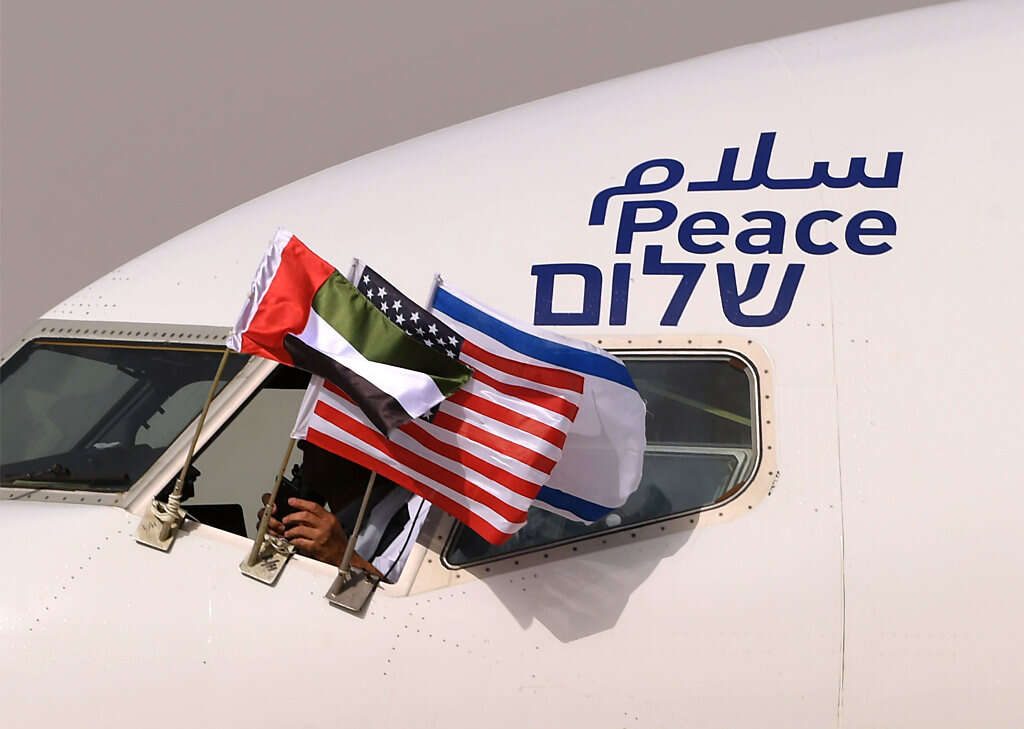
The United Arab Emirates and Bahrain's decisions to normalize relations with Israel follows a history of peace efforts between Israel, the Palestinians and their Arab allies that have failed to overcome decades of distrust and violence.
Most Arab nations have not recognized Israel or hold formal diplomatic or economic relations with it because of what they regard as Israel's thwarting of Palestinians' aspirations for a state of their own.
Follow Israel Hayom on Facebook and Twitter
The Israel-UAE normalization deal announced last month is to be signed on Sept. 15 at a White House ceremony hosted by US President Donald Trump.
Here is a brief look at the main Middle East peace initiatives throughout the decades:
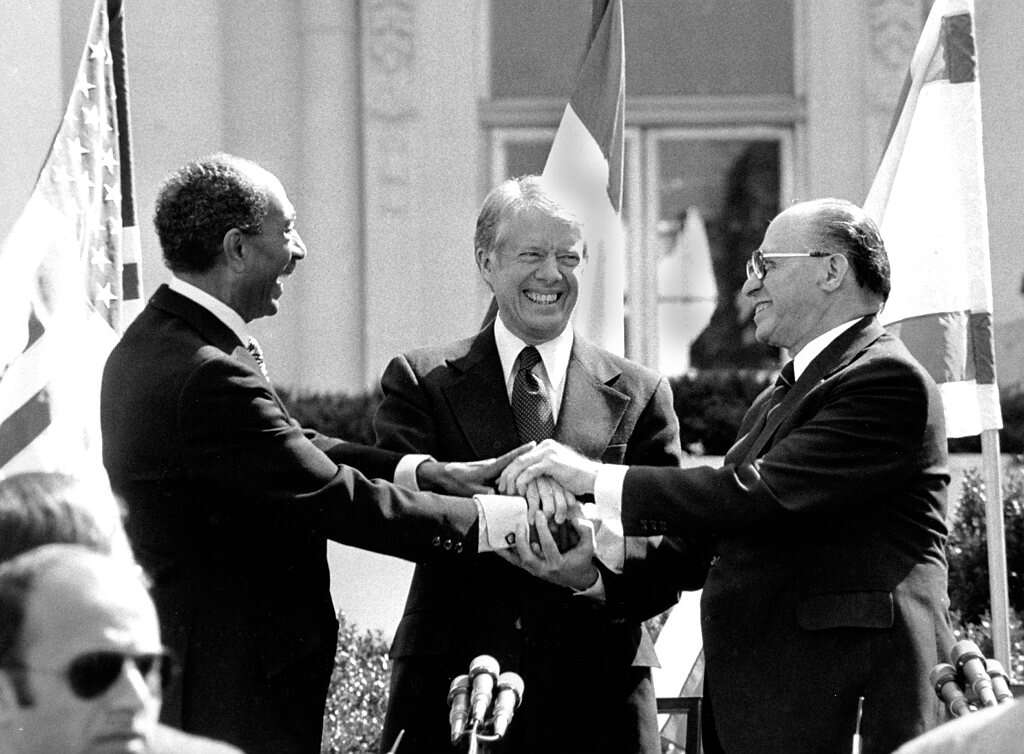
1978 – Camp David agreement
Israel's Menachem Begin and Egypt's Anwar Sadat agree on a framework for regional peace that calls for an Israeli withdrawal in stages from Egypt's Sinai and a transitional Palestinian government in the West Bank and Gaza.
1979 – Israeli-Egyptian peace treaty
The first peace treaty between Israel and an Arab country set out plans for a complete Israeli withdrawal from Sinai within three years. In 1981, Sadat was assassinated by Islamist revolutionaries opposed to the deal.
1991 – Madrid summit
Representatives of Israel and the Palestine Liberation Organization (PLO) attend a peace conference. No agreements are reached but the scene is set for direct contacts.
1993 – Declaration of Principles/Oslo Accords
Israel and the PLO hold secret talks in Norway that result in interim peace accords calling for the establishment of a Palestinian interim self–government and an elected council in the West Bank and Gaza for a five–year transitional period, Israeli troop withdrawals and negotiations on a permanent settlement.
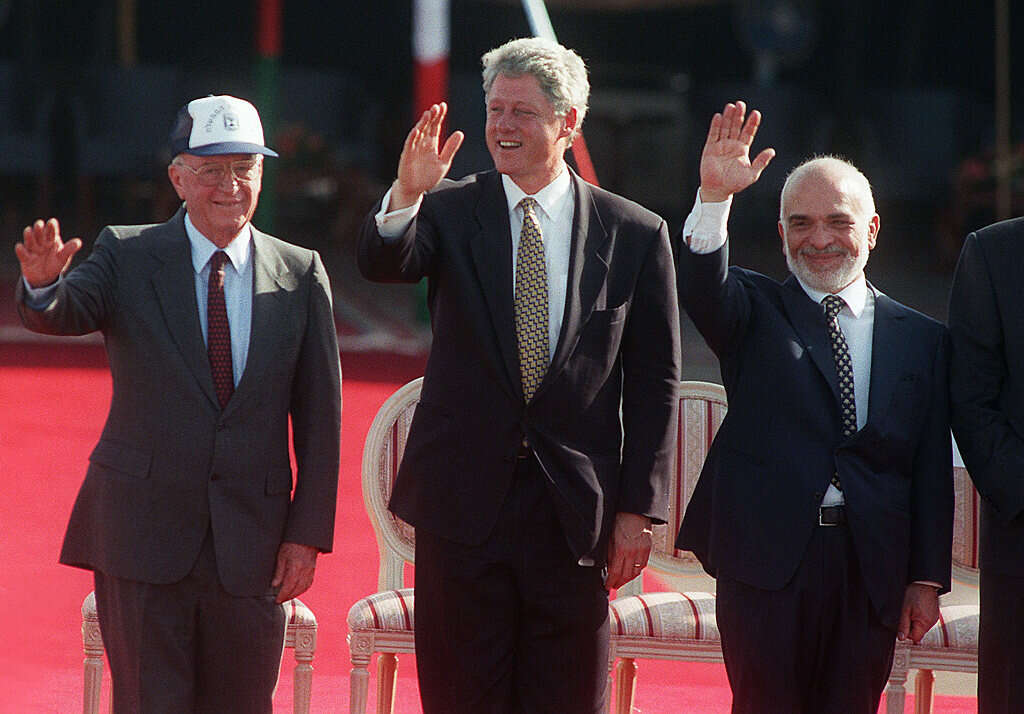
1994 – Israel-Jordan agreement
Jordan becomes the second Arab country to sign a peace treaty with Israel. But the treaty is unpopular and pro–Palestinian sentiment is widespread in Jordan.
2000 – Camp David summit
US President Bill Clinton convenes Palestinian leader Yasser Arafat and Israeli Prime Minister Ehud Barak at Camp David. They fail to agree. Another Palestinian uprising ensues.
2002–2003 – Bush Declaration/Arab peace initiative/Road Map
George W. Bush becomes the first US president to call for the creation of a Palestinian state, living side by side with Israel "in peace and security".
2002 – Saudi Arabia presents Arab League–endorsed peace plan for full Israeli withdrawal from occupied territory and Israel's acceptance of a Palestinian state in return for normal relations with Arab countries. The United States, the European Union, the United Nations and Russia present their own road map to a permanent two–state solution to the conflict.
2007 – Annapolis summit
Palestinian President Mahmoud Abbas and Israeli Prime Minister Ehud Olmert fail to reach a deal at a US–hosted summit. Olmert says later they were close to a deal but a graft investigation against him and a Gaza war in 2008 scupper any agreement.
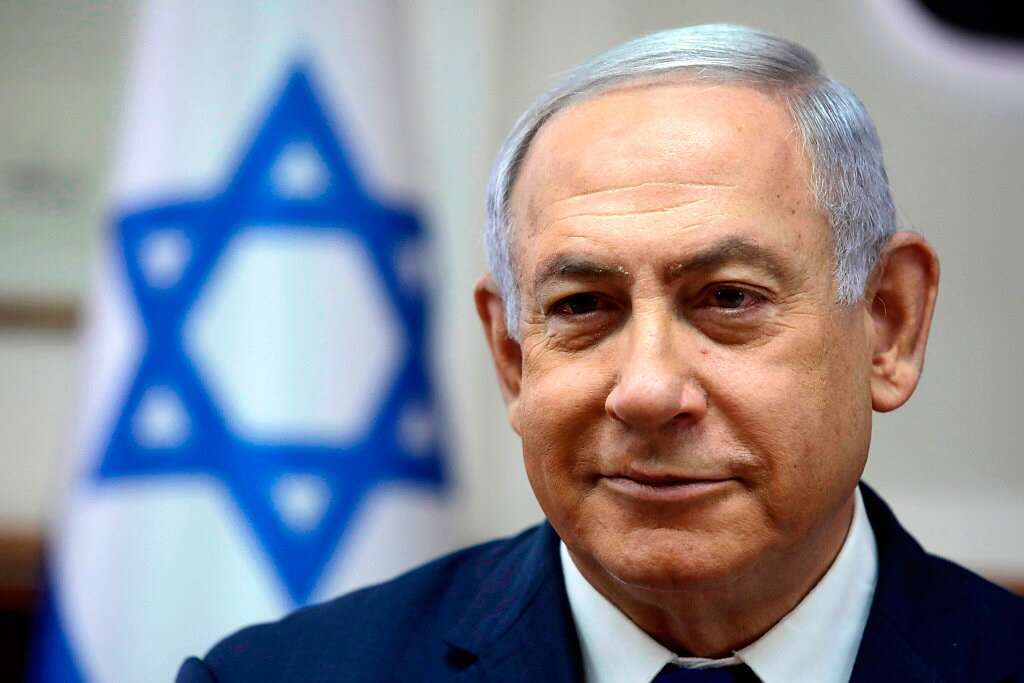
2009 – Netanyahu's Bar–Ilan address
Israeli Prime Minister Benjamin Netanyahu says he would be prepared for a peace deal that includes the establishment of a demilitarized Palestinian state. He also sets another condition: Palestinian recognition of Israel as the "state of the Jewish people."
2013–2014 – Washington peace talks/negotiations collapse
US Secretary of State John Kerry coaxes Israelis and Palestinians to resume talks. They fail and are suspended in April 2014.
2019 – The Trump administration's Middle East peace plan
The preliminary stage of Trump's Mideast Plan is launched in Bahrain by top White House adviser Jared Kushner. He takes an "economy first" approach, calling for a $50 billion investment fund to boost the Palestinian and neighboring Arab economies. Palestinian leaders dismiss it.
Israeli PM Benjamin Netanyahu says he intends to extend sovereignty to parts of Judea and Samaria and the Jordan Valley. US Secretary of State Mike Pompeo effectively backs Israel's claimed right to build Jewish settlements in the West Bank by abandoning a four-decade-old US position that they were inconsistent with international law. Most countries still regard them as illegal.
2020 – History in the making
January 2020 – Trump unveils his full Mideast plan in Washington, alongside Netanyahu. It offered US recognition for Israel's sovereignty over its West Bank settlements and required Palestinians to meet difficult conditions for a state. Palestinians reject it as de facto annexation, saying it would leave them a fragmented "Swiss-cheese" state. Israel's far-right settlers also reject the plan, opposing any form of a Palestinian state.
Aug. 13, 2020 – Trump announces a surprise deal to normalize relations between Israel and the UAE. Emirati officials say the deal puts an end to West Bank annexation. But Netanyahu says it only meant Israel had agreed to "temporarily wait".
Sept. 11, 2020 – Bahrain struck an agreement to normalize relations with Israel, saying it would "increase stability, security, and prosperity in the region" in a joint statement with Israel and the United States.
Subscribe to Israel Hayom's daily newsletter and never miss our top stories!


