
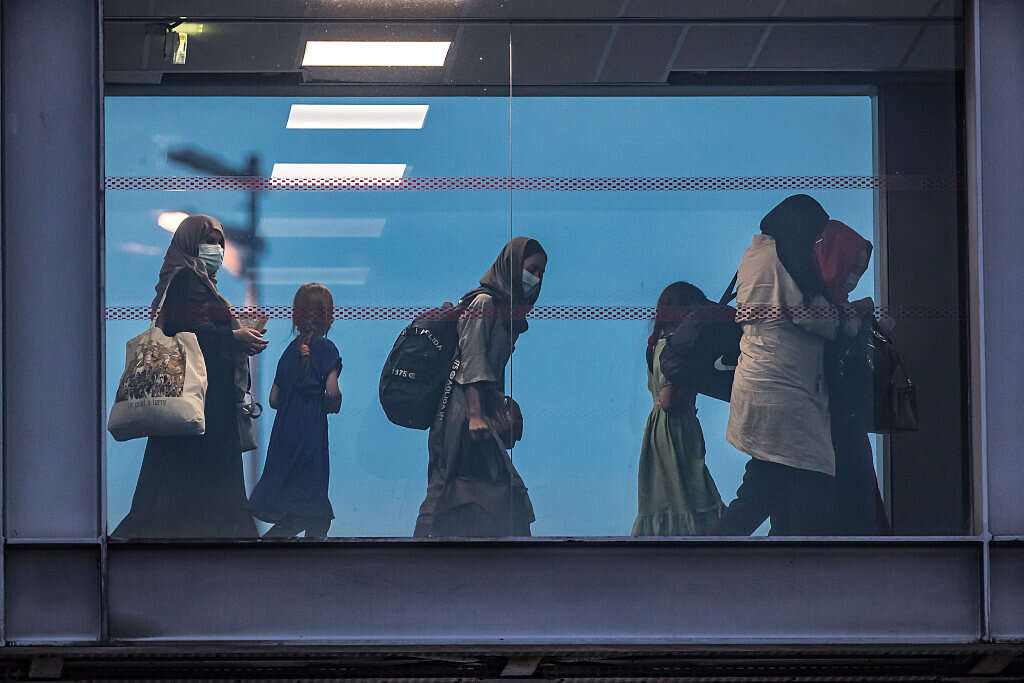
The United Arab Emirates has agreed to host 5,000 Afghan nationals for 10 days as they wait to make their way to a third country at the request of the United States, the Gulf Arab state's Foreign Ministry said Friday.
Follow Israel Hayom on Facebook and Twitter
"The evacuees will travel to the UAE from the Afghan capital of Kabul on US aircraft in the coming days," the ministry said in a statement carried by state news agency WAM.
The UAE has so far facilitated the evacuation of 8,500 people from Afghanistan on its aircraft and through its airports, it said.
The announcement came after US officials told Reuters Washington was expected to announce that countries in Europe and the Middle East have agreed to temporarily shelter people evacuated from Kabul as its base in Qatar reached capacity.
A Qatari official told Reuters the Gulf Arab state was "continuing our efforts to evacuate people from Afghanistan. Additional flights are scheduled during the upcoming days."
Bahrain will allow planes carrying evacuees to make stopovers in the kingdom as part of efforts to assist rescue operations in Afghanistan, Bahrain's Foreign Ministry said in a statement Friday.
A pragmatic approach
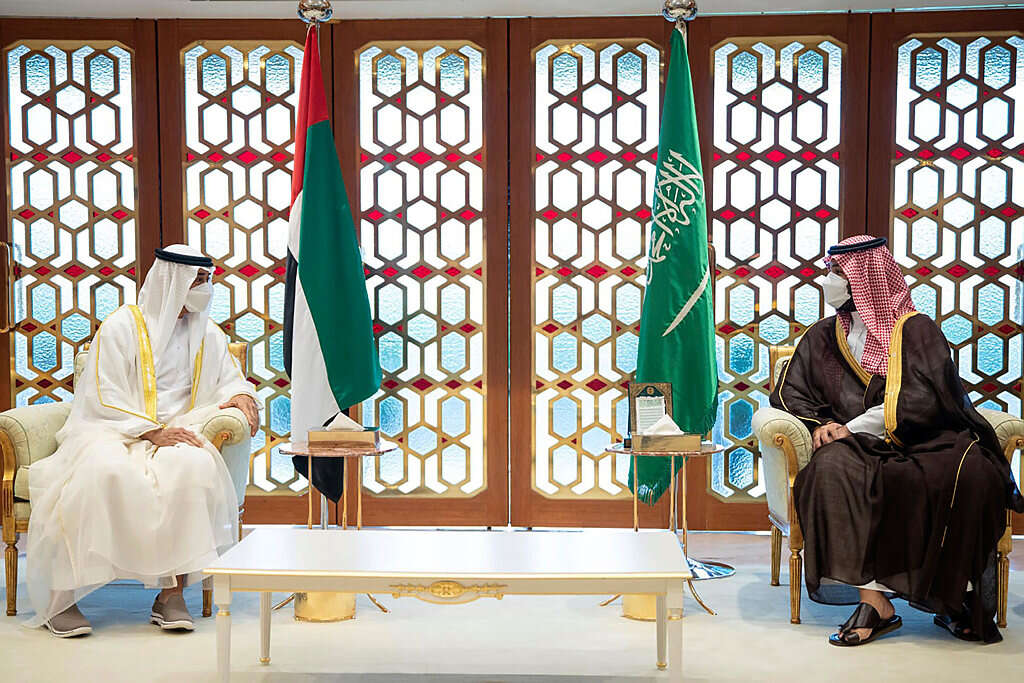
The United Arab Emirates and Saudi Arabia, among the few countries who recognized the Taliban's 1996-2001 rule in Afghanistan, will likely take a pragmatic approach to its return to power despite fears it could embolden militant Islam abroad.
Foreign diplomats and analysts said Riyadh and Abu Dhabi would adapt to realities after the Taliban's shockingly swift conquest of Afghanistan as US-led forces withdrew.
Arab Gulf powers severed ties with the Taliban for "harboring terrorists" following Sept. 11, 2001 terrorist attacks on the US.
Riyadh froze ties with the Taliban in 1998 over its refusal to hand over then-al-Qaida leader Osama bin Laden, who made his name fighting Soviet occupation in Afghanistan in the 1980s and was stripped of his Saudi citizenship for attacks in the kingdom and activities against the royal family.
"The Saudis have a historical relationship with Afghanistan and will eventually have to accept the Taliban [again] ...They have no other option," said a foreign diplomat in Riyadh who asked not to be identified.
Whether pragmatism will extend to a re-establishment of diplomatic relations is unknown: Saudi and UAE authorities did not respond to requests for comment regarding Afghanistan and the Taliban.
Riyadh and Abu Dhabi have limited their response to the Taliban takeover to saying they would respect the choice of Afghans and urging the group to foster security and stability after a protracted insurgency against US-backed rule.
"Both countries are pragmatic and have proven they can work with different regimes around the world," a diplomat based in Qatar said.
Saudi Arabia and the UAE tried to facilitate inter-Afghan peace talks after the fall of the Taliban 20 years ago but were not involved in the main negotiations hosted by Qatar that failed to yield a political settlement.
Sheikh Hamad bin Jassim Al Thani, a Qatari ruling family member and former premier, said countries will have to deal directly with the Taliban.
"The world should respect the current situation in Afghanistan and not take measures to restrict them [Taliban]," he tweeted on Wednesday. "The international community should give them hope that it will accept them and cooperate with them in return for their commitment to international norms."
Two diplomats in Qatar, where the Taliban maintains a representative office, said Gulf states were likely to take their cue from top security ally Washington.
Unique Saudi sway?
Saudi Arabia could try to exert a moderating influence on the Taliban with its status as custodian of Islam's two holiest sites, said Umar Karim, a fellow at the Royal United Services Institute for Defense and Security Studies.
Saudi Crown Prince Mohammed bin Salman has acted to ease restrictions on daily life in the conservative kingdom - the birthplace of Islam, including curbing the powers of the religious police, permitting women to drive, and allowing public entertainment.
"Saudi Arabia still has a strong religious card vis-a-vis the Taliban," Karim said, suggesting Riyadh could also open channels with the group via Pakistan.
Afghanistan has a long border with Pakistan, which long sheltered Taliban leaders and has long-standing ties with Riyadh and Abu Dhabi. Pakistan was the only other country to formally recognize the previous Taliban regime.
Riyadh and Abu Shabi could also use their financial clout as leverage as they have in the past, with the Taliban likely to be critically short of cash to govern the country given that Kabul's foreign currency reserves are now out of reach in the United States.
Three foreign diplomats in Abu Dhabi said the UAE had privately voiced concern that under the Taliban, Afghanistan could once again become a safe haven and breeding ground for extremists.
"Terrorist groups may use [Afghanistan] as a base if global powers cannot negotiate with the Taliban on [the transition of power] quickly," columnist Yousef al-Sharif wrote in UAE newspaper Al Bayan.
"The international community must contain the situation and learn from the catastrophic failure of the American experience."
The Taliban have sought to present a more conciliatory face since taking control, saying they will not allow Afghanistan to be used to launch attacks on other nations and will respect the rights of women within the framework of Islamic law.
Initial international reaction has been deeply skeptical.
"The arrival of the Taliban in Kabul means extremism is in the seat of power," Saudi commentator Faheem Al Hamid wrote in the country's Okaz newspaper. He said any new civil war in Afghanistan would draw in foreign players including neighboring Shiite Muslim Iran.
"Much is required from the Taliban. Not only backing up words with action but also changing the extremist thought rooted in their ideology ... towards tolerance and moderation," he said.
Saudi Arabia and the UAE have long strived to contain political Islamists they deem a threat to Gulf dynastic rule, including the Muslim Brotherhood, in Libya, Sudan, Syria, and elsewhere in the Middle East and North Africa.
Subscribe to Israel Hayom's daily newsletter and never miss our top stories!


