


On September 4, 1975, following intense negotiations led by President Gerald Ford and Secretary of State Henry Kissinger, Israel and Egypt signed the Sinai Interim Agreement. One of the principle stumbling blocks on the way to the agreement was Israel's concern that the administration wouldn't honor its commitment to set up an early warning station at Um Hashiba in the Sinai Peninsula manned by 200 American technicians (the station was aimed at providing Israel with up-to-date intelligence on any Egyptian violation of the agreement).
Follow Israel Hayom on Facebook and Twitter
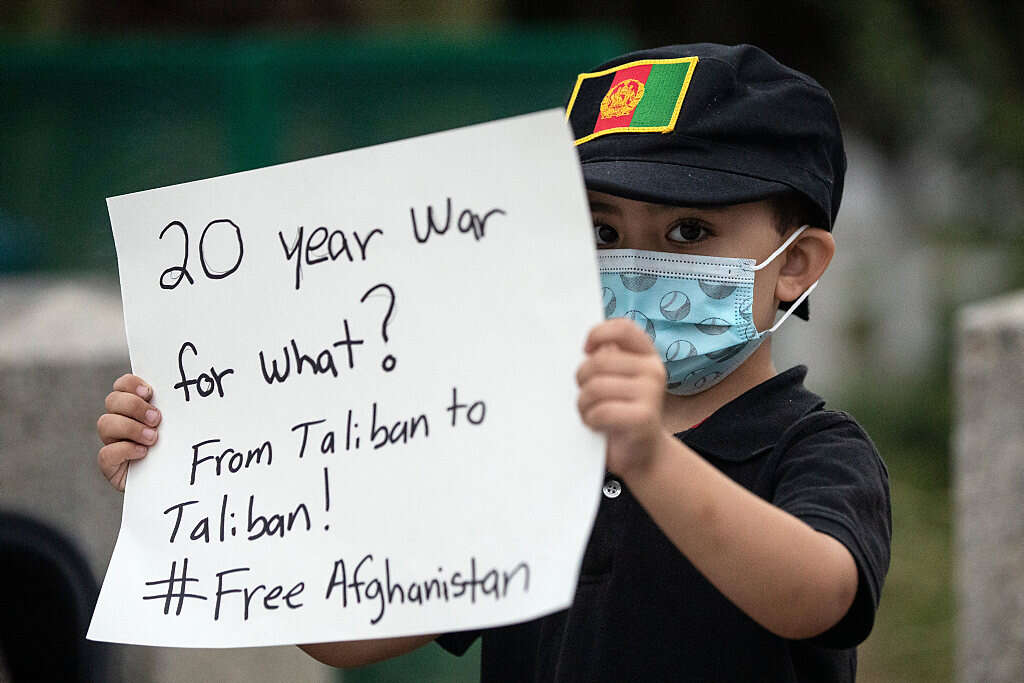
This was just a few months after the rushed American withdrawal from Saigon after a decade of military involvement in Vietnam. Even though Washington in the end honored its commitment to establish and man the early warning system in Sinai, one can not ignore the similarities between the withdrawal of the American superpower from Vietnam, which showed weakness and dealt a terminal blow to its standing and prestige, and its no-less embarrassing flight from Afghanistan under the presidency of Joe Biden. Afghanistan has raised questions about the reliability and determination of the American eagle to provide inspiration and security to allies dealing with radical challenges such as Iran. This in an age where within the American arena there is growing insulation and hesitancy to engage in conflict.
These doubts, which the Afghan tragedy has exposed with full force, serve as the backdrop to Prime Minister Naftali Bennett's first visit to Washington. From the point of view of the timing of his trip to the American capital, lady luck has shined on the prime minister. The shadow of the humiliating American withdrawal from Kabul will hover over the White House this week, even if it is not explicitly mentioned in talks between the two leaders. This cloud will force President Biden to make an extra effort to persuade Bennett that the special ties between Israel and the United States remain firm, and that no conclusions should be drawn from the Afghan arena when it comes to Iran.
In other words, Biden can be expected to claim that even if a return to the nuclear accords between the powers and Tehran is agreed on, this will not come at the expense of his Israeli partner or harm its security. The fact that Bennett, contrary to the approach adopted by his predecessor Benjamin Netanyahu toward the Obama-Biden administration, has adopted a policy that is less pugilistic and contrarian regarding the Iranian nuclear issue, and that instead of an overt diplomatic and public campaign against the nuclear agreement currently being negotiated in Vienna, he has chosen to focus his efforts on maximal coordination with the administration and attaining military and diplomatic compensation - if an agreement is reached - may also contribute to a conciliatory and cordial atmosphere.
Thus, the orders to 'all the President's men' in their contacts with the prime minister over the next few days will be to deal with him with kid gloves when it comes to diplomatic and strategic affairs and to take into account the fragile nature of the current coalition. Moreover, while President Biden's relations with Netanyahu over the past decade were highly charged, Prime Minister Bennett, despite his fundamental political and diplomatic stance, comes with a clean slate for the president.
In addition, one of the aims of the visit will be a visible effort from Bennett to rehabilitate Israel's relations with the Democratic party after a decade in which it has put all its efforts in the support of the Republican camp while neglecting its traditional ties with the Democrats. Indeed, after the chill that characterized Jerusalem's ties with the Democrats and their leader Barack Obama, and after the golden age of ties between Prime Minister Netanyahu and the Republican President Donal Trump, Israel's new government is signaling that it intends to renew the broad bi-partisan partnership and that it desires to build bridges to Democratic fortresses, including those that over the past decade have become growingly opposed to Israeli policies.
With regard to the essence of the visit, in addition to the Iranian issue, which is likely to be the main element along with an American effort to calm Israel's fears and offer it compensation, one can assume that the overall regional arena, which is directly impacted by the United States withdrawal from the Middle East, will be discussed at length.
In this context as well, we can expect to see full coordination between Washington and Jerusalem. In the current era when the world's only superpower is abandoning the dimension of hard military power and physical presence as the foundation of its strategic operations, the importance of regional partnerships in the pro-Western camp as the only means to curb (with American assistance from over-the-horizon) the radical front that sprawls from Kabul to Damascus and Beirut is paramount.
The fact that with Biden's encouragement the strategic infrastructure has been laid for a new 'peripheral alliance' of this nature, with Israel, Egypt and Jordan (together with the partners in the Abraham Accords) at its core is therefore in line with the American desire to stabilize the region and strengthen the various elements of this braking bloc.
Subscribe to Israel Hayom's daily newsletter and never miss our top stories!
Thus, in view of Israel's centrality and proven equity in this critical bloc, we can expect the president, on Bennett's first trip to Washington, to employ promises and temptations, and, at the same time, to avoid exerting pressure on the prime minister, including on the Palestinian issue.
The only area of conflict that may arise and dampen somewhat the euphoria over the beginning of what is expected to be a beautiful friendship is with regard to the Chinese giant. With the after effects of the Phalcon spy plane crisis still firmly seared in collective memories in Beijing and Jerusalem, and with the Biden administration, as with the Trump administration before it, seeing China as its main diplomatic and strategic threat, one can assume that the administration will recommend to Bennett that he act with extreme caution before giving a green light to Chinese companies to continue with their takeover of data-rich transport and technology infrastructures.
For his part, Bennett can be expected to try and avert this bump in the road by adopting an approach straight out of the text book of Israel's first prime minister, David Ben Gurion - 'walking between the raindrops' while trying to find a balance between continued extensive trade and technology ties with Beijing without crossing Washington's red line. One can only hope that Bennett is not blinded by the generosity of his hosts or intoxicated by Uncle Sam's embrace.
Following the collapse in Afghanistan, it needs to be clear to Israel that gestures are not an adequate alternative to a reliable, robust and sober American policy - first and foremost on the Iranian issue.
.


