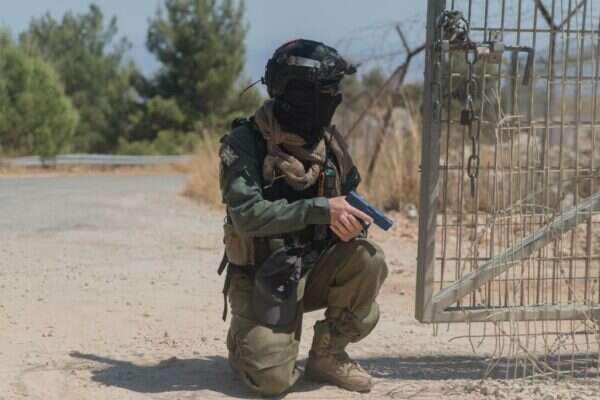
They came at dawn. Approaching the military base is silence, they set up a ladder and were on base grounds within minutes. Now almost nothing could have stopped them from harming soldiers, gathering critical intelligence, or stealing sophisticated weapons.
Follow Israel Hayom on Facebook and Twitter
Luckily, this time it was the members of the Red Unit – an elite special forces unit the sole purpose of which is to examine infiltration scenarios to military bases. Next time, it could be enemy forces.
Several weeks ago, Red Unit members carried out a large-scale exercise at the IDF Northern Command base in Safed. Although this was a nationwide exercise, the context cannot be ignored: Hezbollah – Iran's largest proxy in the Middle East – has stated, multiple times, that in a future conflict, it plans to overrun Israeli communities adjacent to the border, so an attempt by the Lebanon-based Shiite terrorist group to storm a military base, which if successful would be a huge achievement for it, is not a farfetched scenario.
Moreover, several attempts have been made in the past to infiltrate military bases in northern Israel, most notably a Nov. 25, 1897 attack dubbed "Night of the Gliders," which a Palestinian terrorist infiltrated into Israel from South Lebanon using a hand glider and was able to get onto a base near the border, killing six IDF soldiers and wounding eight others before being eliminated.
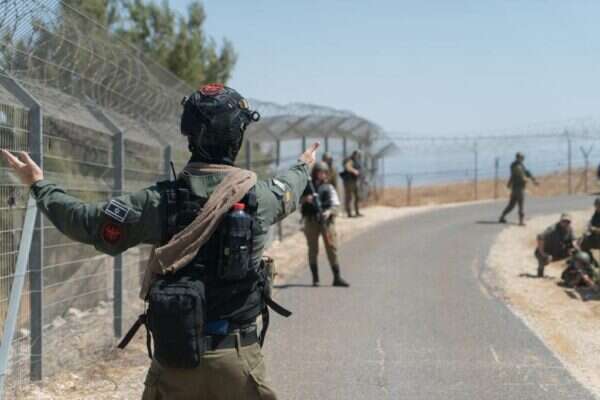
The Red Unit is unique in the Israeli military landscape, even for an elite unit. It comprises only eight members, all reservists who served in special forces and combat units and have a background in security, including some who held senior positions in the Israel Security Agency's Protective Security Department, which is responsible for protecting high-value individuals and locations in the country such as government officials, embassies, airports, and research facilities.
The team has only one objective: to teach and train the various bases in Israel how to best defend themselves. As such, in recent years, the unit has been responsible for the security of soldiers and various military facilities, including the Unit 8200 locations, Navy and Air Force bases, and the Negev Nuclear Research Center.
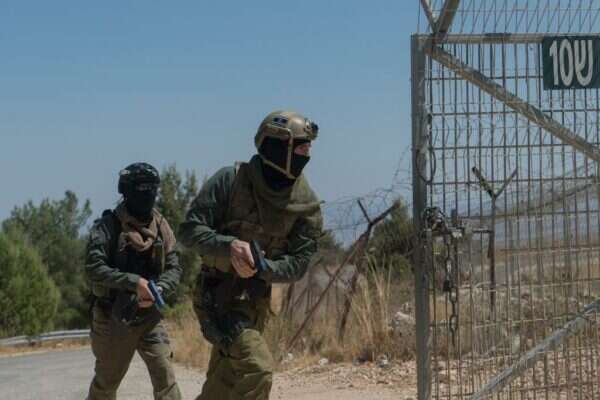
To infiltrate IDF bases, the Red Unit uses every imaginable method, including, forgery, fraud, manipulation, physical incursion, and tactical warfare - all of which are fully coordinated with base commanders.
With attempts to infiltrate military facilities, especially armories, on the rise, the IDF has formed a special unit tasked with dramatically improving on-base security through advanced infrastructure and means, fortifying armories and bunkers, investing extensive resources in technologies, and conducting hundreds of inspections of bases.
The idea of forming the unit came about a decade ago to three security experts - Nir Solovey, Guy Benita, and Captain (res.) Mickey Weinberg, who serves as the unit's commander.
The three realized that as reservists they could contribute to the IDF in the field of base defense, as they do in civilian life. Weinberg himself served the security details for prime ministers for about 20 years – from Yitzhak Shamir, through Yitzhak Rabin and Shimon Peres, to Benjamin Netanyahu – and he currently owns a private security company. If nothing else, this gives him the benefit of vast experience.
"We used to come in, execute a drill, leave the conclusions, and move on," Weinberg explained. "For the past two years, however, we have been operating within the Operations Directorate, which allows us to provide a package of products for the base.
"We can take a base, identify the gaps, and build a real plan that can be spread over six months. We look at the entire field of combat and shadow everyone, from the base commander, through the defense officer, to the last of the soldiers. At the end comes the exercise, which is the icing on the cake. Our goal is to improve every base we visit."
According to Weinberg, the unit's strength lies with what he calls its "boutique ability."
"We do not inspect a base rather we arrive and leave it in much better shape. We don't come to visit but to improve, to build a response for every unit. The IDF understands that an event [like the 'Night of the Gliders'] could happen again, in one way or another, and our goal is to train the soldiers – from the base guard to the base commander – to deal with an extreme event."
The head of the Security Division in the Operations Directorate Maj. Eyal Raz, explains that the capabilities provided by the Red Unit are critical and that its goal is to complete the range of operations the IDF has carried out on its bases in recent years.
"We are conducting a very significant campaign to improve the security of IDF facilities, and the team is providing the units with the tools necessary to defend bases," he said.
"They come to the unit, shadow it for weeks and prepare it for an exercise meant to raise the level of security. Afterward, they execute the drill, which involves the use of various means, including dummy weapons, smoke grenades, and more, to show soldiers how such a scenario would play out. It is important that they [soldiers] understand the scope of the threat."
Raz stressed that the Red Unit arrives at every base and every unit in the IDF, "Including classified units, Military Intelligences, Air Force and Navy bases. Every military body is drilled and naturally, the more strategic the facility, the more frequent the visits are. I've been in the security business since 2005, and I don't remember this type of investment in base security. We're in a much safer place than we used to be.
"We are constantly with our hand on the pulse [of event] – that's our job, to be vigilant at all times and to make sure we don't let our guard down, literally. We understand the threats, deal with them and examine them constantly," he stressed. "Our job is to make sure that people are prepared for such an incident."
Subscribe to Israel Hayom's daily newsletter and never miss our top stories!