Internet and social media giants Google, Facebook, Twitter, and YouTube slapped sanctions on Russian media outlets on Sunday, saying they would bar their earnings on their platforms over the Kremlin's invasion of Ukraine.
Follow Israel Hayom on Facebook, Twitter, and Instagram
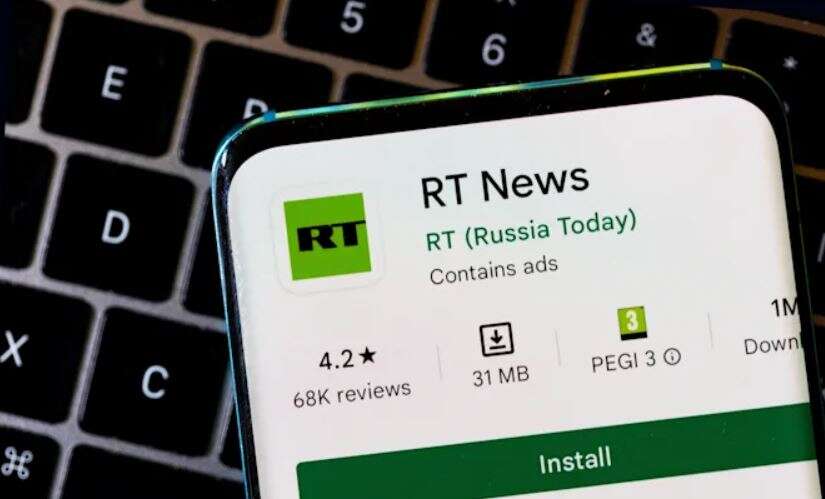
Google banned downloads of Russian state-owned media outlet RT's mobile app on Ukrainian territory at the request of the government in Kyiv.
"In response to the war in Ukraine, we are pausing Google monetization of Russian state-funded media across our platforms," Google spokesman Michael Aciman said in a statement.
"The RT News app is no longer available for download on Google Play in Ukraine. We're actively monitoring new developments and will take further steps if necessary."
Facebook and YouTube were quick to follow suit, blocking Russian state media from running ads on their platforms. Twitter was next, saying it was suspending all advertising in Ukraine and Russia.
Meta's security policy chief Nathaniel Gleicher tweeted on Friday: "We are now prohibiting Russian state media from running ads or monetizing on our platform anywhere in the world."
1/ We are now prohibiting Russian state media from running ads or monetizing on our platform anywhere in the world. We also continue to apply labels to additional Russian state media. These changes have already begun rolling out and will continue into the weekend.
— Nathaniel Gleicher (@ngleicher) February 26, 2022
"We are closely monitoring the situation in Ukraine and will keep sharing steps we're taking to protect people on our platform. In addition to rolling out Locked Profiles in Ukraine, we have also temporarily removed the ability to view and search the "Friends" list for Facebook accounts in Ukraine to help protect people from being targeted.
"On Instagram, we've been rolling out a privacy and account security alert in Ukraine with specific steps on how to protect your account," Gleicher wrote. "Our teams continue to monitor threats and will continue taking steps to help protect people. Stay safe out there!"
On Saturday, Google-owned YouTube said it was also suspending the earning ability of several Russian state-media channels, adding it was also limiting recommendations to those channels and is blocking them entirely in Ukraine, according to a YouTube spokesperson.
Slamming Facebook's "censorship," Russia's Roskomnadzor, the Federal Service for Supervision of Communications, Information Technology and Mass Media, called on Google to remove the sanctions and demanded all restrictions imposed on the Russian-language YouTube channels of media outlets RBC, TV Zvezda and Sputnik be lifted immediately.
Meta's Vice President of Global Affairs Nick Clegg told NPR that Russian authorities had ordered the company to stop labeling and fact-checking posts from four Russian state-owned media organizations.
"We refused. As a result, they have announced they will be restricting the use of our services," Clegg said in a statement. "Ordinary Russians are using our apps to express themselves and organize for action. We want them to continue to make their voices heard, share what's happening, and organize through Facebook, Instagram, WhatsApp and Messenger."
The Russian Government is already throttling our platform to prevent these activities. We believe turning off our services would silence important expression at a crucial time.
— Nick Clegg (@nickclegg) February 27, 2022
In retaliation for what the regulator described as violations of Russian law and human rights, it said it was limiting access to Facebook in the country.
Twitter, which banned advertising from state-controlled media in 2019, also took action, saying it was temporarily pausing all ads in Ukraine and Russia "to ensure critical public safety information is elevated and ads don't detract from it."
TikTok has seen a surge of misleading videos regarding the Ukraine crisis and Russian forces' success in the invasion of Ukraine and the platform has been flooded with posts by Russian-affiliated groups pushing fake new. It is unclear what the video-focused social networking service is doing to curb them.
The online restrictions dealt another financial blow to Russia. on Saturday, the United States, Britain, Europe and Canada announced several key Russian banks would be cut off the SWIFT global payments system, deploying what analysts and diplomats say was a "financial nuclear weapon" against Russia over its attack on Ukraine.
Russia's large banks are deeply integrated into the global financial system, meaning any sanctions on the biggest institutions could be felt far beyond its borders. Cutting them from SWIFT would make transactions more difficult and costlier. The move could therefore inflict a crippling economic blow on Moscow, but also cause much pain to their own companies and banks.
According to Business Insider, as the SWIFT ban came into effect, cards issued by several Russian banks that have been hit by sanctions were blocked from Apple and Google's payment services.
Apple Pay and Google Pay have declined cards affiliated with VTB Group, Sovcombank, Novikombank, Promsvyazbank, and Otkritie, Russia's Central Bank said.
Those banks' customers wouldn't be able to use their cards abroad, or to make online payments to companies registered in countries that have issued sanctions, the bank said.
Subscribe to Israel Hayom's daily newsletter and never miss our top stories!