Friday Dec 5, 2025
NEWSLETTER
www.israelhayom.com
  • Home
  • News
    • Israel
    • Israel at War
    • Middle East
    • United States
  • Opinions
  • Jewish World
    • Archaeology
    • Antisemitism
  • Lifestyle
    • Food
    • Travel
    • Fashion
    • Culture
  • Magazine
    • Feature
    • Analysis
    • Explainer
  • In Memoriam
www.israelhayom.com
  • Home
  • News
    • Israel
    • Israel at War
    • Middle East
    • United States
  • Opinions
  • Jewish World
    • Archaeology
    • Antisemitism
  • Lifestyle
    • Food
    • Travel
    • Fashion
    • Culture
  • Magazine
    • Feature
    • Analysis
    • Explainer
  • In Memoriam
www.israelhayom.com
Home Archaeology

Elevator project takes archaeologists down through Old City's history

Project on accessibility project at Western Wall slows after salvage excavations unearth a wealth of finds from a two-millennia period.

by  AP and ILH Staff
Published on  07-20-2022 14:40
Last modified: 07-20-2022 14:43
Elevator project takes archaeologists down through Old City's historyAP/Maya Alleruzzo

Hebrew University archaeologists Dr. Oren Gutfeld, left, and Michal Haber, pose at site of a Jewish ritual bath or mikveh, near the Western Wall in the Old City of Jerusalem on July 17, 2022 | Photo: AP/Maya Alleruzzo

Share on FacebookShare on Twitter

Installing an elevator doesn't normally involve a 2,000-year plunge into an ancient city's history. But in Jerusalem, even seemingly simple construction projects can lead to archaeological endeavors.

Follow Israel Hayom on Facebook, Twitter, and Instagram

Archaeologists from the Hebrew University of Jerusalem say they have made numerous discoveries, including an ornate first-century villa with its own ritual bath, after a project began to increase access for disabled people to the Western Wall.

The villa, located footsteps from where the biblical Jewish Temples stood, was uncovered during several years of salvage excavations in the Jewish Quarter of the Old City.

The Western Wall is the holiest site where Jews can pray and millions of worshipers and tourists visit it each year. But to get to the site from the adjacent Jewish Quarter, visitors typically have to descend 142 steps, or take a long detour around the city walls to one of the nearby gates.
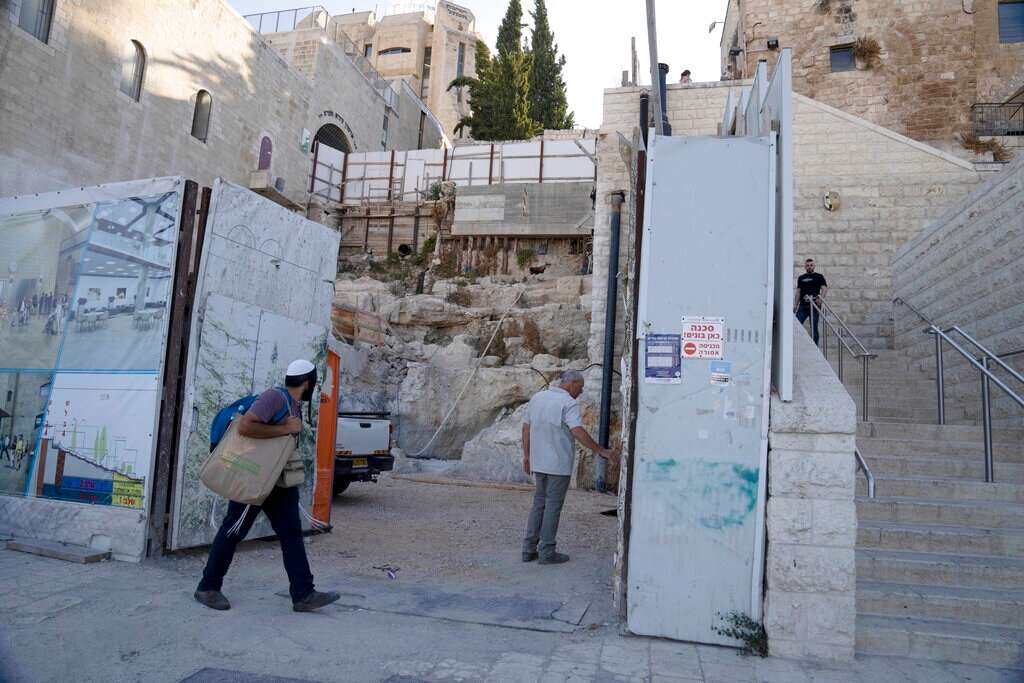
In 2017, the Jewish Quarter Reconstruction and Development Company got the green light to begin construction of two elevators to let visitors make the 26-meter (85-foot) descent to the Western Wall easier for visitors AP/Maya Alleruzzo

In 2017, the Jewish Quarter Reconstruction and Development Company got the green light to begin construction of two elevators to let visitors make the 26-meter (85-foot) descent with greater ease. The location was a narrow sliver of largely undeveloped slope abutting the existing staircase on the eastern edge of the Jewish Quarter.

"The Western Wall is not a privilege, it's elemental for a Jew or for any person from around the world who wants to come to this holy place," said Herzl Ben Ari, CEO of the development group. "We have to enable it for everybody."

However, like modern development projects in other ancient cities, such as Istanbul, Rome, Athens and Thessaloniki, archaeological finds slowed progress to a crawl.

"This plot of land where the elevator is going to be built remained undisturbed, giving us the great opportunity of digging through all the strata, all the layers of ancient Jerusalem," said Michal Haber, an archaeologist from the Hebrew University of Jerusalem.

Five years into the undertaking, the archaeological work is nearing completion, but the elevators are only expected to be brought online in 2025.

Subscribe to Israel Hayom's daily newsletter and never miss our top stories!

During their dig, the archaeologists carefully peeled back successive layers of construction and debris that had accumulated over two millennia, over nine meters (30 feet) in total. Historical waypoints included Ottoman pipes built into a 2,000-year-old aqueduct that supplied Jerusalem with water from springs near Bethlehem; early Islamic oil lamps; bricks stamped with the name of the 10th Legion, the Roman army that besieged, destroyed and was afterwards encamped in Jerusalem two millennia ago; and the remains of the Judean villa from the final days before the ancient Jewish Temple's destruction in the year 70 CE.
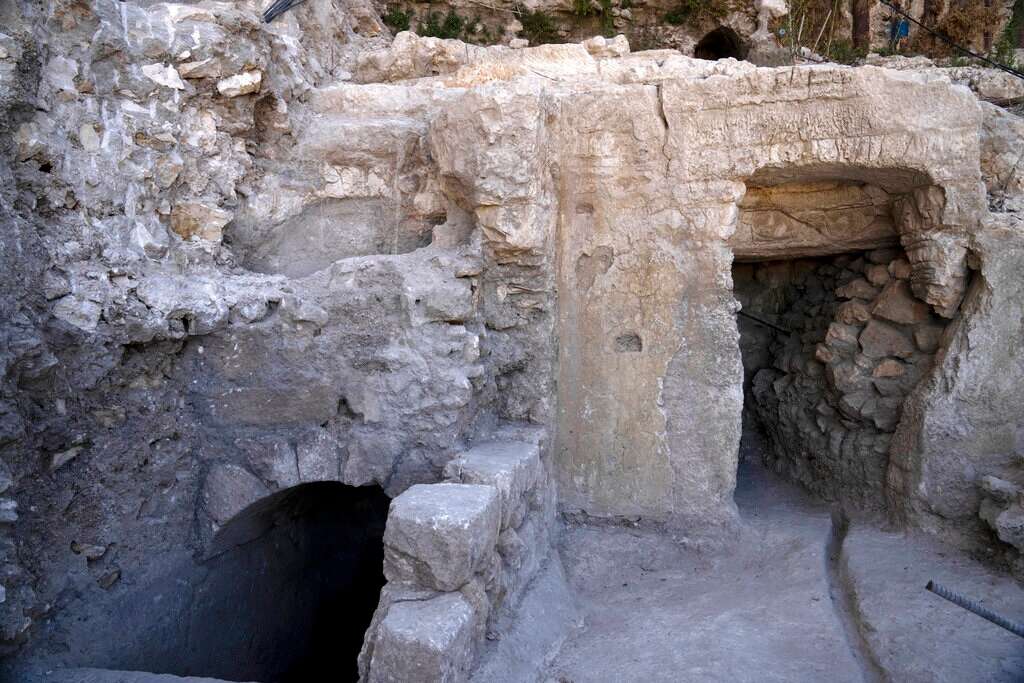
"We are in the wealthy neighborhood of the city on the eve of its destruction," archaeologist Michal Haber says AP

Archaeologist Oren Gutfeld said they were surprised to uncover traces from Jerusalem's reconstruction as the Roman city of Aelia Capitolina in the 2nd century.

Fragments of frescoes and intricate mosaics from the villa indicated the wealth of the home's occupants. But upon reaching bedrock, Gutfeld and Haber's team made one last find: a private mikveh (Jewish ritual bath) hewn into the limestone mountainside and vaulted with enormous dressed stones.

Haber said the most significant thing about the mikveh was its location overlooking the Temple esplanade.

"We are in the wealthy neighborhood of the city on the eve of its destruction," she said.

Related Posts

$20B shipwreck: Legal war erupts over legendary treasure(Falklands Maritime Heritage Trust/National Georgraphic via AP

$20B shipwreck: Legal war erupts over legendary treasure

by Miri Weissman

The ship, which carried approximately 11 million gold and silver coins, was estimated by Sky News to be worth about...

King Tutankhamun's tomb at risk of collapse

King Tutankhamun's tomb at risk of collapse

by ILH Staff

The 3,300-year-old tomb is currently in its most fragile state since its discovery in 1922. Experts believe the cause lies...

Ancient underground synagogue discovered in GolanDr. Mechael Osband

Ancient underground synagogue discovered in Golan

by Roi Bet Levi

The Golan region, where the synagogue is located, was formerly a Jewish area during the Roman and Byzantine periods –...

Menu

Analysis 

Archaeology

Blogpost

Business & Finance

Culture

Exclusive

Explainer

Environment


Features

Health

In Brief

Jewish World

Judea and Samaria

Lifestyle

Cyber & Internet

Sports


Diplomacy 

Iran & The Gulf

Gaza Strip

Politics

Shopping

Terms of use

Privacy Policy

Submissions

Contact Us

About Us

The first issue of Israel Hayom appeared on July 30, 2007. Israel Hayom was founded on the belief that the Israeli public deserves better, more balanced and more accurate journalism. Journalism that speaks, not shouts. Journalism of a different kind. And free of charge.

All rights reserved to Israel Hayom

Hosted by sPD.co.il

  • Home
  • News
    • Israel at War
    • Israel
    • United States
    • Middle East
    • Sports
  • Opinions
  • Jewish World
    • Archaeology
    • Antisemitism
  • Lifestyle
    • Food
    • Travel
    • Fashion
    • Culture
  • Magazine
    • Feature
    • Analysis
    • Explainer
    • Environment & Wildlife
    • Health & Wellness
  • In Memoriam
  • Subscribe to Newsletter
  • Submit your opinion
  • Terms and conditions

All rights reserved to Israel Hayom

Hosted by sPD.co.il

Newsletter

[contact-form-7 id=”508379″ html_id=”isrh_form_Newsletter_en” title=”newsletter_subscribe”]

  • Home
  • News
    • Israel at War
    • Israel
    • United States
    • Middle East
    • Sports
  • Opinions
  • Jewish World
    • Archaeology
    • Antisemitism
  • Lifestyle
    • Food
    • Travel
    • Fashion
    • Culture
  • Magazine
    • Feature
    • Analysis
    • Explainer
    • Environment & Wildlife
    • Health & Wellness
  • In Memoriam
  • Subscribe to Newsletter
  • Submit your opinion
  • Terms and conditions

All rights reserved to Israel Hayom

Hosted by sPD.co.il