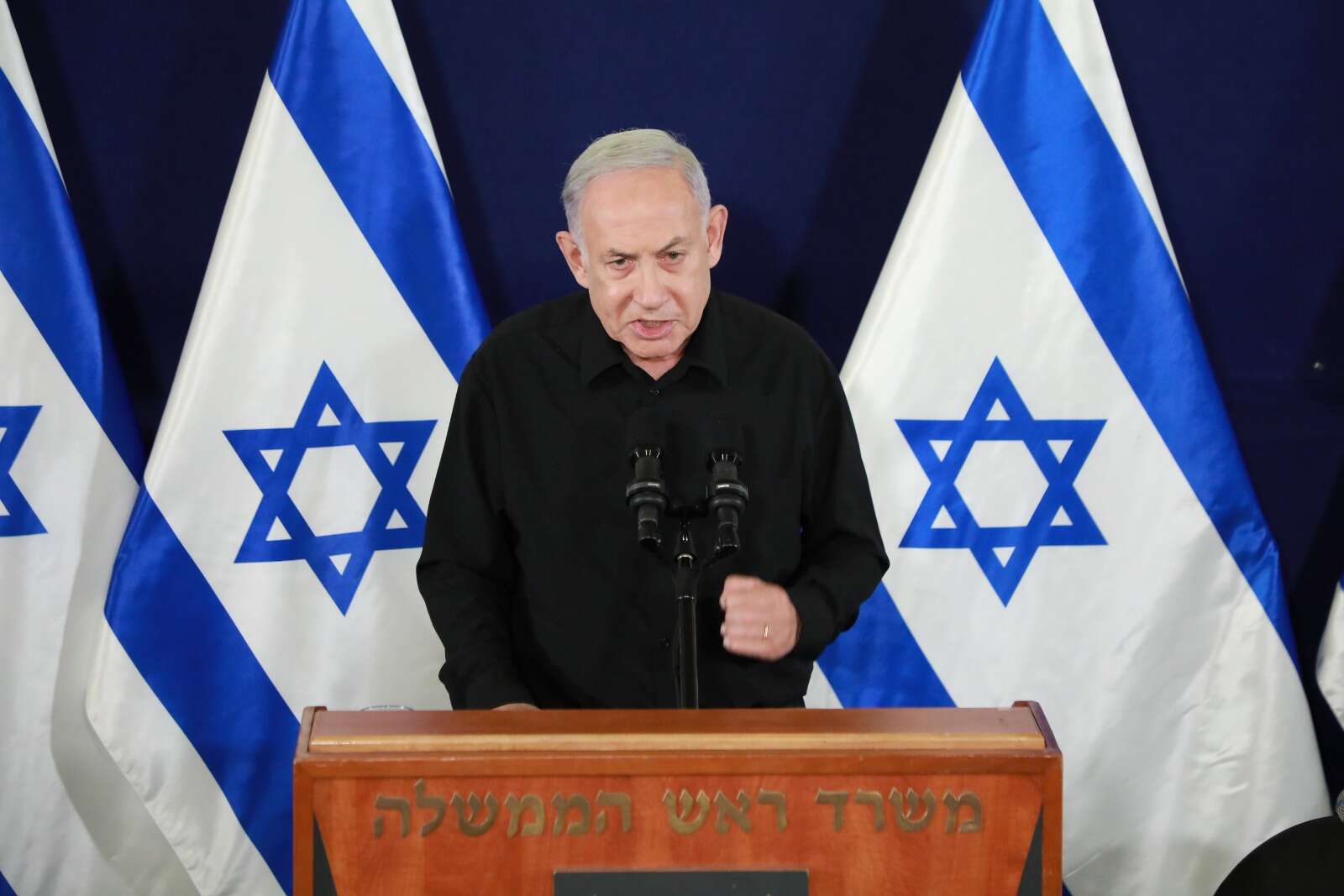
Let's start from the end: Prime Minister Benjamin Netanyahu did the right thing when he deleted the tweet against the heads of the Shin Bet and the IDF Intelligence Directorate. Netanyahu will do well if, from now on, he is careful about what he says and what those close to him say and brief the media about. You cannot demand that scrutiny of you be suspended while simultaneously stabbing the backs of the commanders. Israel is at war, and it must unite in order to win; this particularly applies to the person who runs our lives and shapes our future here.
Follow Israel Hayom on Facebook, Twitter, and Instagram
And now, to the facts. Netanyahu is correct in his claim that no one had given him an early warning or shown him signs about Hamas' intention to launch a war on October 7. He is also correct in claiming that the entire security establishment – without exception – believed that Hamas was deterred and was seeking a long-term arrangement, even in the days leading up to the attack. He is also right in saying that the intelligence agencies' job was to sound the alarm – their ultimate mission – and that is why this is a resounding failure.
However, Netanyahu is wrong in narrowing the discussion to this specific aspect. Hamas does not operate in a vacuum, and this attack did not emerge out of nowhere. After he came back to power for the second time in 2009, Netanyahu made sure to prop up Hamas as an alternative to the Palestinian Authority. He was warned countless times that this was a dangerous plan; that instead of strengthening pragmatic elements, he was strengthening those who would never recognize the existence of the State of Israel.
Netanyahu's name is attached to the deal in which 1,027 prisoners, including Hamas' Gaza leader Yahya Sinwar, were released in exchange for Gilad Schalit. He promised to eliminate Hamas and claimed that Hamas is the same as ISIS, yet continued to effectively allow the organization to build up through various means, including money, supply trucks, fuel, electricity, labor, and more. He, who saw Hamas as a devil, should have destroyed it, but during his long rule, he did the opposite: It thrived and became a monster. Netanyahu effectively legitimized Hamas, and that allowed a misconception to form around it.
Furthermore, since Operation Protective Edge in 2014, all heads of the security services have called for the elimination of the top leadership of Hamas, but Netanyahu consistently rejected their recommendations. He preferred quiet but failed to secure it while trying to promote long-term arrangements. The archives are full of warnings that this was a recipe for disaster; that Israel was playing for time; that Gaza would explode one day; and that the main challenge for Israel was not Iran or the northern front – but the Palestinians. Netanyahu acknowledged all these arguments but ignored them.
But the worst part was this year: The security establishment warned him at every opportunity that the judicial reform crisis was jeopardizing Israel's security by creating instability. The defense minister sounded the alarm and was fired (then reappointed); the head of the Research Division at the Military Intelligence Directorate wrote four warning memos the IDF chief of staff asked to brief the Diplomatic-Security Cabinet (and was rejected); and, if all this was not enough – Israel suffered a multi-front attack from Lebanon, Syria, Gaza, and the West Bank during the Passover, but failed to draw any conclusions.
In July, on the day the first bill in the judicial reform package was passed, the chief of staff requested a meeting with Netanyahu in a last-ditch attempt to persuade him. The prime minister refused and only met him after the vote. Simultaneously, the heads of the IDF intelligence and operations directorates came to the Knesset to explain to cabinet ministers the security establishment chiefs had been warning against. The legislation was tearing apart society and harming the IDF's readiness, and Israel's enemies could exploit it. Both IDF officers sat in the Knesset for hours, but the ministers would not talk to them.
These concerns were clear as day; you could hear them everywhere. They were a strategic warning, but they were met with total indifference. In fact, ministers competed among themselves who could outdo the other in slamming the IDF and its commanders. The result was that the IDF had to invest valuable time in internal matters rather than keeping a watchful eye on the external enemy.
The IDF and the Shin Bet will not be able to evade responsibility for the disaster of Simchat Torah. Everyone who was in the chain of command will pay the price: the chief of staff and the head of the Shin Bet, all the top commanders of the Military Intelligence Directorate, the Southern Command, and the Shin Bet field office in the south, as well as rank and file officials.
These agencies will also require a thorough overhaul in everything related to intelligence collection, its analysis, and in the confidence, they make their assessments; major changes will also have to be taken in bolstering Israel's defensive arrays so that there won't be a repeat of the massive lapse that allowed the Oct. 7 attack to culminate in such horrific results.
But Netanyahu will not be able to shift blame, not only because of the responsibility he attributed to Ehud Olmert after the Second Lebanon War as someone who stood at the top. He had 15 years to ask, to wonder, to change – but he chose to do nothing due to a fusion of arrogance and negligence. The result: 1,400 dead, 239 captives, hundreds unaccounted for, thousands displaced from their homes, unprecedented destruction, a war whose end is unclear, and significant damage to Israel's deterrence. This all happened on his watch."
Subscribe to Israel Hayom's daily newsletter and never miss our top stories!