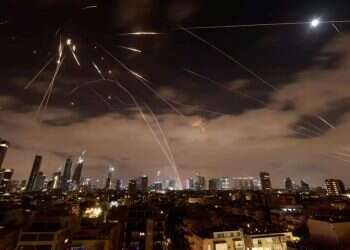
The death toll rises by the hour. Hundreds of thousands of people don't have enough food and water. Israel has been pounding the Strip with airstrikes. Thousands of civilians have been killed. Thousands more have fled their homes, but there's no way out. Thousands of Palestinians are caught in a bottleneck at the Rafah Crossing. Even before this most recent war, Gaza was a difficult place to live.
A brief history of the Gaza Strip
In the 1948 Israeli War of Independence, Israel fought off five Arab armies and came out victorious. After the war, Jordan conquered the West Bank and East Jerusalem, and the Gaza Strip went to Egypt. Then came the 1967 Six-Day War that changed everything. Israel fought multiple Arab armies again and came out with four times as much land as before. This marked the start of what some call the "occupation."
The First Intifada 1987 – 1993
Gaza's four hundred thousand Palestinians were now under Israeli rule. With the encouragement of the Israeli government, Israeli citizens began building communities, also called settlements, in the West Bank and Gaza. After twenty years of Israeli rule, tensions had reached a boiling point. The solution was the First Intifada or uprising. Amid the chaos and violence, a new Islamist group called Hamas was born. Their so-called resistance was extremely violent, but not everybody in Gaza supported Hamas.
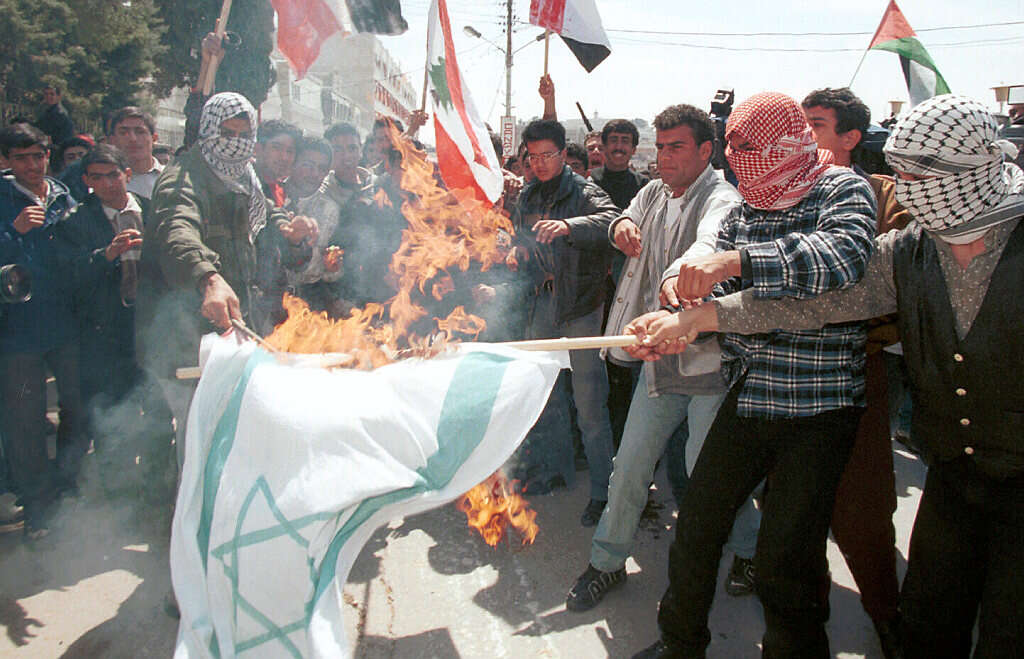
The Second Intifada 2000 – 2005
The Oslo Accords were controversial peace agreements between Israel and the Palestinians. These accords gave the Palestinian people some measure of autonomy for the first time. Gaza and parts of the West Bank were now governed by the Palestinian Authority (PA) under Yasser Arafat. However, the promise of the peace process never materialized. The PA and its ruling political party, Fatah, were plagued by corruption and a record of terrorism, leading to the Second Intifada.
The disengagement and Palestinian elections in Gaza
Prime Minister Ariel Sharon made the highly controversial decision to withdraw all Israeli citizens from Gaza in 2005 unilaterally. Hundreds of thousands opposed this ruling and even chained themselves to their homes in Gaza. The IDF had to rip Israelis from their homes physically, and by mid-September, not a single Israeli remained in Gaza. Fatah was now in charge, but not for long. As Palestinians prepared to vote in 2006, many prioritized eliminating corruption. To everyone's surprise, Hamas won the elections. When Fatah, with the help of the US, attempted to retake control by force, Hamas showed its teeth and has been ruling Gaza ever since.
The Hamas charter and Hamas rule in Gaza
Since 2007, Hamas has controlled the Gaza Strip. Their charter is openly antisemitic, claiming that Zionists want to take over the world and are behind various global issues. However, Hamas didn't win a majority of seats in the Palestinian parliament just because of their antisemitic views. Hamas' spiritual leader, Sheikh Ahmed Yassin, had spent his life building Gaza's infrastructure before turning to terrorism. The people appreciated the schools, mosques, and clinics that Hamas built.
Egyptian and Israeli Blockade
Gaza shares a border with Israel and Egypt, both of whom immediately closed their borders after Hamas' coup. Israel isn't keen to live next door to a government that's pledged to its destruction. Egypt's issue with Hamas stems from its connection to the Muslim Brotherhood, an Islamist group opposed to the Egyptian government. The blockade meant many Gazans who had worked in Israel now found themselves unemployed or facing long lines at the border crossing. Some Gazans were able to get out into Egypt via lax border policies.

Hamas tunnels in Gaza
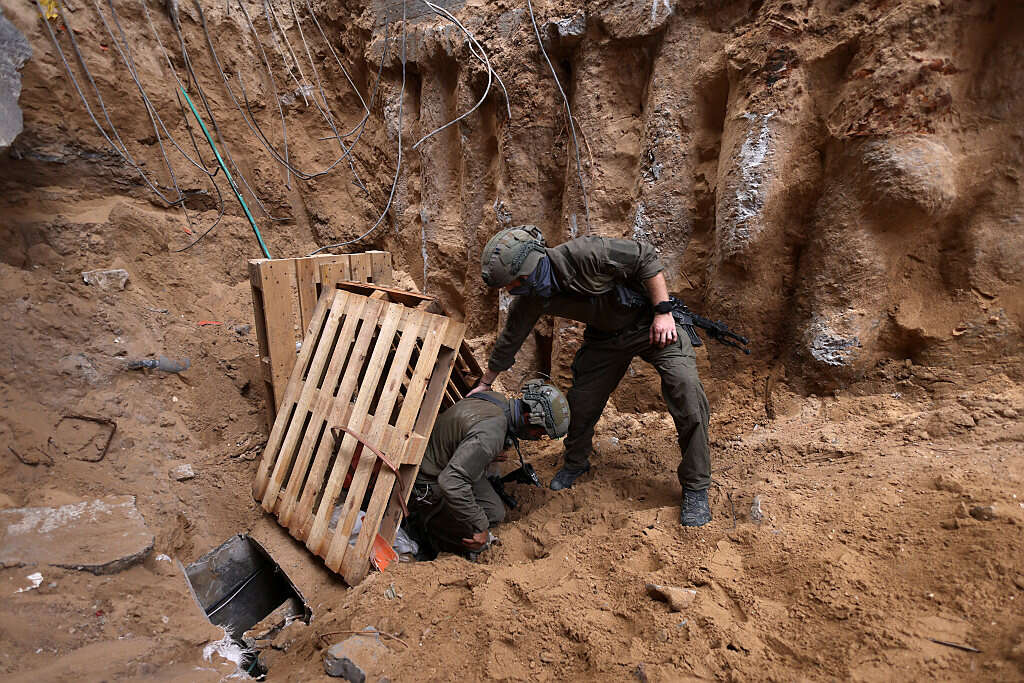
Hamas didn't rely solely on the Egyptian government's inconsistent policies to smuggle weapons. They had an ace up their sleeve: terror tunnels. These tunnels are both sophisticated and highly dangerous. Children are often used to dig these tunnels, which can collapse at any time. The tunnels were an important part of the Gazan economy, bringing in all sorts of goods. However, building these tunnels cost millions of dollars and used supplies that could have been used for other civilian purposes.
Water infrastructure in Gaza
The water infrastructure in Gaza is a mess. Gaza has one independent source of fresh water, an aquifer that has been polluted and depleted. 96% of its water is now undrinkable. Gaza doesn't have sufficient infrastructure to purify, desalinate, and filter their water. This is partly due to Hamas' constant wars with Israel. Rather than rebuild or invest in Gaza's urgent water and sanitation needs, Hamas has chosen to further destroy Gaza's limited infrastructure, turning water pipes into rockets.
Debt and economic corruption
The average Gazan lives on less than $13 USD a day and lacks sufficient water, electricity, sanitation facilities, and food. They have no bomb shelters and nowhere to run. Gazans see exactly what Hamas chooses to do with the money they receive from abroad. Hamas forces businesses to pay protection money, but this money isn't used to build infrastructure. Hamas insists that the international community, not the local government, is responsible for Gaza's civilians.
Hamas leadership's extravagant lifestyle
Hamas' political chief, Ismail Haniyeh, lives in Qatar and owns multiple lavish properties on the Gazan coast. His fortune is modest compared to his predecessors. Khaled Mashaal's net worth is estimated to be between two and five billion dollars. Ordinary people in Gaza are sick of being exploited. The Hamas terrorists who poured into southern Israel on October 7 had plenty of practice killing civilians because they've done it to their own people as well.
Hamas executions of Palestinians
Hamas executes people in front of their families. Protests are often violently broken up. In March 2019, young Gazans took to social media and the streets under the slogan, "We want to live." Hamas security forces violently broke up these protests. It's forbidden to report transparently, be anti-war, or be pro-peace in Gaza. Gazan peace activists like Rami Aman get arrested, tortured, and silenced.
Many Palestinians were asking why they were not seeing the direct benefits of the millions of dollars that Hamas has been getting from Qatar. Hamas used batons and fired live ammunition into the air to break up the crowds. LGBTQ Palestinians have to live in secret. Undercover Hamas operatives lure gay men with fake social media profiles and then torture them. Armed Hamas operatives enforce dress codes on women, even demanding that business owners dress their mannequins modestly. Women can't ride bikes or scooters. Polygamy is strongly encouraged. The people of Gaza hate their government, and it's not just women and young people who are repressed.
The Christian minority in Gaza
Gaza's tiny Christian minority has found itself in Hamas' crosshairs too. Gaza was home to roughly three thousand five hundred Christians in 2007. Since then, more than two-thirds have fled. Gazan Christians are disappearing. Violence has haunted Gaza's only Christian bookstore. Invasive questions and violence have made life unbearable for many Christians in Gaza.
Hamas prevents Gazans from fleeing
In the wake of the October 7 massacre, Israel has been pounding the Gaza Strip with airstrikes, trying to root out Hamas. Though the IDF has sent leaflets letting Gazan civilians know they need to flee in a certain direction, those who tried found themselves forcibly turned back by Hamas. The Israeli government has promised that the war will continue until Hamas surrenders or is destroyed. The innocent people in Gaza deserve better. Their leaders are too attached to their own power, corruption, and violence to let their people live.
What do Palestinians want when the war ends?
Young Palestinians have ideas for the future. They want a government that protects freedom of and from religion. They want to build up Gaza into the jewel of the Middle East. They want to live in peace with their neighbors. Above all, they just want to live. The long Israeli-Palestinian conflict has caused immense suffering. The people of Gaza deserve a chance to live freely and peacefully. We await the day we can meet as friends, not as soldiers or activists separated by a wall.