Friday Dec 5, 2025
NEWSLETTER
www.israelhayom.com
  • Home
  • News
    • Israel
    • Israel at War
    • Middle East
    • United States
  • Opinions
  • Jewish World
    • Archaeology
    • Antisemitism
  • Lifestyle
    • Food
    • Travel
    • Fashion
    • Culture
  • Magazine
    • Feature
    • Analysis
    • Explainer
  • In Memoriam
www.israelhayom.com
  • Home
  • News
    • Israel
    • Israel at War
    • Middle East
    • United States
  • Opinions
  • Jewish World
    • Archaeology
    • Antisemitism
  • Lifestyle
    • Food
    • Travel
    • Fashion
    • Culture
  • Magazine
    • Feature
    • Analysis
    • Explainer
  • In Memoriam
www.israelhayom.com
Home Analysis

The public doesn't really have influence on hostages' fate

The government is certainly responsible for the deaths of the hostages, but no more, and certainly no less, than its responsibility for Oct. 7 as a whole.

by  Roni Eitan/Makor Rishon
Published on  09-02-2024 06:00
Last modified: 09-02-2024 12:54
The public doesn't really have influence on hostages' fateAhmad Gharabli/AFP

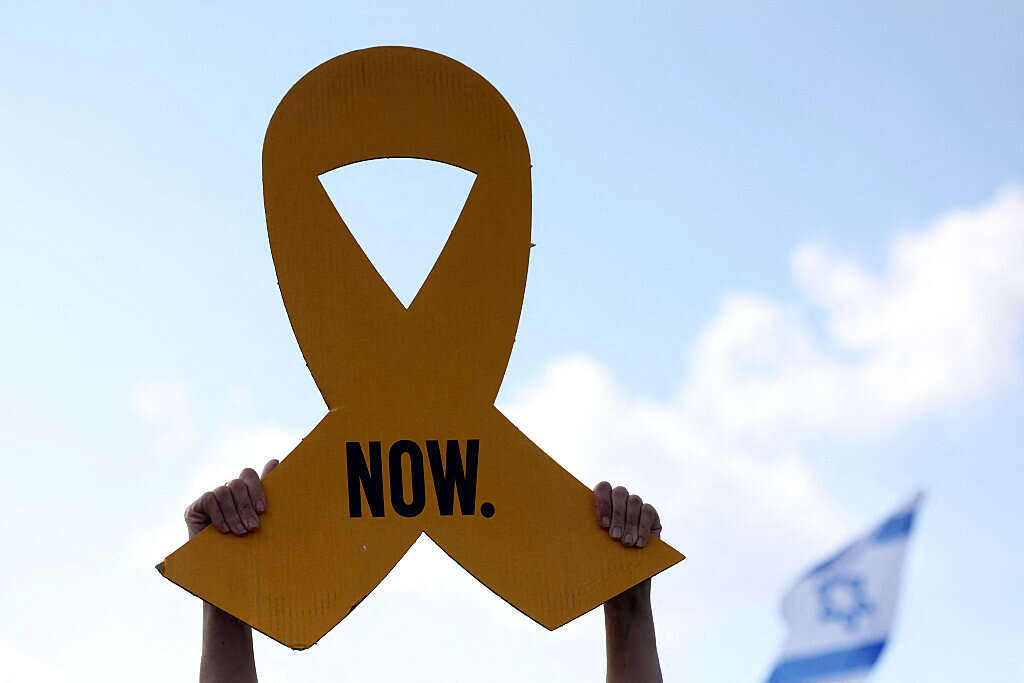
A protester raises a cutout in the shape of a yellow ribbon in support of the Israeli hostages held by the Hamas terrorist organization in the Gaza Strip | Photo: Ahmad Gharabli/AFP

Share on FacebookShare on Twitter

The government is certainly responsible for the deaths of the hostages, but no more, and certainly no less, than its responsibility for Oct. 7 as a whole. The bulk of its culpability lies in the failure on that day itself, and less in what transpired afterward, at least regarding the hostages.

The Israeli government, Israel Defense Forces, and all those in positions of authority failed catastrophically to foresee the attack and to be prepared for it, or indeed for any major assault, before it occurred. This led us to a situation where dozens of Israelis are held captive by a ruthless enemy.

The day when approximately 1,200 Israelis were murdered and about 200 were kidnapped is the foundation of this failure. From there, we arrived at a situation where we are largely dependent on Hamas' "goodwill" in most aspects. Anyone examining the events should have long since understood that such goodwill never existed and never will. This is the core of the colossal failure. Anything beyond that is primarily the fruit of our frustrations and our preconceived political and ideological assumptions.

Hamas has consistently rejected any deal since November. With or without a Ramadan ceasefire, with or without Philadelphi, with delays in entering Rafah or after entering Rafah – ultimately, they hold the hostages, they decide whether to keep them alive or murder them, and they are, at the immediate level, the only ones who can control their fate. If the US administration is now openly saying that Hamas is the refuser, there is no logic in not believing it.

The notion that we, as a state, sometimes have no solution when there is another party with a will no less than ours to achieve the opposite, is unbearable for the average Israeli. Hamas holds the hostages in a way that makes a military rescue almost impossible. Hamas maintains positions regarding the continuation of the war against Israel that make a deal with them, especially one that doesn't include a clear victory for the murderous organization that it is, almost impossible.

A demonstrator holds a banner reading "Bring them home" during a demonstration calling for the release of Israeli hostages held by Hamas, Tel Aviv, Dec. 9, 2023 (Marco Longari/AFP) Marco Longari/AFP

These are two frustrating and sad basic facts that must underpin any discussion. Not everything is in our hands. Not everything depends on the strength of our will. This doesn't mean nothing should be done – and Israel is acting, both in negotiations where Israel's proposals to Hamas are far-reaching, and through military means.

It's permissible to criticize, and it's permissible to argue that more should have been done. One can argue that this or that clause is not worth insisting upon, or that the military pressure is insufficient. But ultimately, if we want to remain a sane society, we must recognize the basic fact: due to the October 7 failure, the fate of the hostages, in general, is not in our hands. Hamas carried out the kidnapping of Israelis on a massive scale to psychologically break Israeli society, recognizing its sensitivity to human life, and to bring about its internal rupture, and perhaps even unconditional surrender in the ongoing war.

When Hamas sees the nature of the Israeli discussion on the subject, the polarization caused by the preoccupation with the issue, it is achieving its goal from its perspective.

Hamas has no interest in releasing the hostages, and it's doubtful whether their release can be turned into an interest for them when they believe that holding them is a guarantee of their survival. The ones who kidnapped them, who didn't release them, who murdered them when fearing they would be released, are Hamas. We must always remember this. We must ensure that the fate of hundreds of Israelis will never again be in the hands of a murderous terrorist organization. And we must ensure that an organization that committed this atrocity, as part of the day of horrors ten months ago, does not emerge with the upper hand. Otherwise, we may find ourselves having this terrible discussion once again.


Related Posts

The fall of Abu Shabab

The fall of Abu Shabab

by Shachar Kleiman

As conflicting accounts circulate in Gaza and Hamas supporters celebrate, the uncertainty around Abu Shabab’s fate exposes deeper fractures within...

The nightmare scenario: What a Iran-Hezbollah retaliation could look likeReuters

The nightmare scenario: What a Iran-Hezbollah retaliation could look like

by Orna Mizrahi

Ali Tabataba'i's assassination may be the breaking point for the terrorist group. From missiles aimed at the home front, through...

Israel's 10-year dilemma: Can it live with a weakened Hezbollah?AFP / Ibrahim AMRO

Israel's 10-year dilemma: Can it live with a weakened Hezbollah?

by Shachar Kleiman

Hezbollah is playing the long game, betting that Lebanon's demographic trends will make it more Shiite and pro-Iranian. Israel managed...

Menu

Analysis 

Archaeology

Blogpost

Business & Finance

Culture

Exclusive

Explainer

Environment


Features

Health

In Brief

Jewish World

Judea and Samaria

Lifestyle

Cyber & Internet

Sports


Diplomacy 

Iran & The Gulf

Gaza Strip

Politics

Shopping

Terms of use

Privacy Policy

Submissions

Contact Us

About Us

The first issue of Israel Hayom appeared on July 30, 2007. Israel Hayom was founded on the belief that the Israeli public deserves better, more balanced and more accurate journalism. Journalism that speaks, not shouts. Journalism of a different kind. And free of charge.

All rights reserved to Israel Hayom

Hosted by sPD.co.il

  • Home
  • News
    • Israel at War
    • Israel
    • United States
    • Middle East
    • Sports
  • Opinions
  • Jewish World
    • Archaeology
    • Antisemitism
  • Lifestyle
    • Food
    • Travel
    • Fashion
    • Culture
  • Magazine
    • Feature
    • Analysis
    • Explainer
    • Environment & Wildlife
    • Health & Wellness
  • In Memoriam
  • Subscribe to Newsletter
  • Submit your opinion
  • Terms and conditions

All rights reserved to Israel Hayom

Hosted by sPD.co.il

Newsletter

[contact-form-7 id=”508379″ html_id=”isrh_form_Newsletter_en” title=”newsletter_subscribe”]

  • Home
  • News
    • Israel at War
    • Israel
    • United States
    • Middle East
    • Sports
  • Opinions
  • Jewish World
    • Archaeology
    • Antisemitism
  • Lifestyle
    • Food
    • Travel
    • Fashion
    • Culture
  • Magazine
    • Feature
    • Analysis
    • Explainer
    • Environment & Wildlife
    • Health & Wellness
  • In Memoriam
  • Subscribe to Newsletter
  • Submit your opinion
  • Terms and conditions

All rights reserved to Israel Hayom

Hosted by sPD.co.il