


In recent years, the concept of Zionism has become a topic of significant debate and controversy. Judaism is inherently Zionist as the book of Jewish faith, the Bible, says the Jewish people belong in the land of Israel. But one does not need to be Jewish to be a Zionist. There are more Christian Zionists in the US (30 million) than Jews in the entire world (15 million). This article aims to explore the historical roots of Zionism, its evolution, and its relevance in contemporary society.
A historical perspective
Zionism is often defined as the belief that Jews have the right to govern themselves in their ancestral homeland, a notion deeply intertwined with Jewish history and identity. The roots of this belief stretch back over four thousand years to the biblical narratives that depict Israel as the promised land for the Jewish people. Despite the historical complexities and periods of exile, the connection to the land has been a constant theme in Jewish prayers and cultural expressions.
The modern political movement of Zionism emerged in the late 19th century, catalyzed by a wave of nationalism sweeping across Europe. Jews faced widespread persecution, particularly in Eastern Europe, where pogroms and antisemitic laws were rampant. This environment fostered a renewed interest in returning to the land of Israel, which many Jews began to view as a real possibility rather than just a distant dream.
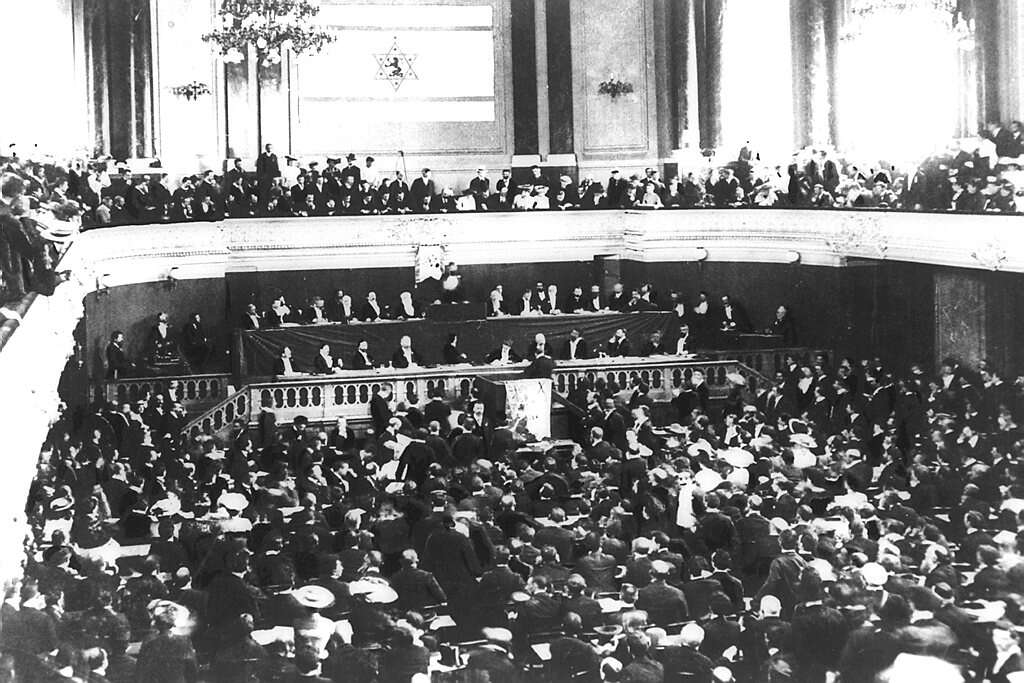
The role of Theodor Herzl
Central to the establishment of modern Zionism was Theodor Herzl, a Viennese journalist who became disillusioned with the prospects of Jewish assimilation in Europe. The Dreyfus Affair in France, where a Jewish army officer was wrongfully convicted of treason, served as a wake-up call for Herzl. He recognized that antisemitism was pervasive and that Jews needed a state of their own to ensure their survival and self-determination.
Herzl's vision was not merely about escaping persecution; he believed that establishing a Jewish state would ultimately eliminate antisemitism. He envisioned a society where Jews could live freely and proudly without fear of discrimination. This vision laid the groundwork for the Zionist movement, which sought to create a sovereign Jewish state in then-Palestine.
Streams of Zionism
As the Zionist movement gained momentum, various factions emerged, each with distinct ideologies and visions for what a Jewish state should look like. Six primary streams of Zionism can be identified:
- Political Zionism: Advocates for a Jewish state modeled after other nations, emphasizing the need for political sovereignty.
- Labor Zionism: Focuses on socialist principles, advocating for a state that prioritizes agriculture and labor rights.
- Cultural Zionism: Emphasizes the revival of Jewish culture and identity, seeking to create a vibrant cultural hub rather than a strictly political entity.
- Revisionist Zionism: Calls for a strong, independent Jewish state with a focus on self-defense and military strength.
- Religious Zionism: Views the return to Israel as a divine mandate, emphasizing the spiritual significance of the land.
- Non-Zionist religious Jews: While they long for a return to Zion, they oppose the establishment of a secular state, believing that only God should determine the time for the Jewish return.

The impact of antisemitism on Zionism
The rise of antisemitism in Europe played a crucial role in solidifying the Zionist movement. As Jews faced increasing violence and discrimination, the urgency for a safe haven grew. The horrors of the Holocaust further highlighted the need for a Jewish state, where Jews could find refuge and safety from persecution.
In the aftermath of World War II, the establishment of the State of Israel in 1948 marked a pivotal moment in Jewish history. It was a realization of the long-held dream of self-determination in their ancestral homeland. However, the creation of Israel also led to complex geopolitical issues, particularly regarding the Palestinian population that had been living in the area. These tensions continue to shape the discourse around Zionism today.
Zionism today
In contemporary society, the relevance of Zionism is often debated. Some argue that with the establishment of Israel, the primary goal of Zionism has been achieved, and thus it is no longer necessary. Others contend that the principles of Zionism remain vital, as they advocate for Jewish identity, continuity, and a safe homeland for Jews worldwide.
Critics of Zionism often conflate it with nationalism and imperialism, leading to accusations of injustice against Palestinians. This has led to a growing anti-Zionist sentiment, which some argue can cross the line into antisemitism. The distinction between anti-Zionism and antisemitism is crucial, as it informs the conversation around Jewish identity and the legitimacy of Israel as a state.
In conclusion, Zionism is not merely a historical movement but a living concept that continues to resonate with many Jews today. It embodies the struggle for survival, identity, and a sense of belonging in a world that has often been hostile to Jewish existence. The journey of Zionism is far from over; it is a narrative that is still being written, one that reflects the complexities and challenges of contemporary Jewish life.


