


As tensions escalate on Israel's northern border, concerns grow about Hezbollah's missile capabilities and the effectiveness of Israel's civilian protection measures. In an exclusive interview with Makor Rishon, Dr. Yehoshua Kalisky, a senior researcher at the Institute for National Security Studies (INSS), provides a comprehensive overview of Hezbollah's arsenal, its potential impact, and the readiness of Israel's defense systems.
The conflict with Hezbollah is intensifying, and as Israel Defense Forces (IDF) strikes in Lebanon become more extensive, the range and volume of missile fire towards Israel are expanding. It is clear that the Shiite terror organization has yet to reveal its most serious capabilities in terms of missiles and drones it can launch at Israel. Less than a week after Operation Pagers, and as the frequency of shelling in northern Israel and Lebanon increases, it seems that a full-scale war is approaching our doorstep.
Hezbollah is the strongest and wealthiest terror organization in the world, with an unimaginable number of munitions of Iranian, Russian, and Chinese origin. "Estimates speak of over 150,000 rockets and missiles, but it's important to emphasize that the information on which these estimates are based, including my own assessment, relies on open sources and not on intelligence information, so the margin of error is large," said Kalisky.
Now, let's break down the weapon arsenal by range.
"Let's start with the short range, where Hezbollah has Katyushas, Grads, anti-tank missiles, and rockets with which they bombard the northern area. Starting with Burkan rockets, effective for a range of 3-5 miles, through various types of missiles and rockets that reach varying ranges, and finally, the Katyushas, which reach about 25 miles. About 50 percent of all the weapons in Hezbollah's possession are effective for this range," meaning that according to estimates, we're talking about 75,000-80,000 munitions effective for the short range.
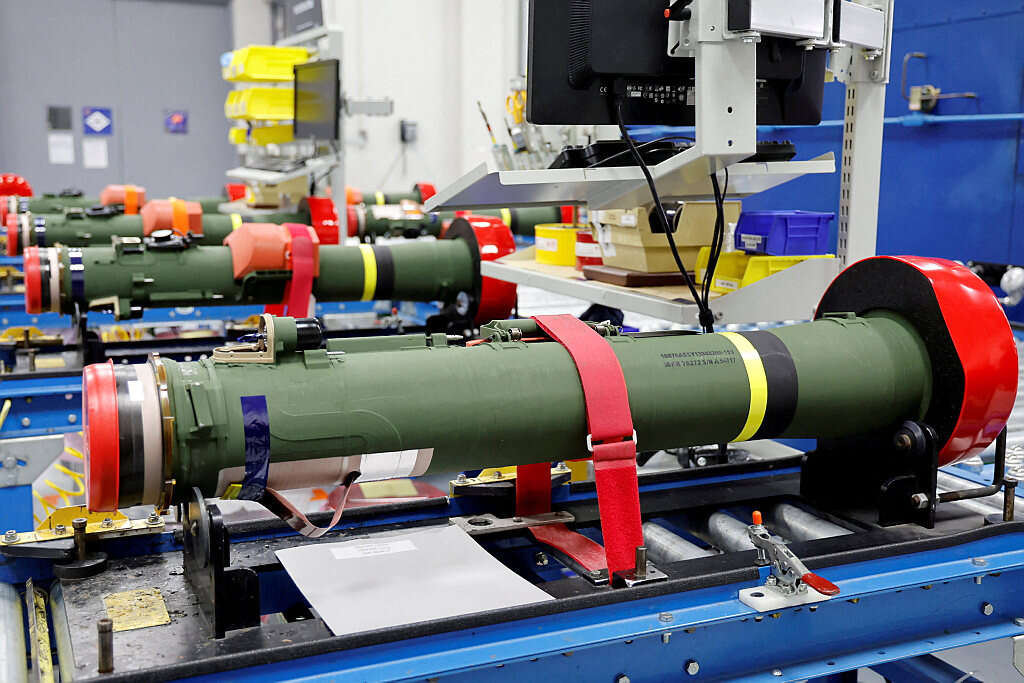
"In addition, Hezbollah has anti-tank missiles, Kornet and Almas, based on the Israeli Gill missile. The range of the Kornet is up to 3.4 miles, and the Almas is between 2.5 and 10 miles, depending on the model. "It's not known how many anti-tank missiles Hezbollah has," says Kalisky, "but these are not the missiles and rockets they fire en masse to the north; rather, they use them sparingly."
"The second group is medium-range munitions that mainly include Fajr 3 and 5 missiles," Kalisky continues, "like the one that hit Nazareth last Saturday, and they are effective for 47-50 miles, as well as Raad missiles that reach about 43 miles. The medium-range munitions constitute about 40 percent of Hezbollah's total ammunition," that is an order of magnitude of about 60,000. Last week, the Lebanese newspaper Al-Mayadeen, close to Hezbollah, reported that the terror organization has about 80,000 Fajr 3 and 5 missiles and Raad missiles, but the reliability of the channel is questionable.
The explosive payloads in those short- and medium-range munitions that Hezbollah holds are relatively small in most cases. "Anti-tank missiles have about 10-11 pounds of explosives, Katyushas have 44 pounds, Fajr 3 have 99 pounds, Raad 110 pounds, and Fajr 5 have 198 pounds," says Kalisky. "The exception is the Burkan rocket that can carry up to half a ton of explosives."
What do the estimates say about the number of Burkan rockets Hezbollah has?
"There are currently no accurate estimates for them specifically, but I don't think they have many. The Burkan is basically a kind of flying barrel bomb, and they use it to scare or take revenge, but it's not a weapon that will decide the war."
I understand. Let's go back to dividing Hezbollah's weapons arsenal by range.
"So we come to the third group – long-range weapons, which constitute about 10 percent of Hezbollah's total ammunition. The organization has missiles that reach 62 miles and threaten the entire area up to Hadera – the Khaibar missiles, and above them, the missiles that reach 124 miles – the Zelzal and Fateh 110, which is effective for 155-186 miles and can reach Beer Sheva and Dimona. They also have, I estimate, a single-digit number of Scud missiles of the C and D models that reach 310-435 miles. The Khaibar missiles carry 330 pounds of explosive payload, the Zelzal and Fateh – about half a ton, and the Scuds between half a ton to a ton."
What is the accuracy level of Hezbollah's munitions?
"All of Hezbollah's missiles and rockets are not precision weapons, but statistical – they don't have GPS, only a gyroscope (a device that helps maintain stability, direction, and speed), but this is not advanced technology. The Germans used it in World War II," says Kalisky.
"The exceptions are the Kornet, which is a laser-guided weapon, and the Fateh 110 ballistic missiles. The Fateh is a GPS-guided missile and they are accurate within a radius of 98 to 164 feet, very high accuracy relative to distances of hundreds of miles." The Fateh also carries a significantly heavier payload of about half a ton of explosives. A missile with such a level of accuracy poses a significant threat to densely populated civilian areas and large military targets located hundreds of miles from the border.
What damage can such a missile carrying half a ton of explosives do?
"When talking about damage, you need to take into account the specific missile carrying the explosive payload and its speed. Heavy ballistic missiles carrying half a ton of explosives and coming from above, from the atmosphere (they are fired outside the atmosphere and then start descending towards the target), gain tremendous speed and reach up to 10-15 times the speed of sound – creating shock waves, so the damage they cause is severe," says Kalisky. "In the Gulf War, such a missile hit one building on Yona Street in Ramat Gan and took down the entire street. The shock waves create a double and quadruple effect," he added. Last Thursday, 7 Burkan rockets were fired at Metula, which led to the complete destruction of houses, extensive fires, collapse of the electricity grid, and more.
What defense systems in Israel are not capable of intercepting?
"The Burkan and anti-tank missiles – the Kornet and Almas. This is because the firing range is very short, so they reach the target too quickly. In addition, the Iron Dome knows how to intercept missiles and rockets on a ballistic trajectory that rises and falls, while the anti-tank flies in direct alignment and at low altitudes, similar to the Burkan. In the future, when we have a laser cannon, we hope it will succeed in intercepting this type of munition as well because it will be able to reach the target at the speed of light."
When is the laser cannon expected to enter operational use?
"The official announcement from MAFAT (Directorate of Defense Research & Development) was that it is expected to enter at the end of 2025."
Safe Room Resilience
The obligation to install a safe room came in 1992, following the First Gulf War, meaning that in their original purpose, safe rooms were designed to protect their occupants from blast and shrapnel from ballistic missiles similar to those that came from Iraq. The safe room also withstands the scenario of a direct hit by a missile with a small explosive payload on the building – the vast majority of Hezbollah's ammunition, as mentioned.

However, the protection provided by the protected spaces is not perfect. A direct hit by a missile or rocket carrying large amounts of explosives like the Burkan, or missiles belonging to Hezbollah's long-range munitions group, can penetrate the safe room and even destroy it. During the Gulf War, a Scud missile managed to penetrate the shelter at Beit Dani in Tel Aviv. Hitting a safe room in a way that will succeed in penetrating it is a scenario with relatively low probability, but not impossible, subject to the location where the explosive payload meets the protected space and the energy generated by the impact, resulting from the type of munition and the speed at which it arrives, as Dr. Kalisky said above.
The missile that hit on Sunday in the front of a house in Kiryat Bialik significantly damaged the structure, caused the safe room window to be torn off and its glass to break, with the glass injuring one person who was sitting in the room, despite the family sealing the safe room door and window. During Operation Guardian of the Walls in 2021, a child, Ido Avigal, was killed as a result of a rocket fragment that penetrated through the safe room window where he was staying with his family. The window is the weakest point in the safe room, but despite this fact – there is no instruction from the Home Front Command to crouch below the window line when staying in it.
Last year, several manufacturers conducted a test with the participation of the Home Front Command designed to examine more resilient safe room windows so that they would be more resistant to impacts.
Anything you'd like to add in conclusion?
"In the end, we have defense systems that no other country in the world has," says Kalisky, "They consist of Iron Dome, David's Sling, Arrow 2, Arrow 3, fighter jets, and, thank God, the number of casualties is very small, with most of them not fatalities. Along with this, it's important to follow the Home Front Command's instructions. They save lives."


