


Indirect communications have been established between the US and Iran regarding a framework for discussions on a new nuclear agreement aimed at preventing an American attack and halting Iran's nuclear weapons program, Israel Hayom has learned from two diplomatic sources familiar with the talks.
The verbal confrontation between Tehran and the White House escalated significantly on Sunday, running parallel to behind-the-scenes diplomatic efforts. After President Donald Trump threatened "bombings the likes of which they have never seen," the regime-aligned Tehran Times responded with its own warning that "all Iranian missiles are loaded in their launchers in underground missile cities and ready for launch."
Supreme Leader Ali Khamenei added to the threatening rhetoric on Monday, saying: "They threaten to commit evil acts, but if evil acts are committed – we do not think that evil acts will likely be committed from outside – but if evil acts are committed, they will certainly suffer a strong reciprocal blow. And if they think of inciting riots within the country, as they have done in recent years, the Iranian people themselves will give them an answer."
Concurrent with the verbal exchanges, American military positioning has intensified with an unprecedented deployment of strategic B-2 bombers to Diego Garcia in the Indian Ocean. An additional aircraft carrier is moving to the region to join the USS Harry Truman, which has been launching nightly airstrikes against targets in Yemen. On Sunday, an Iranian military source threatened through the British newspaper The Telegraph to strike the American base – located approximately 4,000 kilometers (2,485 miles) from Iran – should the US attack. Looming over these developments is Trump's ultimatum letter delivered through the United Arab Emirates, setting a two-month deadline for reaching a nuclear agreement.
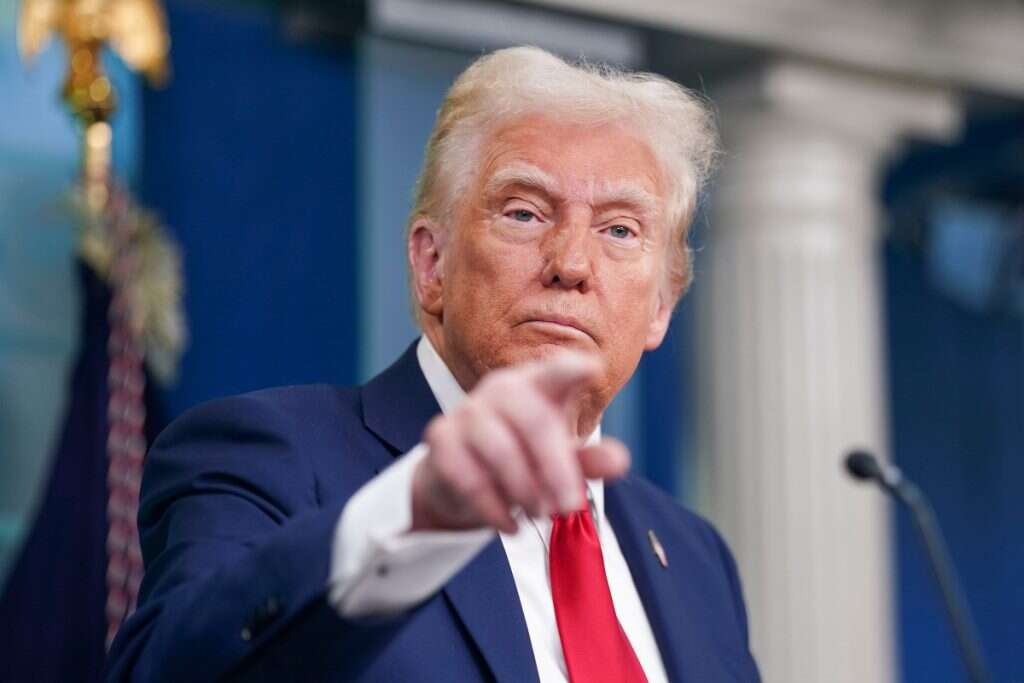
According to two Middle Eastern diplomatic sources who spoke with Israel Hayom, the US and Iran have been exchanging messages through two Gulf states. These communications indicate Iran's desire to avoid military confrontation through indirect negotiations while refusing to acknowledge its compromised diplomatic position.
Entering direct talks with Washington would represent an admission of weakness for Tehran, explaining why Iranian President Masoud Pezeshkian publicly rejects direct US negotiations on Iran's nuclear program. However, his statements supporting indirect negotiations reveal Iran's strong desire to resolve the crisis through an agreement that would end the crippling economic sanctions.
Sources indicate that Pezeshkian would have preferred negotiations with Washington to begin two months ago, but Supreme Leader Ali Khamenei, heavily influenced by conservative factions within the Islamist regime, determined that Iran could withstand the American ultimatum while buying time through indirect talks to potentially reach at least a partial agreement.
Khamenei's stance was partly influenced by the conciliatory approach of US Special Envoy to the Middle East Steve Witkoff, who represents the "carrot" in America's dual-track approach. In public statements, Witkoff consistently emphasizes his preference for a negotiated solution. Approximately ten days ago, he disclosed that Iranians were engaging with him through "back channels, through several countries and several conduits," adding: "I think there is a real possibility for this to be resolved diplomatically, not because I spoke with someone in Iran, but just because I think logically it makes sense that this needs to be resolved diplomatically.
"I think the president has acknowledged that he's open to the opportunity to clean everything up with Iran, where they come back to the world and be a great nation again and don't need to take sanctions and can grow their economy. Their economy — I mean, these are very smart people. Their economy was once a wonderful economy. They're choking and strangling today. There's no need for that to happen."
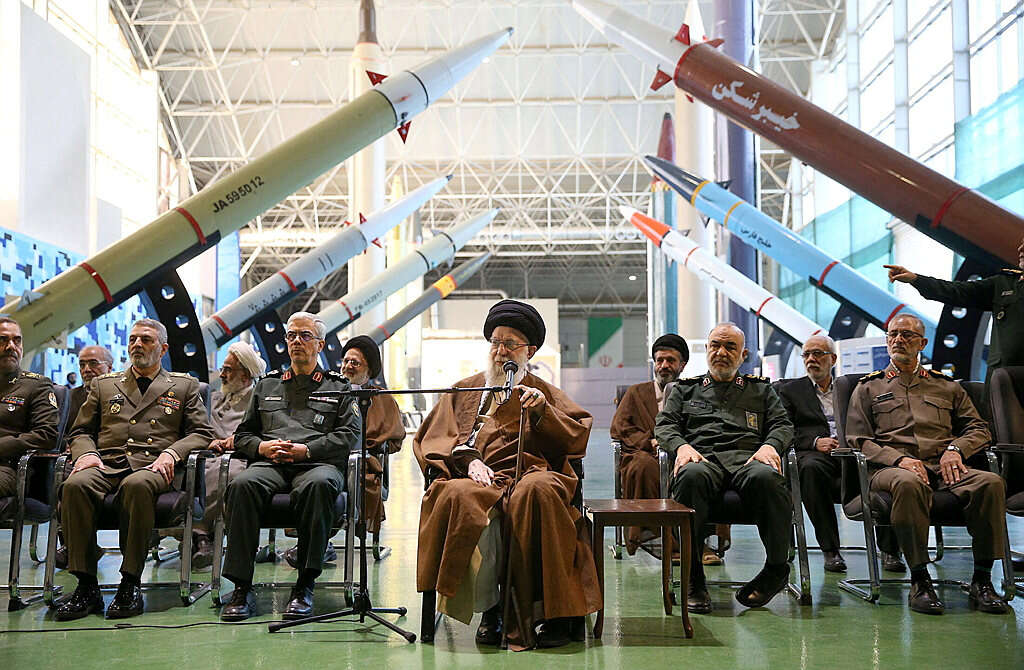
Diplomatic sources reveal that several message exchanges have already occurred to establish parameters for discussions. The Iranians have firmly rejected American demands to include reductions or elimination of Iran's ballistic and hypersonic missile programs. They have, however, expressed willingness to allow renewed IAEA (International Atomic Energy Agency) inspections while maintaining their disputed claim that their nuclear program serves peaceful purposes. According to Witkoff, these contacts have already dampened emerging protests in Iran triggered by the deteriorating economic conditions.
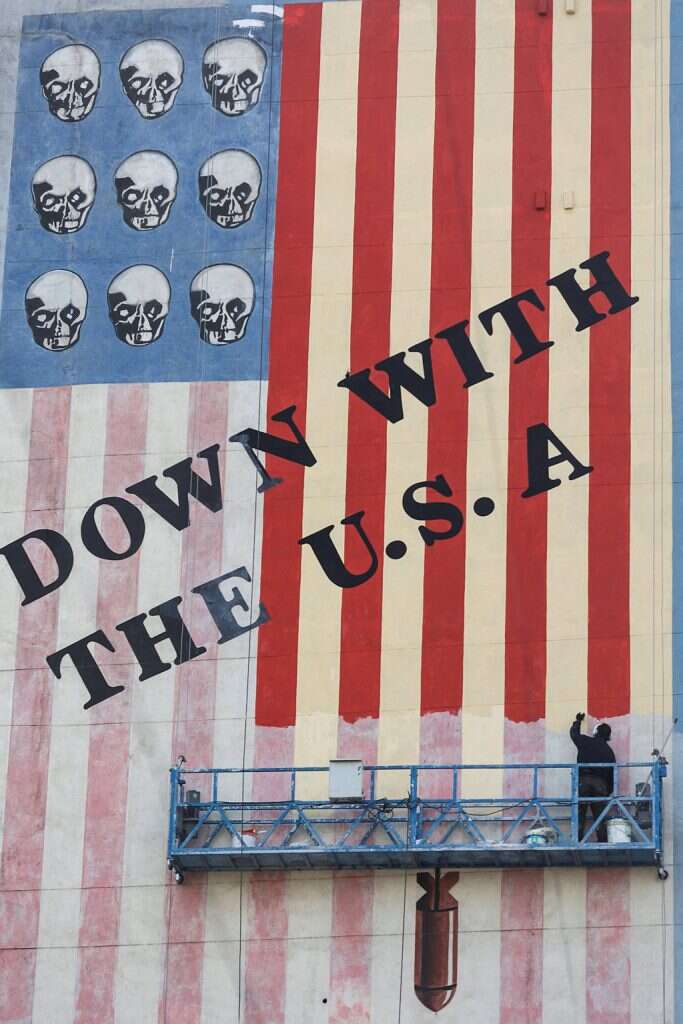
The prospect of regime change has been temporarily shelved pending clarity on whether Washington or Jerusalem will opt for military action or accept the framework for indirect negotiations. Since Trump's return to power, graffiti has appeared in major Iranian cities calling for US and Israeli strikes against Iran's nuclear and military installations – effectively advocating regime change – but such sentiment now remains in a holding pattern.
The Iranian economy on the brink
Iran's economy continues its downward spiral as sanctions increasingly target components of its oil export chain. Following sanctions on tanker fleets transferring Iranian oil to Chinese ports, American pressure has shifted to those ports and refineries, with some facilities halting Iranian oil imports altogether.
Iranian oil exports have plummeted from approximately 1.8 million barrels per day in summer 2024 to roughly 500,000-600,000 barrels daily in February, with China remaining the primary buyer. Iran has also been forced to discount its oil prices due to sanctions risks, causing oil revenues – the country's main export – to drop by tens of percentages since January. This collapse has driven the Iranian currency to approximately one million rials per dollar, delayed public sector salaries for months, and fueled rampant inflation.
Dr. Sharona Mazalian from the Alliance Center for Iranian Studies at Tel Aviv University identifies the water crisis as a significant factor driving public protests against regime failures. Iran's energy minister acknowledged last week that several central provinces, including Tehran and Isfahan, face severe water shortages. The Karaj Dam, which supplies water to millions in the Tehran region, has fallen to just 6% capacity.
The crisis stems from the mismanagement of water resources, including excessive extraction from natural sources and aquifers to the point of depletion. Mazalian explains that Iran, politically isolated since the 1979 revolution, attempted to establish a self-sufficient economy based on domestic agriculture, requiring enormous water consumption. The population doubling from under 40 million in the late 1970s to 90 million today has further strained these resources.
Dr. Raz Zimmt, senior researcher at the Institute for National Security Studies and Tel Aviv University, notes that while the economic crisis persists, economic hardship alone typically isn't sufficient to spark successful protests. He states it's impossible to predict what might trigger future demonstrations – whether water shortages, infrastructure failures, armed conflict, or media suppression – but suggests that when protests do emerge, external support could help them challenge the regime.
An Israeli security source expressed concern that Iran might stall negotiations to secure an agreement that dilutes "the rare opportunity to bring about real change in the Middle East and Israel's security situation." The source added: "Our clear interest is not to be satisfied with removing the nuclear threat but in bringing down the Islamist terror regime that feeds and supports terrorism throughout the Middle East and the entire world."


