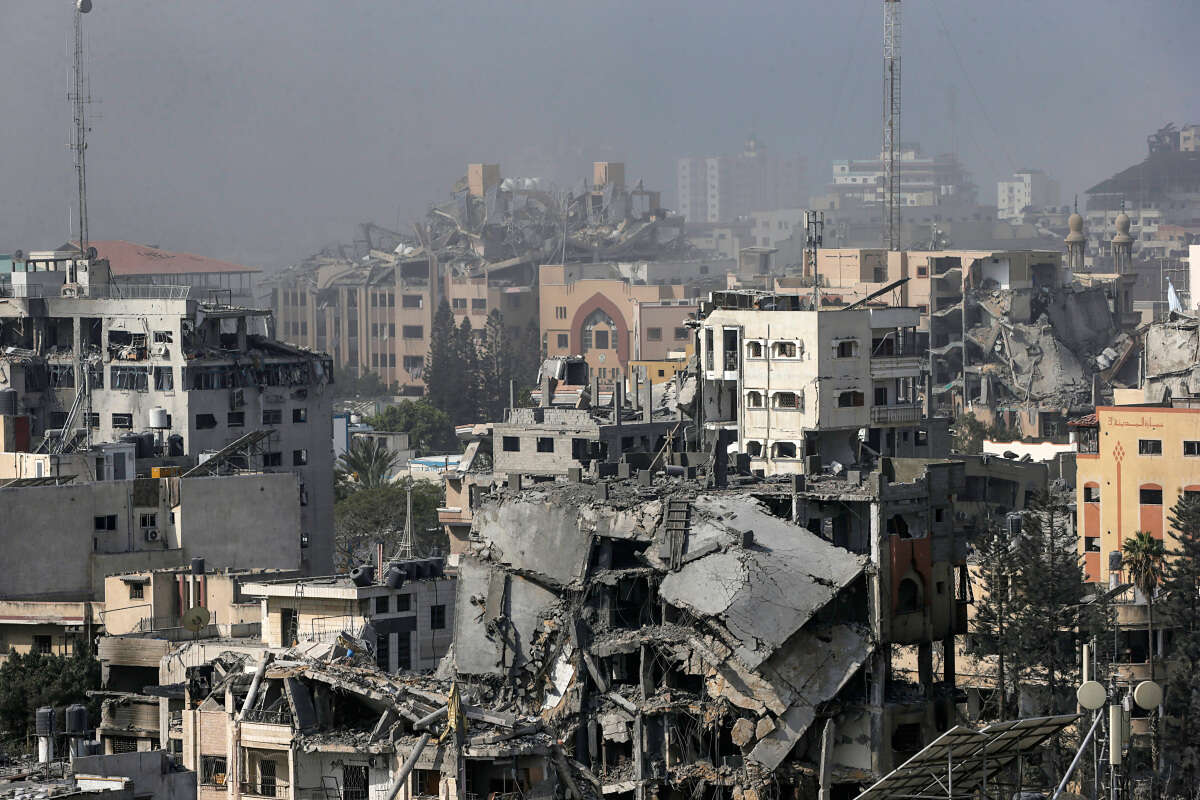
Before the Hamas-led attack on October 7, Rimal was considered one of Gaza's most upscale neighborhoods. Most of its districts lie close to the sea and the marina. Wealthy business figures resided there in luxury apartments, and it was no surprise that the area became a favored enclave for Hamas elites. Known as the beating heart of Gaza City, it featured shops, restaurants and bustling markets. But 600 days into the war that Hamas brought upon Gaza, the situation has been completely upended.
Currently, tens of thousands of displaced people from eastern Gaza City and the northern part of the Strip are crammed into the Rimal area. Some are living in tents, others in partially destroyed buildings, and a few have taken refuge in abandoned shops. The extreme overcrowding and deepening poverty have stoked significant tensions among the population.

The cost of living fuels hunger
In just the past few days, several shootings and killings have spread panic among residents. Armed militants from various factions are exchanging fire over disputes involving water access, food stalls, and the placement of tents. Some of the violence stems from long-running feuds between extended families. According to Palestinian sources, at least three people have been killed in these incidents. In response, clan leaders are trying to mediate and prevent further escalation.
Children have been forced into street begging. One case reported by the London-based Arabic newspaper Asharq Al-Awsat detailed the story of Rawa'a, 14, who begs in Rimal because her father makes her do so. She said her father, who separated from their mother, sends her and her three siblings to different parts of the city to beg, claiming he cannot support them otherwise.

Another acute challenge for residents of Rimal and Gaza more broadly is the soaring cost of basic goods. On Thursday morning, a list of food prices circulated in a neighborhood WhatsApp group: a liter of oil for 120 shekels ($34), a kilogram of sugar for 160 shekels ($45), salt for 25 shekels ($7), cucumbers for 38 shekels ($10), tomatoes for 40 shekels ($11), potatoes for 45 shekels ($12), eggplants for 26 shekels ($7), Egyptian rice for 45 shekels ($12), long-grain rice for 65 shekels ($18), canned meat for 40 shekels ($11), canned fava beans for 13 shekels ($3.50), falafel spread for 12 shekels ($3.20), canned tuna for 15 shekels ($4), and lentils for 30 shekels ($8). A source in Gaza told Israel Hayom that such prices are driving the most extreme hunger cases among civilians.

Target of Israeli airstrikes
The hardship is compounded by the devastation and casualties caused by IDF strikes targeting Hamas and other terrorist groups. Overnight, at least 16 people were reported killed in strikes across Gaza, including in Gaza City, Deir al-Balah, and Khan Younis.
Earlier this month, the IDF's Arabic-language spokesperson issued an evacuation warning for five residential blocks in southern Rimal. Lt. Col. Avichay Adraee cautioned that Hamas uses civilian areas to hide its operatives, who are taking shelter in locations such as schools, the Islamic University, and the well-known Shifa Hospital, all sites previously exploited by Hamas during earlier rounds of fighting. According to UN estimates, some 600,000 Palestinians have been displaced once again since the breakdown of the ceasefire in March.
Southern Rimal borders the Shati refugee camp, another Hamas bastion. This week, leaflets were scattered in the area threatening Az al-Din Haddad, a senior Hamas figure believed to be the new commander of the group's military wing.
"Your friends are waiting for you. Sinwar says he won't go to hell without you," the message read. "Don't worry, we'll make sure you get an express ticket to hell soon." In the leaflet's blue section, the Israeli intelligence services appeared to call on Gaza residents to cooperate and "join the winning side."
Amid these developments, Hamas has issued a series of warnings regarding four humanitarian aid centers operated by a US-based organization in the Gaza Strip; three in Rafah and one in al-Bureij. A Hamas-affiliated channel cited a source within the group's internal security wing, who claimed that Israel was using the crowded aid centers for intelligence-gathering purposes.