

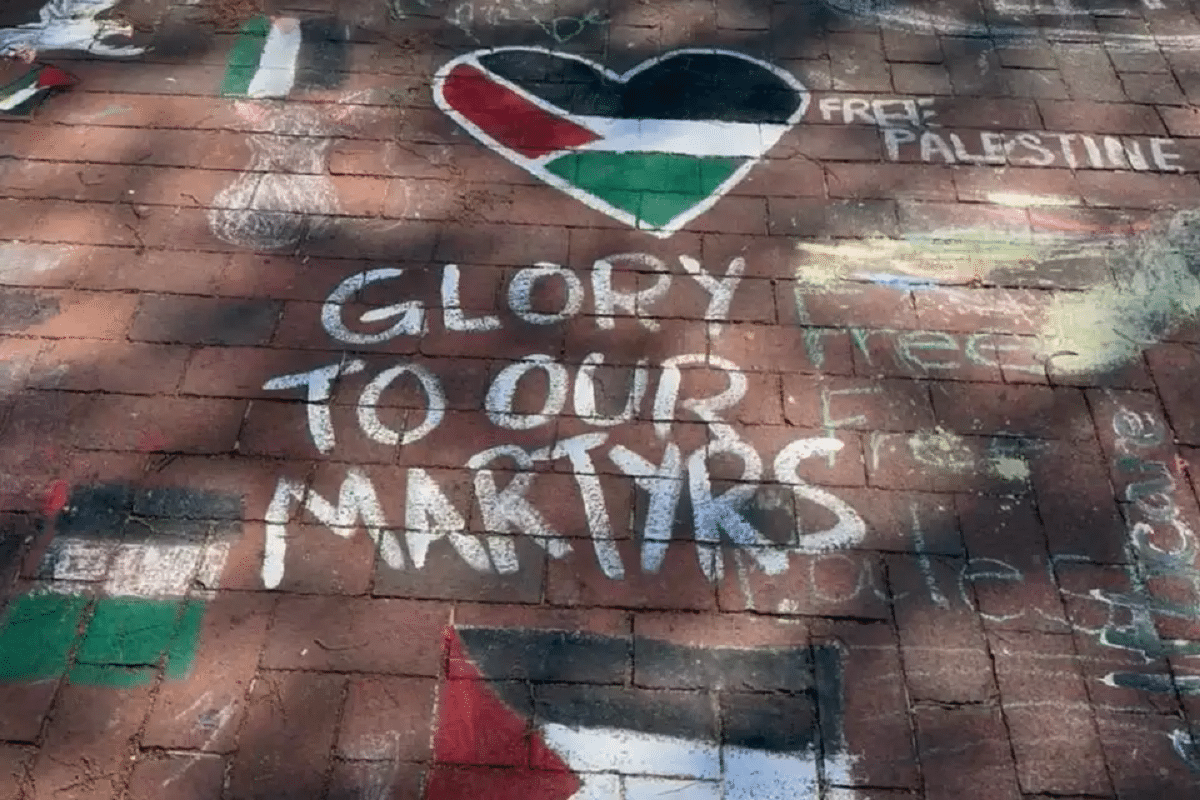
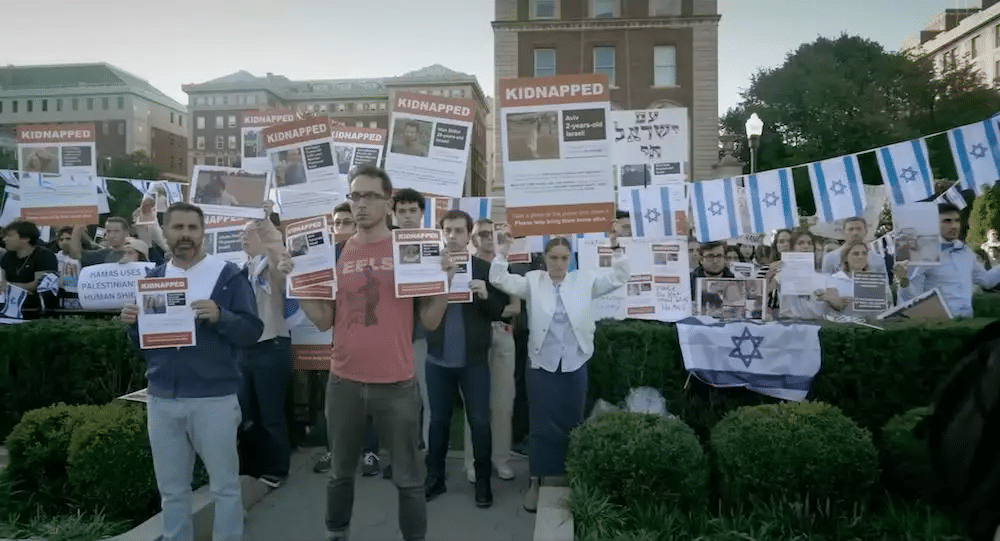
Jewish-American filmmaker and author Wendy Sachs wasn't entirely surprised by the anti-Israeli and anti-Jewish sentiment that reared its ugly head in the United States in the days and weeks following the October 7 massacre. Still, she too was horrified when the scope of hatred toward Jews on campuses and in major cities began to become clear.
"I was in shock," she said. "Of course, anyone who followed developments in the progressive left and the Democratic Party in recent years, as I did, could see the writing on the wall. Anti-Israeli sentiment and antisemitism had been bubbling beneath the surface for a long time, and suddenly everything burst out like a tsunami.
"However, the silence on October 8 was deafening. On a personal level, I simply felt abandoned by my friends, by my professional groups. Very impressive and educated women, who immediately jump to defend all the world's injustices, suddenly became hostile. When over 30 Harvard student groups issued that statement blaming Israel for the massacre, just one day after the massacre, I immediately understood that the pro-Palestinians had taken control of the narrative and that the messages being conveyed in universities are actually Hamas messages. Within less than two weeks, it was already clear to me that I was going to make a film about this."
"October 8", the documentary Sachs directed to try to reclaim control of the narrative, will be screened Sunday at the Jerusalem Film Festival, and she will also hold a Q&A session with the audience afterward. According to her, the film seeks to explain "how we got to where we got," and it's intended for an international and not necessarily Jewish audience. But from watching it, it's hard not to feel that Sachs also created it for her brothers and sisters in the United States, and that it documents in real time a process of awakening.
"In the past year, I've been screening the film around the world to non-Jewish audiences," Sachs said. "People cry and react to it very emotionally, because they see phenomena similar to those happening on American campuses also happening where they are – in places like Amsterdam, Sydney, Mexico City, and more. It was important for me to show that the issue is much bigger than what's happening in Israel, and it was important for me to show that after October 7, there's no longer any difference between anti-Zionism and antisemitism.
"Within that, the film is definitely also dedicated to all my Jewish friends who didn't believe that all this was really happening, who lived in their bubble and didn't understand that there's so much antisemitism in America. This film provides them with the feeling that they're seen and understood, and also provides them with tools to cope and respond. On October 8, American Jewry woke up. I saw it happen with my own eyes."
Q: Your response to the events of October 7 was to make this film and fight back. But most famous Jews in the United States didn't feel like you did. Almost no one raised their voice. Actor Michael Rapaport, who is interviewed in your film, refers to this and says that if he's the biggest celebrity you managed to bring, then the situation is probably really bad.
"Very true," she laughed. "We discovered that Hollywood has no spine; we saw that people have no courage. So many famous Jews: Producers, directors, writers, actors, comedians. People who built their careers by telling Jewish stories. My acquaintances, my friends – suddenly they're silent."
Q: Did you find yourself confronting them? Or can you understand where this comes from?
"There were confrontations, but it's a very complex issue. I saw how people were canceled as a result of their support for Israel, I saw how careers were damaged. Even actress Debra Messing's manager, who participated in producing my film, told her she was harming her career. But I'm not famous. I won't say I have nothing to lose, but my calculation is different. I was so determined to make this film and get it out before the first anniversary of the massacre. I developed an obsession with telling this story, and I felt I had to tell it properly, because I knew they would put the film under a microscope. This became the project of my life."
Q: Do you think your film can change someone's mind? Do you think there's anyone to talk to at all? Is someone interested in listening?
"That's a good question. I believe that films like 'October 8' can definitely influence the conversation and public opinion, and they can also educate. From what I see from people's reactions who watch it, it does succeed in creating change."
Q: Predictably, your film is being attacked online constantly. Pro-Palestinian users are systematically writing bad reviews about it on sites like Letterboxd and IMDB to lower its rating, and professional critics in the United States have also brutally slammed it while often exposing their ignorance and biased opinions on the Israeli-Palestinian conflict. How do you respond to people who strongly claim that "October 8" is one-sided pro-Israeli propaganda?
"Did 'No Other Land,' the documentary that won the Oscar this year, tell the other side of the story? No. Was it criticized for being one-sided? No. Only when you make a film with a sympathetic viewpoint toward Israelis and Jews do these accusations come. The film doesn't try to justify the war in Gaza or defend it. My film isn't about the war at all. Of course, what's happening in Gaza is terrible and awful, and of course, the images coming out of there are horrifying, but I called the film 'October 8' on purpose. Because even before Israel responded to the massacre, even before it all started, many good people in America portrayed the Hamas terrorists as freedom fighters and heroes. That's what the film is about."
Q: How do you see the coming years? How pessimistic are you? Have you thought about leaving the United States?
"I end the film on an optimistic note because that's my nature. I think the only positive thing that came out of the terrible disaster of October 7 is that the Jewish community in the United States finally united and woke up. I see young people who are discovering courage and raising their voices. This inspires other young people, and that gives me hope for the future.
"Regarding leaving the United States, the thought has certainly crossed my mind. It's very comforting for me to know that Israel is there for me and my family; it's not a bad option because where else do we have to go? I think that's why so many Jews in the diaspora fight so hard for Israel. It's our homeland."
"October 8" will be screened Sunday at Jerusalem Cinematheque at 2:30 p.m. in the presence of director Wendy Sachs. At 4:30 p.m., there will be a meeting with Sachs at the Jerusalem Cinematheque's mediatheque. The event will be held in English, and admission is open to the public and free of charge.


