


Columbia University will pay the Trump administration $200 million to resolve accusations that it inadequately protected Jewish students from harassment, according to a university statement released Wednesday. The comprehensive settlement restores hundreds of millions in federal research grants that were frozen earlier this year.
The agreement, which resolves more than half a dozen civil rights investigations, represents the first negotiated resolution between the Trump administration and a major university over antisemitism allegations. The New York Times reported that the deal includes commitments to eliminate racial considerations in admissions and hiring practices, along with enhanced measures to combat campus antisemitism that Columbia initially agreed to implement in March.
An independent monitor approved by both parties will oversee compliance with the settlement terms, submitting progress reports to the government every six months. Columbia will also pay an additional $21 million to settle separate investigations conducted by the US Equal Employment Opportunity Commission.
"This agreement marks an important step forward after a period of sustained federal scrutiny and institutional uncertainty," Acting President Claire Shipman stated in the university's announcement. "The settlement was carefully crafted to protect the values that define us and allow our essential research partnership with the federal government to get back on track."
The resolution restores the vast majority of more than $400 million in grants that the National Institutes of Health and Department of Health and Human Services terminated or suspended in March. Columbia can now compete for new federal grants on equal terms with other institutions. The university will remit the $200 million penalty in three annual installments.
Education Secretary Linda McMahon characterized the settlement as "a seismic shift in our nation's fight to hold institutions that accept American taxpayer dollars accountable for antisemitic discrimination and harassment." McMahon added that "Columbia's reforms are a road map for elite universities that wish to regain the confidence of the American public by renewing their commitment to truth-seeking, merit and civil debate."
Columbia receives approximately $1.3 billion in federal research grants annually, and university officials indicated that all funding would have remained at risk without reaching an agreement. The institution became the first university penalized by the Trump administration through research funding freezes over alleged failures to protect Jewish students from harassment.
According to The New York Times, the funding crisis extended beyond the initial $400 million reduction. The National Institutes of Health froze nearly all research funding flowing to Columbia, including reimbursements for ongoing research grants. Grant Watch, a project tracking federal funding cuts, estimated that approximately $1.2 billion in unspent NIH funding to Columbia had been terminated or frozen.
Additional federal agencies, including the National Science Foundation, also withdrew grants from the university. The research funding losses had reached what Columbia described as a "tipping point" threatening the institution's research excellence.
The settlement requires Columbia to notify the Department of Homeland Security when international students face arrest, expanding beyond existing requirements for suspension or expulsion notifications. The university must also comply with transparency laws regarding foreign funding sources.
Bart Schwartz, co-founder and chairman of crisis consulting firm Guidepost Solutions and former chief of the criminal division for the US Attorney's Office for the Southern District of New York, will serve as the independent monitor. Columbia will fund the monitoring arrangement.
Shipman, a former television journalist who assumed the acting presidency role in late March after serving as board of trustees co-chair, led Columbia's negotiation efforts rather than pursuing litigation like Harvard University. During several months of intensive discussions, she worked with the board, legal counsel, and academic leadership to modify White House demands into acceptable terms.
"Ultimately, we had to make the decision that was the right decision for Columbia," Shipman explained in an interview this week. "And I think we have made that decision. We weren't reckless. In my view, it was important to slow things down and be extraordinarily deliberate, and that was actually quite hard to do."
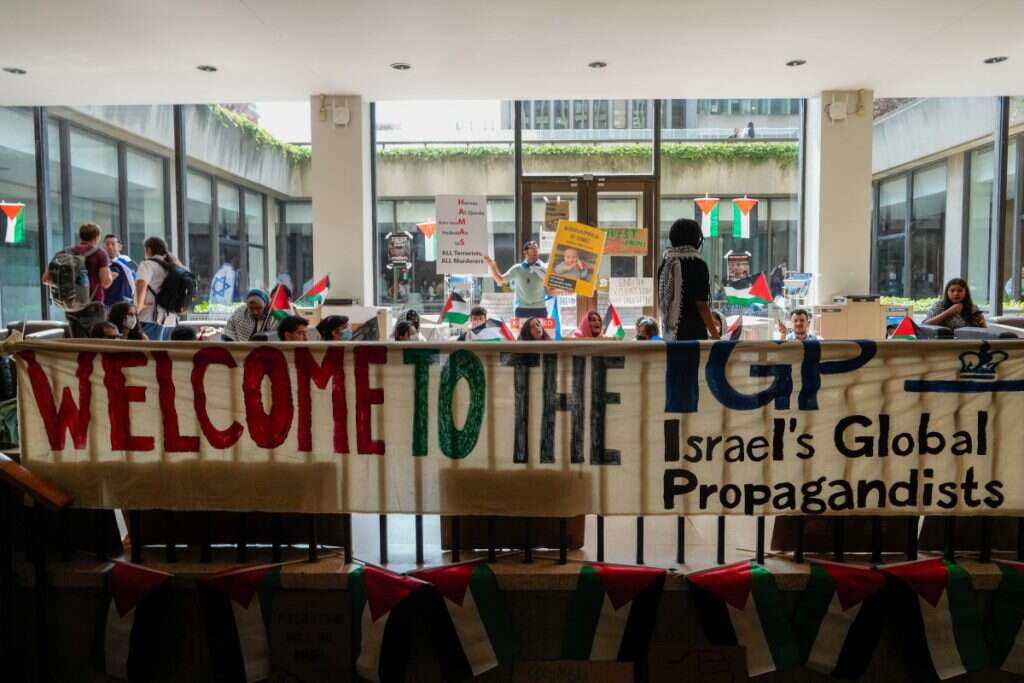
The settlement drew sharply divided reactions from campus constituencies. Michael Thaddeus, a Columbia mathematics professor and acting president of the university's American Association of University Professors chapter, expressed concern that the agreement "opens the door" to interference in Columbia's academic affairs through a monitor "charged with scrutinizing our admissions data and our Middle Eastern studies department."
Brian Cohen, executive director of Hillel at Columbia, welcomed the resolution. "This announcement is an important recognition of what Jewish students and their families have expressed with increasing urgency," Cohen stated. "Antisemitism at Columbia is real, and it has had a tangible impact on Jewish students' sense of safety and belonging and, in turn, their civil rights. I am hopeful that today's agreement marks the beginning of real, sustained change."
The Columbia settlement is expected to establish a framework for similar agreements with other elite universities facing federal investigations. Harvard, Cornell, and Northwestern universities have faced comparable funding cuts from the Trump administration over antisemitism allegations.


