


Blueground operates a furnished apartment rental platform across more than 50 cities worldwide, connecting property owners, brokers, and corporate clients through a digital marketplace where tenants can book and move into furnished spaces within 24 hours. The company targets professionals and digital nomads through month-to-month rentals that allow relocation between properties without traditional lease constraints. Tenants manage services through a mobile application for maintenance, cleaning, and other needs.
Dennis Brodetzky, general manager of Blueground's Israel branch, describes the company's focus on technology. "We're the easy way. You go on the map, you click a few buttons, you sign the contract, and it's done. That's how it's supposed to work in 2025," Brodetzky claims.
The Israeli operation, which launched in August 2024, currently employs 11 people and manages 99 apartments with plans to reach 100 units soon. "We add one hundred apartments per year. So it's our first year. We have 99 apartments. We're looking for our 100th," Brodetzky said.
Clientelle
The service addresses multiple housing scenarios that traditional leases cannot accommodate. "Maybe you want to check out a neighborhood because your children need to go to this particular school. You want to see whether it goes well. Or you may be renovating your apartment, and then you need to live somewhere temporary," Brodetzky explained. "There are lots of life scenarios where it's much easier and smarter to get a temporary solution than look for permanent, and take a risk that it won't fit." Brodetzky described a scenario of those who "live a couple months here, live a couple months there. So what would you do if you live in two countries? There was no good solution."
Corporate clients comprise approximately 50% of Blueground's Israel bookings, while new immigrants account for roughly one-third of demand. "I think it is something that is appealing to Olim. When you come from a different country and you're not really sure about the neighborhood, you're not sure about the job, you're not sure about the school that your kids will go to, you're not sure about the apartment, or whether you're going to stay there for a long time. So with all this uncertainty, normally, you'll have to just pick an apartment and stay there." Brodetzky recounted, "When I made Aliyah like 25 years ago, that was very stressful for us."
Three-tier revenue model
Blueground generates revenue through partnerships with property owners, converting vacant units into furnished apartments while ensuring a guaranteed rental income. Property owners receive higher rental rates compared to unfurnished units, while Blueground handles furniture installation, maintenance, and tenant management. "Basically, we'll rent those apartments from the landlords. We do the renovation and then we rent it out to the tenants on flexible terms," Brodetzky explained. "The person who's renting never speaks to the landlord. He speaks to us. So we are professional landlord," he said.
The company operates an invite-only partner network for property managers with 10 or more units, targeting longer-term stays of one month or more. Real estate brokers earn commissions through three channels: representing renters, sharing referral codes, and submitting qualifying properties in prime locations.
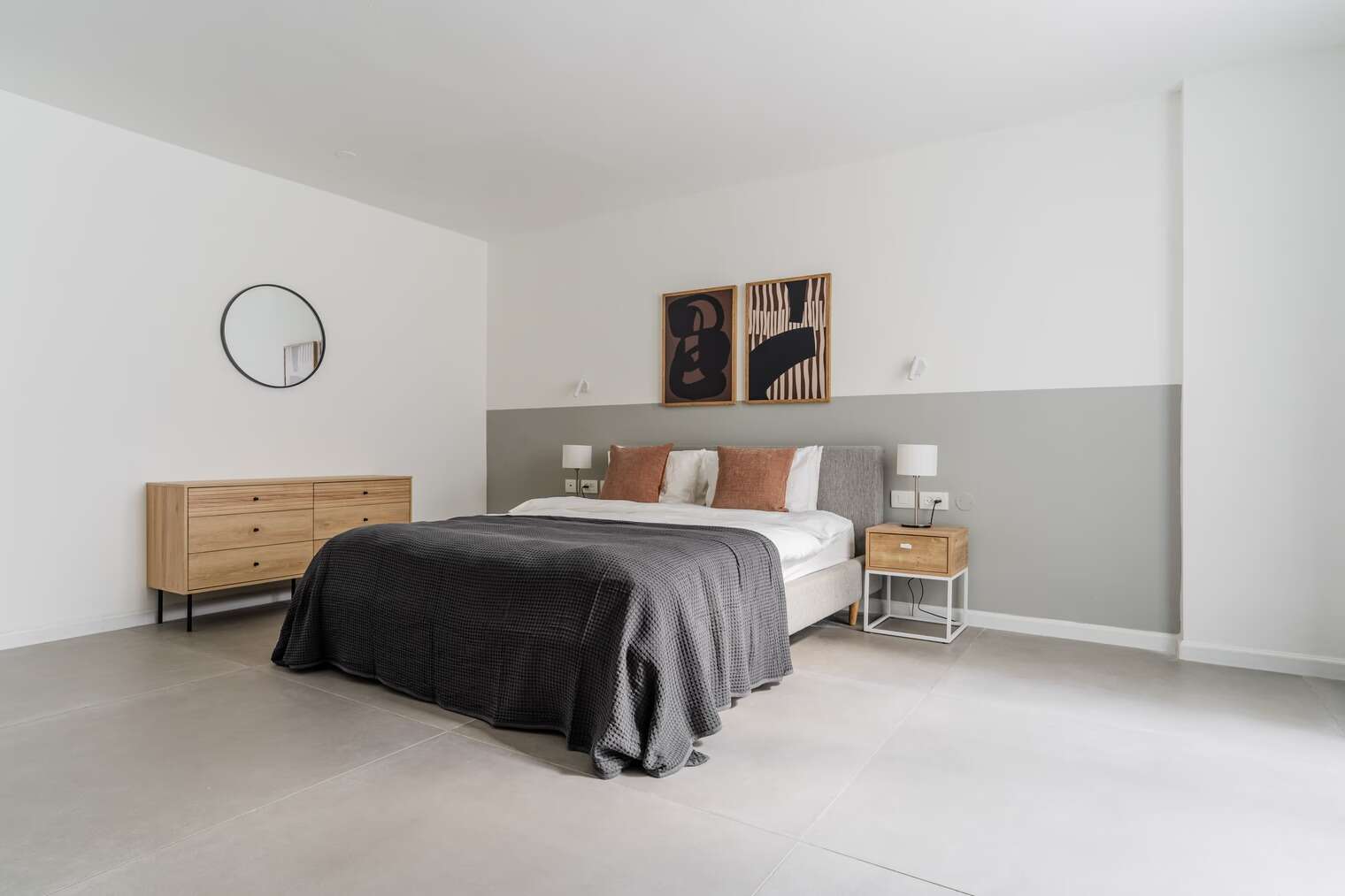
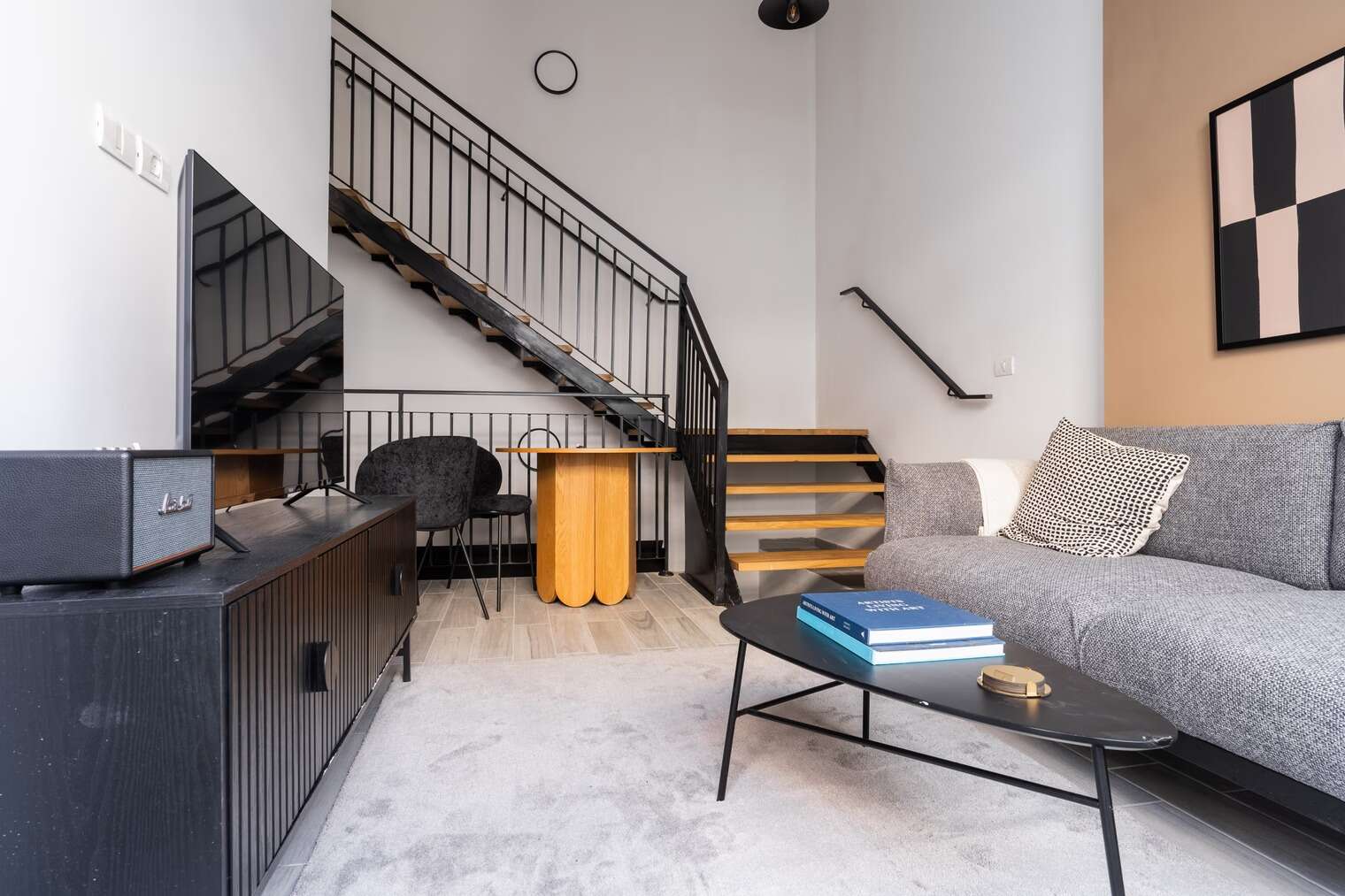
Blueground for Business provides corporate housing to over 4,000 companies. The division claims 30-50% cost savings compared to hotels for business travelers staying one month or longer. The company provides corporate billing and contracts directly to businesses, rather than to individual employees. Properties come equipped with high-speed internet, smart televisions, and Bluetooth speakers as standard amenities. Each unit includes fully equipped kitchens, premium bedding, linens, and toiletries.
The company charges 12% of the first month's rent as a booking fee, plus approximately 20% markup from what it pays the landlords for the apartments. However, the markup pricing varies based on rental duration and availability. "If you stay for a year or above, that would be much cheaper than if you stay a few months. The price declines dramatically," Brodetzky noted.

Comparisons
"The regular rental market is not really competition because it's something different from us," Brodetzky said. "You need to rent an apartment in Israel, go in, sign checks, meet landlords, pay brokers, go shopping for all the furniture, call the electrical company, the internet company, and all this headache." Also, "A classic scenario that you can find in terms of Facebook marketplace is you see something good and then you get something else. With Blueground, you actually get what you see. You have a 3D tour, you have a floor plan, and you have pictures of the view from the apartment. So you won't have any surprises, like a very nice apartment, but it is next to the central bus station or something like that."
Compared to companies like Airbnb and Booking.com, "The equipment of the apartments is usually fitted for short-term stays. It costs more money because of tourism. It's more hotel-like pricing that doesn't give you a very good value for money in terms of longer stays. Our worldwide average is four months per stay."
The housing crisis in Gush Dan
The housing crisis in Gush Dan, Israel's most densely populated metropolitan area, represents one of the country's pressing economic challenges, affecting millions of residents across Tel Aviv and surrounding cities.
Price outpaces income
Housing prices in Gush Dan have increased dramatically over the past decade, with apartment costs rising significantly faster than average wages. The Tel Aviv metropolitan area, which includes cities like Ramat Gan, Givatayim, and Herzliya, has experienced some of the steepest price increases in the country. Many young professionals and families report being priced out of areas where they grew up or work.
The shortage affects both rental and purchase markets. Rental prices have climbed substantially, with many residents dedicating 40-50% of their income to housing costs, which is well above the recommended financial guidelines. First-time homebuyers face particular challenges, as down payment requirements and mortgage qualification standards have become increasingly difficult to meet. "It's very expensive. And there are always issues with quality. Even a simple apartment in Tel Aviv costs around $1 million," Brodetzky commented on the market.

Supply and demand
Limited land availability in Gush Dan creates fundamental supply constraints. The region's small geographic footprint, combined with environmental restrictions and zoning regulations, restricts new construction. Municipal approval processes for new developments often face delays, further limiting housing stock growth. Government data shows construction permits issued in the region have not kept pace with population growth and housing demand.
However, Brodetzky observes some improvement in supply. "We see a lot of new buildings coming up. They're finished. And they're for sale and or rent," he said. "The demands are the same, but the supply is much higher. They're building up, adding more floors. But the bad side of this is the density, which you could see is increasing in some areas. It's starting to be hardcore in terms of traffic. For people who have cars, Tel Aviv is crazy. Now people are moving to bikes. I hope that the light rail will help a little bit. And now they want to start building a metro, so maybe we'll see that."
Israeli authorities have implemented various measures to address the crisis, including tax policies targeting foreign buyers and investment purchases. The government has also announced plans to increase public housing construction and provide assistance programs for young couples and first-time buyers.
Crisis drives demand for flexible housing
One would think that the war between Israel and Iran would send Tel Avivians scrambling to pack and flee. Interestingly, the ongoing conflict in Israel has actually created additional demand for temporary housing solutions, particularly for apartments equipped with secure shelters. Brodetzky reported a notable increase in bookings during recent military escalations. "We saw a spike during the war with Iran," Brodetzky said. "There was a spike because of the demand for the shelters, and because people lost their apartments or had to evacuate from their apartments temporary." He noted that government accommodations fell short of meeting evacuees' needs. "The government moved people only to hotels. They did not use apartments at all. And it's not realistic to live in a 15-meter box; that's something that's very, very difficult. So people were looking for alternatives."

Additionally, Blueground's month-to-month rental model addresses specific pain points created by the housing crisis. Rising property prices and rental costs in Tel Aviv and its surrounding cities have prompted many residents to seek alternative housing arrangements. Young professionals and corporate employees increasingly seek furnished, short-term rental options rather than committing to traditional long-term leases in an expensive market. "At least one risk they could put aside is the solution to housing. They like it, they can extend. They don't like it, they can move to a different part of the city," Brodetzky said.
However, Blueground's furnished rentals typically command higher monthly rates than traditional unfurnished apartments, potentially pricing out some residents who are already struggling with housing costs in Gush Dan. The service primarily serves higher-income professionals and corporate clients rather than addressing broader affordability issues.
Blueground's business model addresses the growing market of location-flexible professionals and companies seeking alternatives to traditional housing arrangements. The platform positions itself as an intermediary that reduces property management burdens for owners while providing move-in-ready solutions for tenants and corporate clients.


