

Some days in the Jewish calendar are viewed through tears. Tisha B'Av, the Day of Destruction, has over the centuries become a day marked by grief and remembrance, national mourning intertwined with enduring hope. Rabbinic tradition identifies five disasters that took place on this date. But history reveals that the ninth day of the Hebrew month of Av has become, time and again, a symbol of Jewish calamity.
Here's a reminder of what has befallen the Jewish people on this date through the ages:
The sin of the spies
The first event cited by the sages is the divine decree that the generation of the Exodus would die in the desert, following the sin of the spies. According to rabbinic tradition, on the night of Tisha B'Av, the Israelites cried over their fear they would never enter the Promised Land. God responded: "You wept for nothing, I will make this a day of weeping for generations." This was the first seed of collective Jewish sorrow tied to the date.
The First Temple's destruction
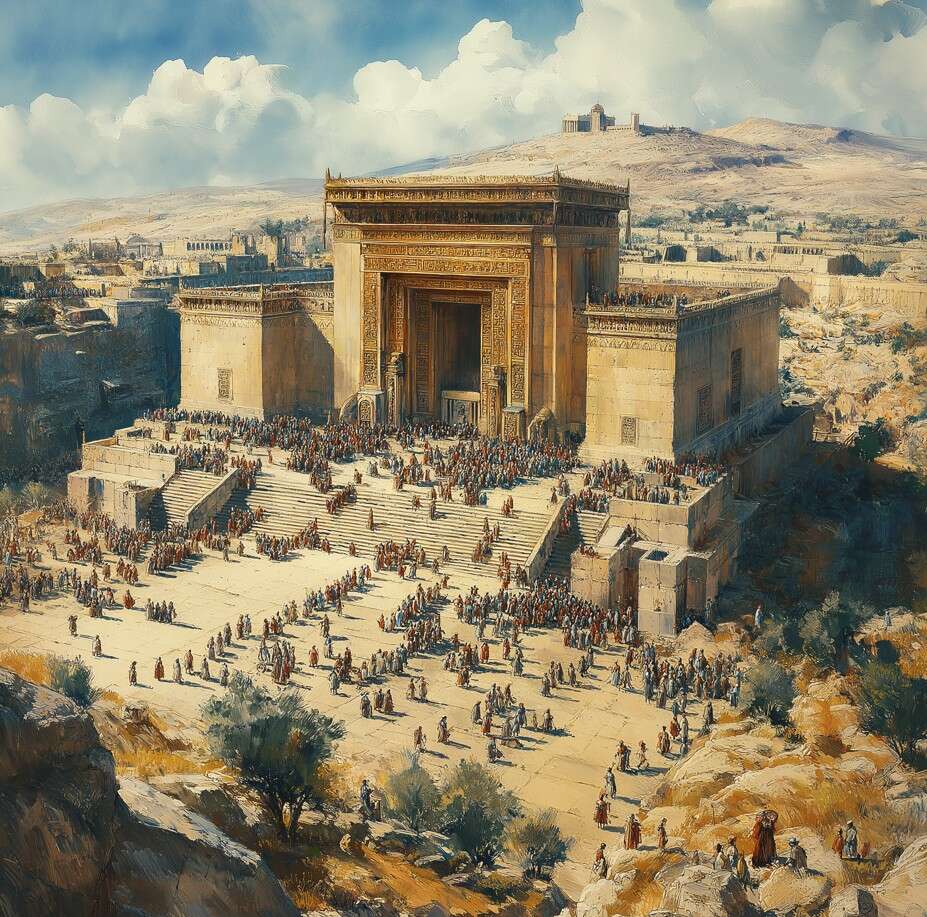
The First Temple, built by King Solomon, was destroyed on Tisha B'Av in 422 BCE (according to Jewish tradition) by Nebuchadnezzar, king of Babylon. This marked the end of the initial period of Jewish sovereignty in the Land of Israel and the beginning of the Babylonian exile. The destruction was perceived both as a national catastrophe and a theological crisis.
The Second Temple's destruction
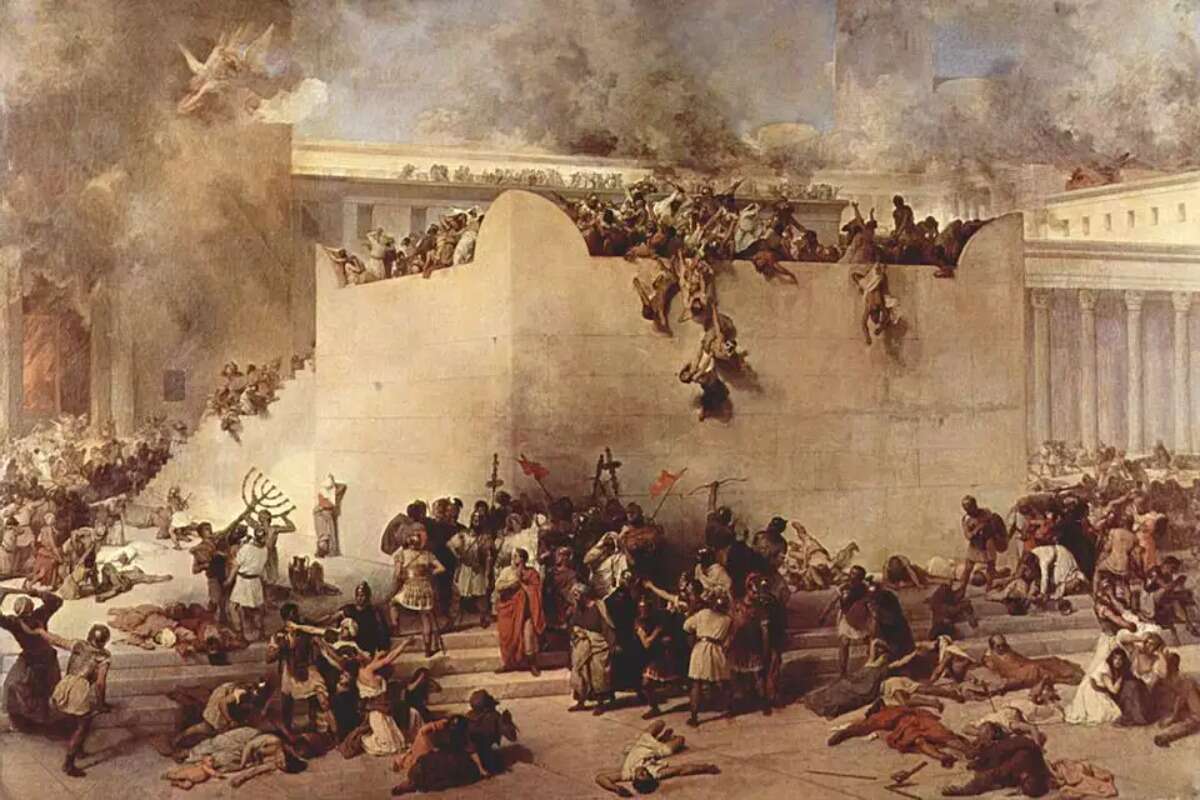
Roughly 650 years later, on Tisha B'Av in the year 70 CE, the Romans destroyed the Second Temple following the Great Revolt. Roman general Titus led the legions that crushed the renewed Jewish independence. This destruction is the central event commemorated by the current fast, and Jewish mourning on this day has preserved its memory for nearly two millennia.
The fall of Beitar
During the Bar Kochba revolt, about 65 years after the destruction of the Second Temple, the city of Beitar - the last stronghold of the Jewish rebels, also fell on Tisha B'Av, according to rabbinic sources. Maimonides wrote that the belief held by many that Bar Kochba was the Messiah turned into a cruel disappointment. Around 800,000 Jews were killed, enslaved, or exiled. The revolt ended in utter failure.
The plowing of Jerusalem
According to Maimonides, on Tisha B'Av, the Roman commander Turnus Rufus plowed the Temple Mount and all of Jerusalem. This act was viewed as a literal fulfillment of the biblical prophecy that "Zion shall be plowed like a field." The Romans rebuilt the city as a pagan colony called Aelia Capitolina and erected an idolatrous temple in place of the Jewish one. The plowing symbolized a brutal attempt to erase Jewish identity from Jerusalem.
Expulsion from England
On Tisha B'Av 1290, King Edward I ordered all Jews to leave England - the first large-scale Jewish expulsion in medieval Europe. Their property was confiscated, and any Jew who remained faced execution. The edict remained in effect for more than 350 years.
Expulsion from France
Sixteen years later, on the 10th of Av 1306, King Philip IV of France expelled the Jews from his kingdom. Around 100,000 Jews were uprooted, their synagogues and property seized by the crown.
Expulsion from Spain
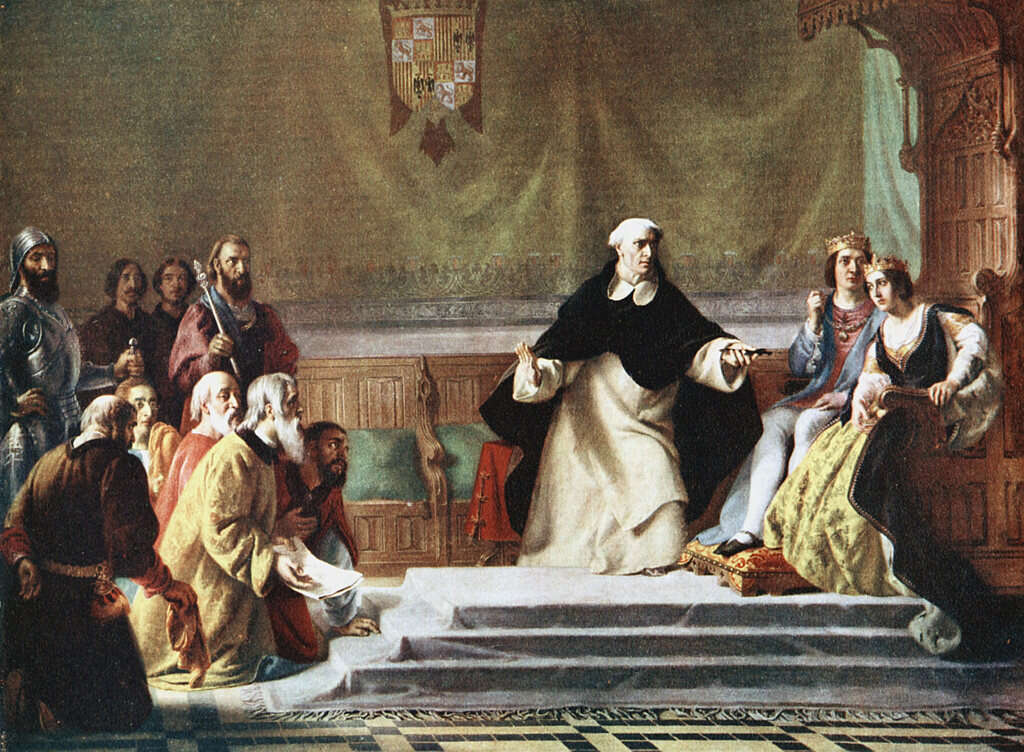
At the end of the 8th of Av, 1492, the deadline expired for Jews to leave Spain, as decreed by the Alhambra Decree. This marked the end of centuries of thriving Jewish life in Spain. Many Jews were forced to convert to Christianity, while others left their homeland behind. The Spanish expulsion is regarded as one of the greatest tragedies of the Jewish diaspora.
Outbreak of World War I
On Tisha B'Av 1914, Germany declared war on Russia, initiating World War I. About 1.5 million Jews served in the armies of the belligerent nations. Between 140,000 and 170,000 Jewish soldiers were killed, including 100,000 in the Russian army alone.
Jewish soldiers often found themselves on opposite sides of the battlefield. In Eastern Europe especially, Jews were arrested or accused of spying, forced to prove loyalty to ever-changing regimes. After the Bolshevik Revolution, the situation worsened. Rabbis and Jewish leaders were persecuted under communism, and entire Jewish communities were displaced.
Antisemitic accusations surged. Some blamed the Jews for starting the war. US industrialist Henry Ford even sailed to Europe to claim the war was driven by Jewish financial interests and should be halted immediately.
In czarist Russia, Jews from Galicia were falsely accused of aiding Austria, sparking looting and murder in towns along the retreat. The war's end brought new upheavals: In Germany, Jews were blamed by the far Right for betraying their country; in Russia and neighboring states, they were accused of opposing the Bolsheviks.
It is estimated that 100,000 Jews were murdered in postwar pogroms during anti-Bolshevik campaigns in Ukraine, Russia and Poland. This violence triggered a mass Jewish migration to the US, particularly to New York City. The war was seen as the beginning of a descent that ultimately led to the Holocaust.
Approval of the Final Solution
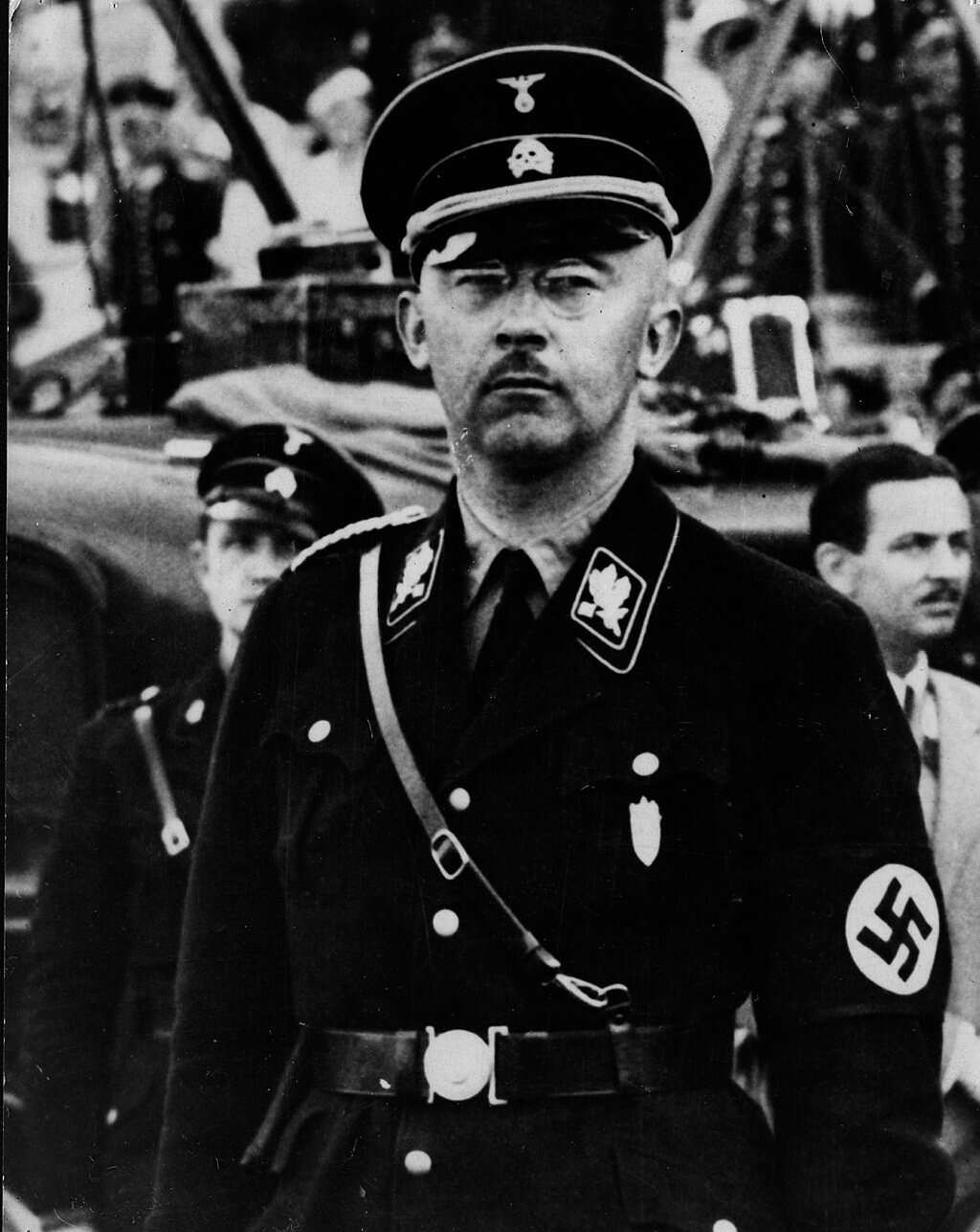
On Tisha B'Av 1941, Heinrich Himmler approved a memo from Hermann Göring instructing the preparation of a plan for the Final Solution - the systematic extermination of European Jewry. From there, the path to Auschwitz and humanity's greatest trauma in the 20th century was short.
Holocaust deportations from Warsaw and Paris
On the 7th–9th of Av 1942, mass deportations from the Warsaw Ghetto to the Treblinka death camp took place. Thousands of families were torn apart, their fates sealed. At the same time in France, the Vichy regime rounded up more than 13,000 Jews from Paris and deported them to concentration camps.


