

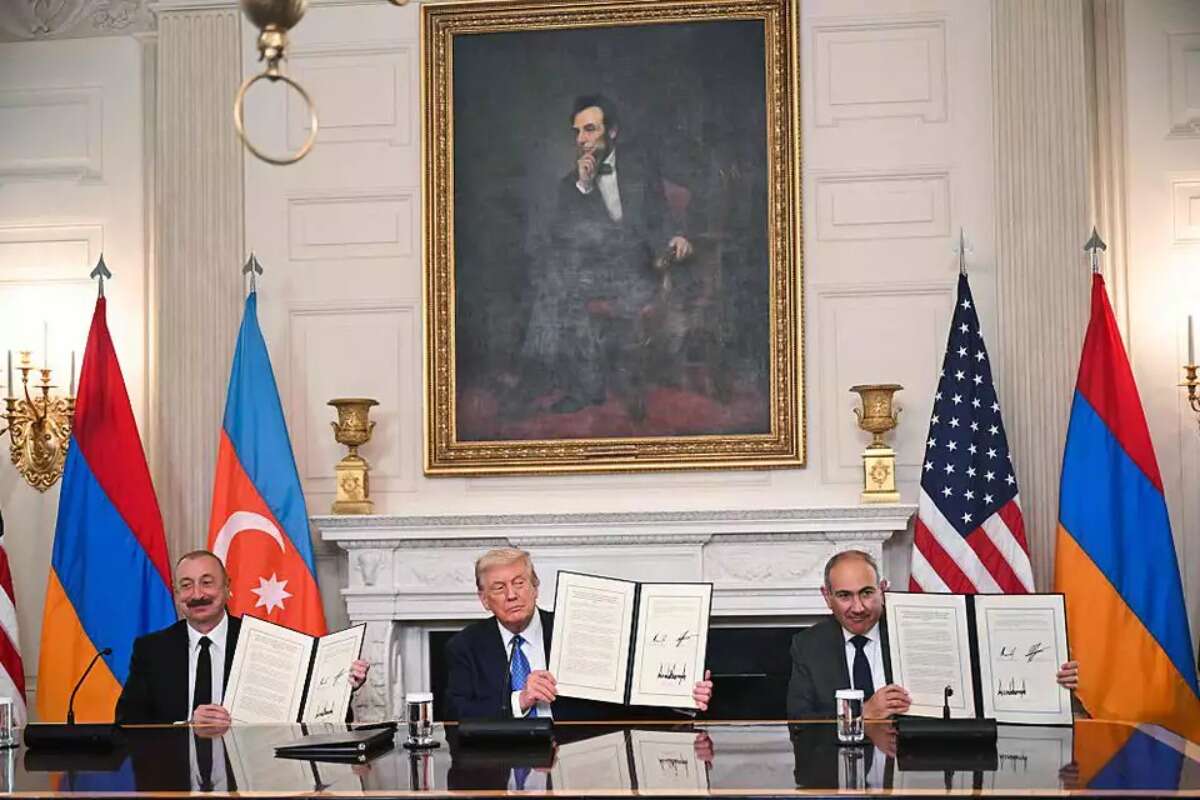
Armenia and Azerbaijan have signed a historic peace agreement at the White House, bringing an end to nearly four decades of territorial conflict. The deal, brokered by US President Donald Trump, gives Washington a strategic foothold in a critical region bordering Iran and deep within the former Soviet sphere.
Trump hosted Armenian Prime Minister Nikol Pashinyan and Azerbaijani President Ilham Aliyev for what he called a "historic peace summit" in Washington. "Many Leaders have tried to end the War, with no success, until now, thanks to 'TRUMP'," he wrote on his social media platform.
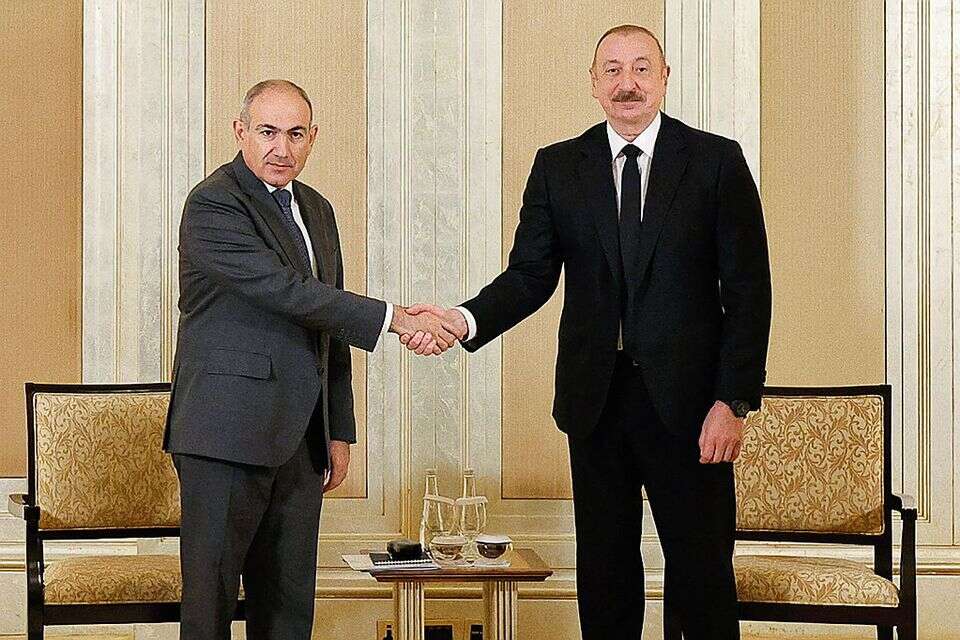
In a joint gesture, Aliyev announced that he and Pashinyan would submit a joint letter nominating Trump for the Nobel Peace Prize.
The two countries, Shiite majority but secular Azerbaijan, a close Israeli ally, and Christian Armenia, had been locked in a bloody dispute over borders and ethnic enclaves since the collapse of the Soviet Union, most notably over Nagorno-Karabakh. That region, under Armenian control since the 1990s, was recaptured by Azerbaijan in 2023, leading to the exodus of more than 100,000 Armenians.
Ultimately, it was Trump's resolution of the core territorial dispute that paved the way for the breakthrough agreement.

Although the two sides had reached terms back in March, the signing was delayed due to Baku's demand that Armenia amend its constitution to remove any language suggesting territorial claims against Azerbaijan. Pashinyan, weakened politically at home, had initially refused, fearing electoral defeat.
At the heart of the agreement is a provision granting the US exclusive rights to build a strategic transportation corridor through the South Caucasus. The corridor will connect mainland Azerbaijan with its autonomous Nakhchivan exclave via the Zangezur corridor, which runs through Armenian territory.
The corridor had long been a major sticking point. Baku had sought an extraterritorial route allowing goods to pass from Azerbaijan to Nakhchivan and Turkey without Armenian border checks, while Yerevan feared it would undermine its sovereignty and open the door to future territorial demands.
The American-brokered compromise allows for a middle path: the route will be built and operated by a newly established US corporation but will remain under Armenian law within Armenia's Syunik Province. The corridor is set to be named the "Trump Route for International Peace and Prosperity", or TRIPP.
The agreement represents a stinging diplomatic defeat for the Kremlin, which has long viewed the South Caucasus as its backyard. Moscow, bogged down in Ukraine, has been unable to dedicate resources to the region.


