

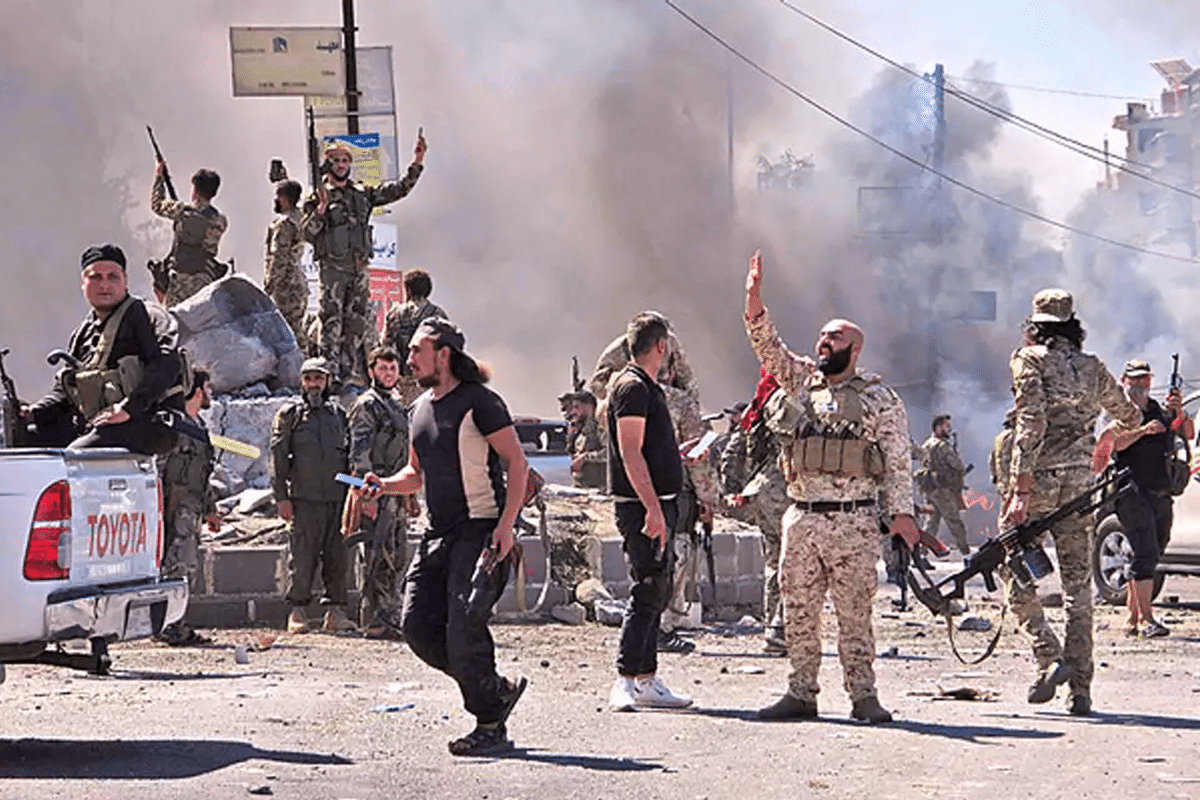
Mass killings of Druze and Alawite civilians, billions in reconstruction investments, and the formation of unprecedented minority alliances mark the stark reality nine months after Ahmed al-Sharaa (also known as Abu Mohammad al-Julani) consolidated power in Damascus. While the Syrian leader successfully courts international legitimacy through diplomatic charm and economic partnerships, systematic persecution campaigns against religious minorities reveal the brutal contradictions underlying Syria's celebrated "transition."
The regime's strategic positioning has masterfully served international interests. Forces under al-Sharaa's command actively combat Syria's narcotics industry, previously the Assad government's primary revenue source. Occasional interceptions of weapons shipments to Hezbollah further enhance the administration's regional credibility. Most significantly for European and Arab partners, the new government pledges to absorb millions of Syrian refugees currently residing abroad – a promise worth overlooking considerable human rights violations.
International investment flows reflect this pragmatic embrace. Al-Sharaa's government signed $14 billion in development agreements this month, encompassing Damascus airport modernization, commercial complexes, infrastructure rehabilitation, and subway construction. Qatar and Turkey lead the investment surge, joined surprisingly by the UAE. Trump administration representative Tom Barrack provided a ceremonial endorsement at signing ceremonies, symbolizing broader Western acceptance.

However, this diplomatic success masks a governing coalition dominated by Islamist organizations whose armed components systematically target minority populations while threatening regional stability. Rather than moderating extremist elements, Damascus actively promotes jihadist ideology through mosque-based distribution of radical literature and preachers.
Current religious dissemination includes works by Ibn Taymiyyah, the controversial 13th-century theologian whose writings advocate violence against Jews, Christians, and other minorities while declaring Shiites heretical. Ibn Taymiyyah's prominence among ISIS and al-Qaida adherents makes his official promotion particularly concerning for regional security and minority protection.
The Alawite community bore initial persecution, suffering mass killings in March that government investigation committees subsequently minimized through whitewashed reports. Similar whitewashing followed massacres and military actions in Sweida. These threats prompted unprecedented coordination among Syria's endangered minorities, with Druze, Kurdish, and Alawite leaders conducting joint video conferences to coordinate survival strategies.
"We seek not a religious state but a secular, civil, pluralistic, and decentralized system," declared senior Alawite cleric Rezaal Rezaal during minority leadership consultations. "Decentralized governance will constitutionally guarantee all communities' rights while providing ideal solutions." Participants explicitly condemned crimes against humanity on Syria's coast, in Sweida, and against Christian populations, emphasizing the need for administrative restructuring matching demographic realities.
Video: The massacre at the National Hospital of Sweida
Military analysts suggest Kurdish leadership leverages minority persecution to strengthen negotiating positions with Damascus, using documented suffering to justify autonomy demands and international intervention.
Israel's Druze Civilian Headquarters, directed by Sheikh Muwaffaq Tarif, coordinates international awareness efforts while providing emergency humanitarian assistance based on extensive field intelligence networks. The parallel "We Are Brothers Initiative" amplifies global attention to minority persecution through documentation and advocacy campaigns.
A senior headquarters activist, deeply familiar with Sweida conditions, characterized the situation as systematic extermination disguised as counterterrorism. "Violence escalated from July 13 with continuous insane killing. Despite US-sponsored ceasefire agreements, ISIS elements and al-Julani's establishment continued nightly attacks," the activist explained to Israel Hayom. "Every night our people die. Saturday, they deployed 300-400 ISIS fighters against a single village. Forty-one villages remain under occupation. Half the population fled while half remain trapped without communication. Israelis must understand this reality."
Recently exposed footage documents the hospital execution of medical personnel in Sweida. A volunteer physician testified to the Syrian Center for Human Rights about systematic intimidation campaigns. "From day one, Defense and Interior Ministry personnel occupied the hospital. These weren't tribal militias but official security forces wearing ISIS insignia. They assembled medical staff in the emergency room, asking first, 'Are you all Druze?' They claimed to provide security while simultaneously murdering a nurse in an ambulance."
The testimony continues with descriptions of deliberate dehumanization tactics. "They called us 'pigs' and confined us to single rooms. Sectarian abuse exceeded description – calling us 'infidels,' 'Zionists,' and 'traitorous collaborators.' Security forces confiscated smartphones, destroyed surveillance equipment, and positioned snipers on hospital rooftops."
"We Are Brothers Initiative" coordinators Aya Achimeir and Shiri Fein-Grossman draw explicit parallels to the October 7 attacks. "Current events mirror our October 7 experience – massacres, kidnappings, sexual violence, and international silence. With 50 hostages still captive after 675+ days, we cannot remain passive. This represents identical methodology and evil. Jews understand unanswered cries for help. Druze communities won't face abandonment – we share brotherhood beyond battlefield solidarity."

"Devil wears Prada"
The same activist detailed the month-long siege conditions producing death through starvation. "All access routes remain severed. Main highways from Damascus and western Daraa province are blocked by al-Julani forces. Video evidence shows Bedouin fighters and personnel wearing ISIS identification. These represent identical extremists from Jabhat al-Nusra – al-Qaida's Syrian affiliate – simply transferred to official government ranks. Only uniforms changed; the murderous mentality persists. Siege conditions created severe water shortages. A female physician died from medication unavailability. Dozens of wounded underwent limb amputations due to inadequate medical supplies. Civilians beg in the streets for basic flour rations."
Threats extend beyond Sweida to Jaramana, home to substantial Druze populations receiving explicit warnings about impending targeting. "These criminals are essentially 'Devil wears Prada' – Ahmed al-Sharaa in diplomatic suits. Most Druze support Sheikh al-Hajari (community spiritual leadership). The majority desperately pleads with Israel to intervene, occupy, and change circumstances. Two days ago, Red Crescent operations returned 30 bodies from massacred villages. Bulldozers systematically razed entire communities."
Regional response remains muted despite escalating atrocities. "Jordan maintains silence, understandably avoiding Bedouin mobilization. Lebanon similarly avoids involvement. Turkish personnel saturate Syrian territory while al-Sharaa's drone fleet originates from Turkish bases," the activist observed. He advocates pressuring Jordan's monarchy to establish humanitarian corridors while proposing UN intervention modeled on Gaza assistance programs.
Regarding recent announcements of local Druze governance structures, the activist emphasized survival priorities over political arrangements. "Leadership demands security above all else. With 2-3 million armed Bedouins and a murderous regime, no agreement provides reliability. Druze leadership recognizes this reality. Autonomy represents a mandatory survival strategy despite economic and human costs. This reflects evolving circumstances. If Vatican sovereignty exists, Sweida autonomy certainly remains viable. Regional autonomy could provide significant Israeli security benefits. Consider millions of ISIS-affiliated fighters positioned along borders with modern weaponry, capable of coordinated invasion on command. The international community ignored al-Qaida until September 11, and ignored Hamas until October 7. Current events demand attention. Are we relegating this to 'Druze problems'?"
"An entire people faces extinction. This campaign will continue for months, not days. Europeans prefer Ahmed al-Sharaa as a stable partner for refugee repatriation involving millions of displaced persons. Global awareness must increase. This man maintained al-Qaida membership," the activist warned while expressing skepticism about negotiated solutions. "These individuals only comprehend violence."
Despite international indifference, Israeli assistance receives tremendous appreciation within besieged communities. "Sweida Druze openly express gratitude. Israeli flags fly on residential buildings throughout the city. They recognize Israel as the sole nation capable of understanding their suffering. Surveying regional options, Israel represents their only source of hope. They view Israeli Jews and Druze as addresses for assistance. They grasp desperately at any available support."


