Since October 7, American and Israeli media have frequently reported a dramatic increase in antisemitism across the United States, from threatening graffiti and vandalism of Jewish and Israeli businesses to stormy protests on campuses. Media coverage presents an image of constant threat, a suffocating atmosphere, and growing insecurity among Jews and Israelis. But does the reality on the ground match this picture? Or perhaps this represents an exaggeration that gains resonance? We set out to speak with five Israelis living in different cities across the US, from Boston to San Francisco, to understand what is really happening on the ground.
From conversations with them emerges a complex picture: Antisemitism in the US indeed exists. Sometimes it is hidden and limited to signs, graffiti, and protests, and sometimes it is direct and aggressive - especially in sensitive centers such as campuses or businesses prominently identified with Israel. It appears that the level of exposure to hostile incidents depends largely on the personal choice of whether to externalize Israeli and Jewish identity. Those who identify openly, especially in protest-saturated environments, risk dealing with tangible - and sometimes even dangerous - antisemitism.
"They want Jews to feel uncomfortable," Sivan (real name withheld) | Bank employee, New York
Sivan, who preferred not to identify by her real name, has lived in New York for a decade. She initially came for studies, later worked as a lawyer, and today she is employed at a major bank in the city, a mother of two children. According to her, at the workplace, she has not experienced antisemitism directly, but heard conversations that included biased reports against Israel. On the streets, she sees repeatedly vandalized hostage posters with hateful writings such as "genocide," "f*** Zionism and Israel," and "Free Palestine." According to her, "The feeling is one of activism, aimed at making Jews and Israelis in the city feel uncomfortable."
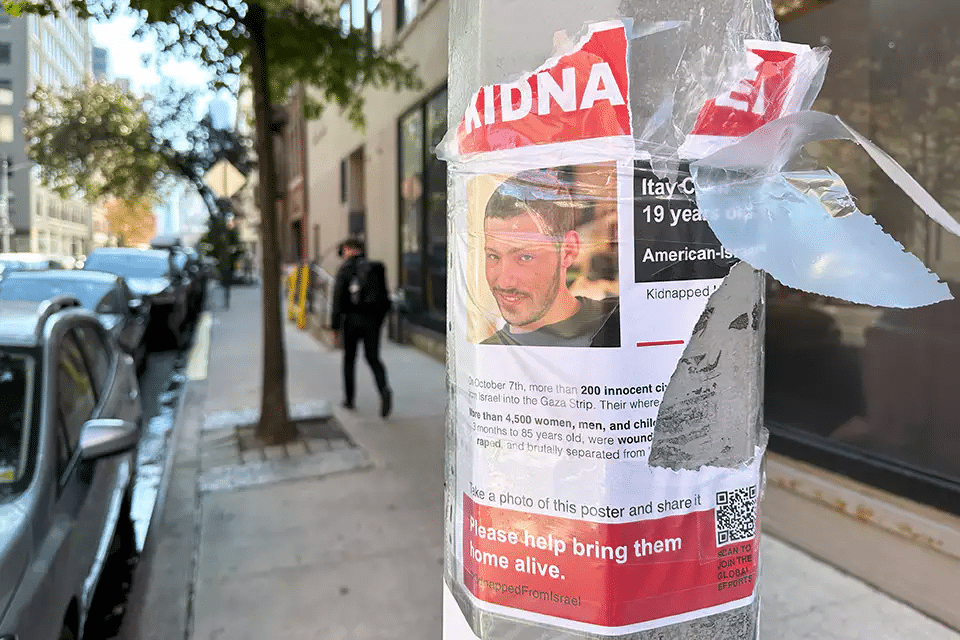
Sivan was exposed to a protest that passed near her home in Manhattan, with keffiyehs and chants of "from the river to the sea." According to her, she tried to confront young people who tore down hostage signs. In response, one of them told her, "Go back to Poland." "It was not pleasant to hear, and I am a granddaughter of Holocaust survivors," she emphasizes. In addition, she points to cases of vandalism of Israeli businesses in New York, including cafes, and criticizes the Democratic candidate for mayor, Zohran Mamdani, whose "positions are extreme and he is not expected to defend the Jewish community. There is reason to worry."
In Israeli groups, she hears about harassment of Jewish children, and there is also graffiti and vandalized pictures of hostages in public spaces. At a protest she attended with her family in Central Park, for the release of the hostages, they shouted "Free Palestine" at her. However, Sivan believes that "the city is still comfortable for Israeli tourists to visit, if they maintain a low profile."
"Difficult experience at the commencement," Shani Farjun | MBA graduate at MIT, Boston
Farjun moved last year from Tel Aviv to Boston as part of an MBA program at the prestigious MIT university. According to her, her place of study at the university is physically distant from the main campus, but she heard from her friends about the anti-Israeli protests at the institution.
The most difficult event, according to her testimony, was recorded at the commencement. "One of the students, who is 'very Free Palestine,' changed at the last minute an agreed speech she was supposed to give, and called on MIT to cut all ties with Israel. Within seconds the crowd raised PLO flags."
In response, Fargon and her Israeli friends left the hall. "It was super scary, stressful and infuriating. There were guests who came from Israel, and this is what they were forced to see." She was also angry at the anemic response of the university president, who only said "We at MIT believe in freedom of expression, and there is a place and time for everything." Fargon was comforted by the fact that at a smaller ceremony there were foreign students who supported their Israeli friends with words such as "We very much love and appreciate you."
Fargon tells about a complaint that Israeli students filed against MIT. On her initiative, last May a delegation from the university came to Israel, with a tenth of the members of her study program. Their visit to Israel was crowned a success, despite a Houthi missile that hit the Ben Gurion Airport area then. According to her, "The Israel brand is perceived positively at the business school, but in certain communities there are unrelated anti-Israeli protests that pop up."
She does not hide her Israeli identity. "I will always say I am from Israel. I usually get empathetic responses, even if behind my back they will say something else about me. I don't experience antisemitism day-to-day, but when it comes, it hits you hard. The ceremony was a very difficult experience."
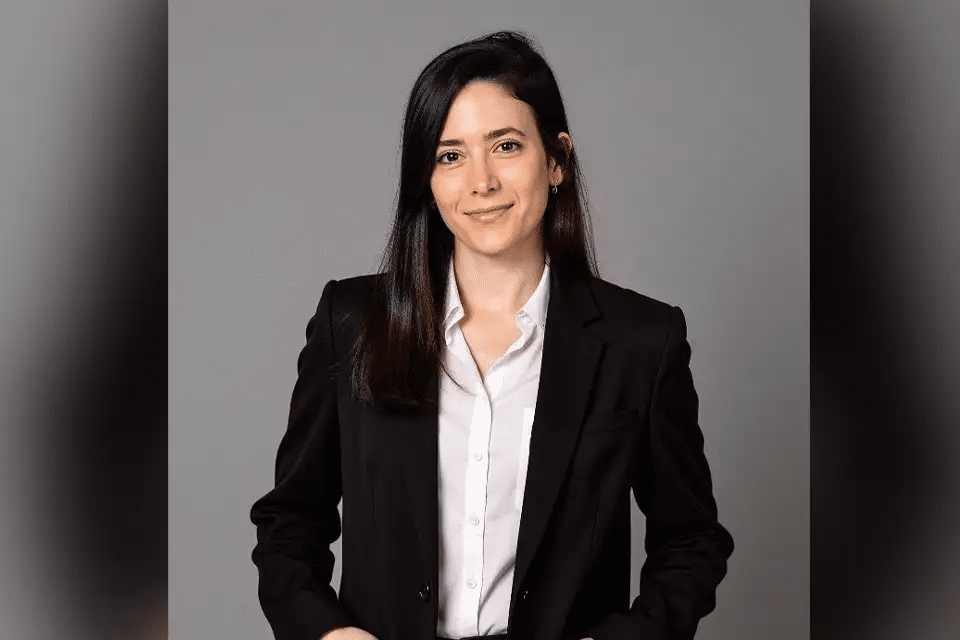
"Someone spat on the store floor," Nofar Shablis | Bakery business owner, Atlanta
Nofar moved in 2021 with her husband Sagi and their daughter to Atlanta, Georgia, and today they are parents of three. They run a cookie shop across from Emory University, a center of anti-Israeli protests. "After October 7 we projected the Israeli flag on a screen in the store, as a sign of identification and support for our country, and since then we are experiencing severe and ongoing antisemitism," she explains.
According to her, within less than two months they began to feel a decline in sales, and subsequently received aggressive responses. "People enter the store, scream at us, curse us and Israel, and say we should be ashamed, because we support genocide." She tells that one anonymous person spat contemptuously on the store floor, another called and declared he "hates Jews," and threatened "to burn down the place and whoever is inside it," and there was also someone who sent a postcard with a picture of Anne Frank, with threats written on the back of the picture.
The protest also included extensive vandalism at the store. "They painted PLO flags on our tables. Someone drew a swastika on a sign facing the store, and also spilled paint on the camera outside the store and on the door." According to her, anti-Israeli protests were held outside the store entrance, and a boycott was organized that includes intentionally publishing negative reviews on Google and Facebook, aimed at harming the business.
According to Nofar, "Emory University became a direct source of the hostile pressure we are experiencing. Customers curse and leave. There were cases where people chose products but canceled purchases when they saw the Israeli flag."
"This is about a handful that has a very big influence. Since October 7 Israelis in the US are more tense, there are lots of threats, and in parallel there is an increase in security at Jewish institutions. Alongside this, there is also an increase in the number of American Jews who proudly wear Jewish symbols, Star of David necklaces and 'Chai.' We are proud to be Jews, we are an eternal people, not afraid and they will not break us! Am Yisrael Chai!"
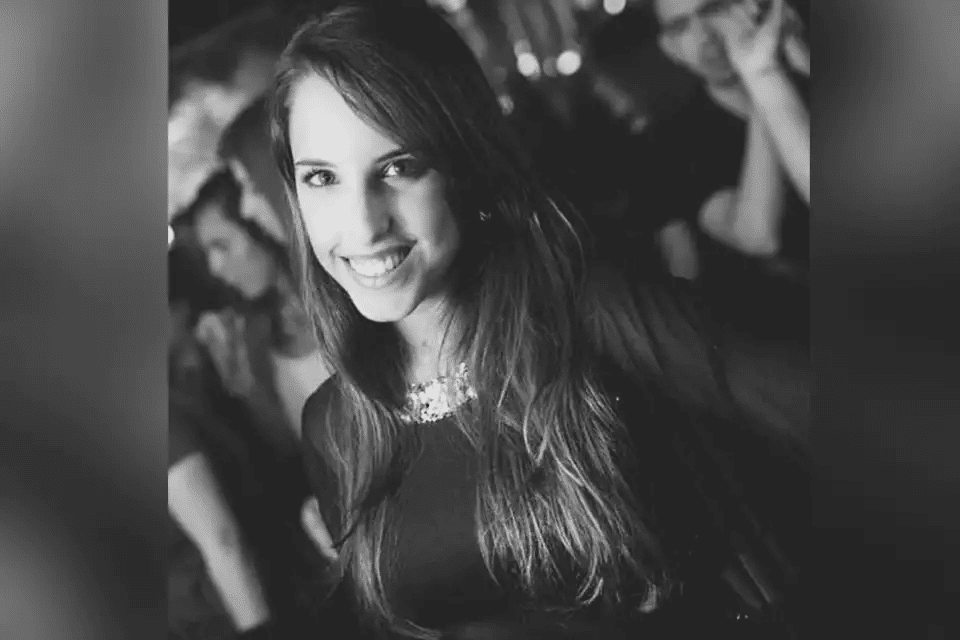
"Careful before speaking Hebrew," Asaf Geva | Programmer, San Francisco
Asaf, originally from Haifa, moved to study in the US in 2014, and since 2018 he has lived in northern San Francisco and works in programming. According to him, he has not experienced antisemitic reactions, not against him or against any of his acquaintances, but encountered graffiti writings in public spaces in favor of freeing Gaza and Palestine. He admits that since October 7 he is "more hesitant" to mention the fact that he is Israeli.
"There is no distinct antisemitism, and on a nearby house in my neighborhood Israeli flags even fly and a giant poster of the hostages, but a group of friends with whom I used to play online computer games changed their attitude toward me after October 7. It included someone very very pro-Palestinian, and it has been more than a year and a half since I heard from the group at all." At his workplace, he says, the issue of Israel and Gaza hardly comes up, except for a single case where "a certain employee I have no contact with said negative things about Israel."
Nevertheless, Geva describes a change in his sense of security. "If someone on the street had asked me where I am from before October 7, I would have answered that I am from Israel. But now I probably would not say, because it simply does not feel smart. I examine the situation more before I speak Hebrew in public. Day-to-day, the fact that I am Israeli is not too relevant, but since October 7 I think much more about my Judaism and about the political situation from all sides, and it is not fun."
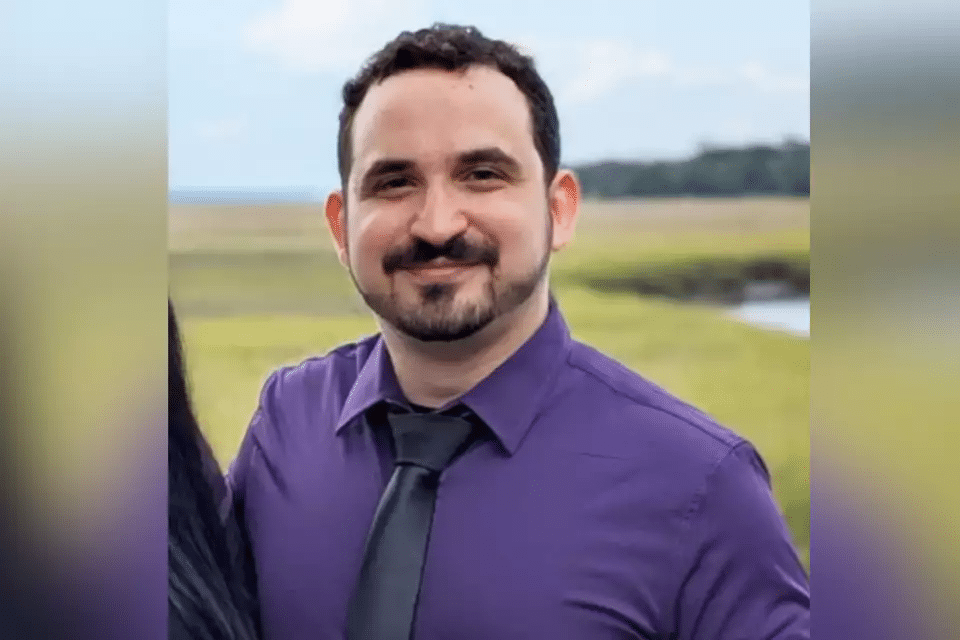
"There is an atmosphere of hostility toward everything identified with Israel," Adam Odesser | Jewish community worker, Rockville
Adam, originally from Jerusalem, grew up to an American mother and Israeli father. After completing military service he was sent by the IDF and the Jewish Agency to Jewish summer camps in North America, where he met his wife Emily. Initially they lived three years in Israel, and in 2019 moved to Rockville, Maryland, near Washington DC, to be close to her family. According to him, the area is characterized by a vibrant Jewish community, "and a fairly large Israeli community."
Since October 7 Adam has not experienced personal antisemitism, "but we feel its presence in the environment, including 'Free Palestine' stickers and graffiti at transportation centers and on campuses, property vandalism at restaurants with Jewish or Israeli symbols, and tightening of security procedures at Jewish schools. There is an atmosphere of hostility toward everything identified with Israel. As part of my work at the Jewish Community Relations Council (JCRC) in the Washington area, I hear stories of community members who experience incidents directly."
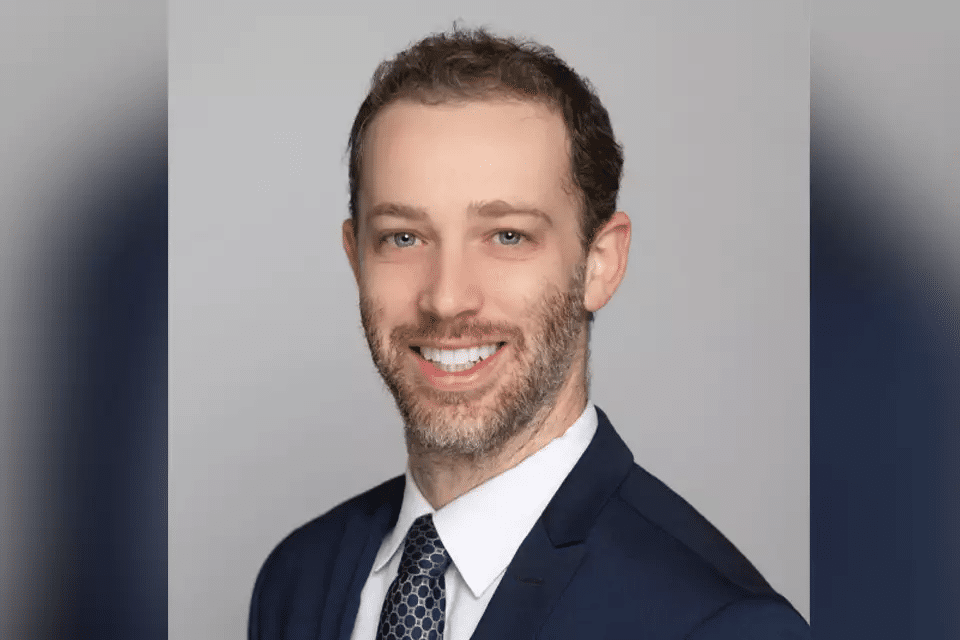
Adam explains that his close environment "is supportive and understanding," but in conversations with more distant people there is "hypersensitivity or avoidance of topics related to Israel. After October 7 every community event became a small security operation, with security circles, barriers, bag checks and coordination with police. On one hand this created a sense of security and solidarity, but on the other hand also a loss of the feeling of normality."
He describes the atmosphere in the US as "a combination of warmth and concern. A strong and united Jewish community - alongside more hostile expressions toward Israel and Jews in the public space. This is not a daily danger for most of us, but it is a reality of constant alertness, knowing where you are, who you are talking to, and how you present yourself."