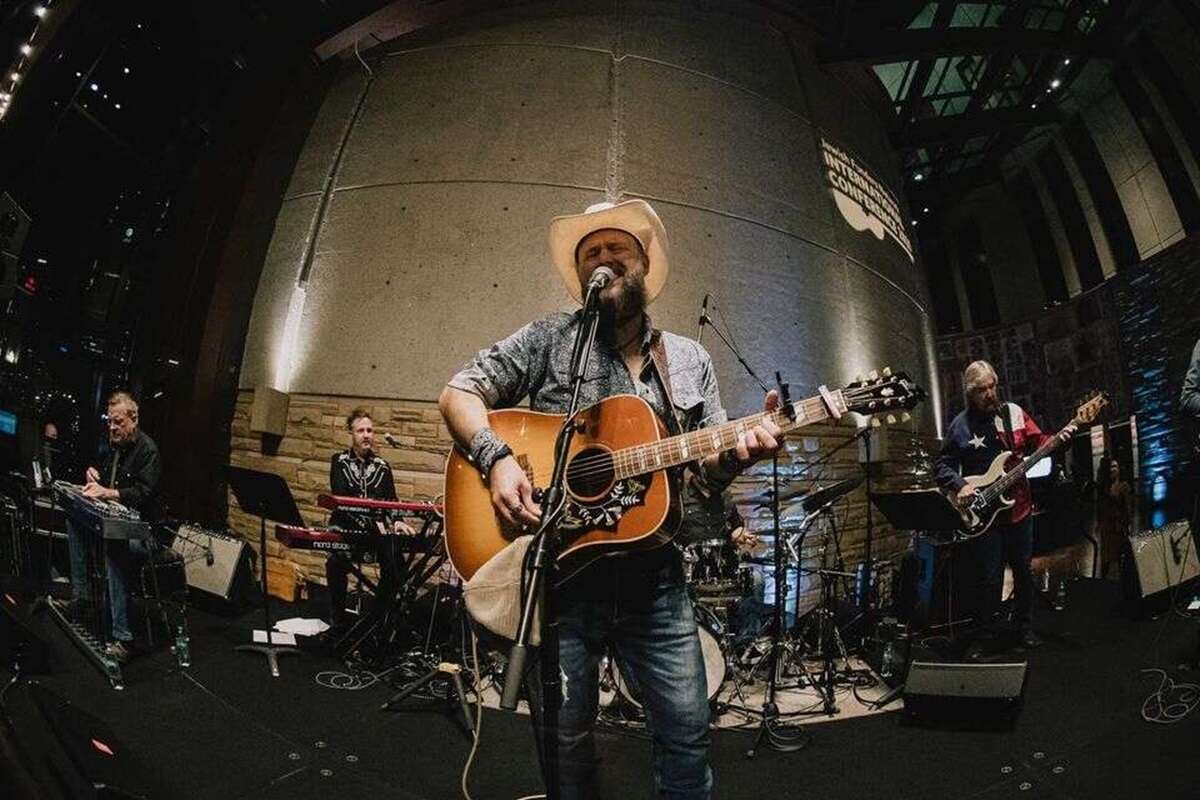
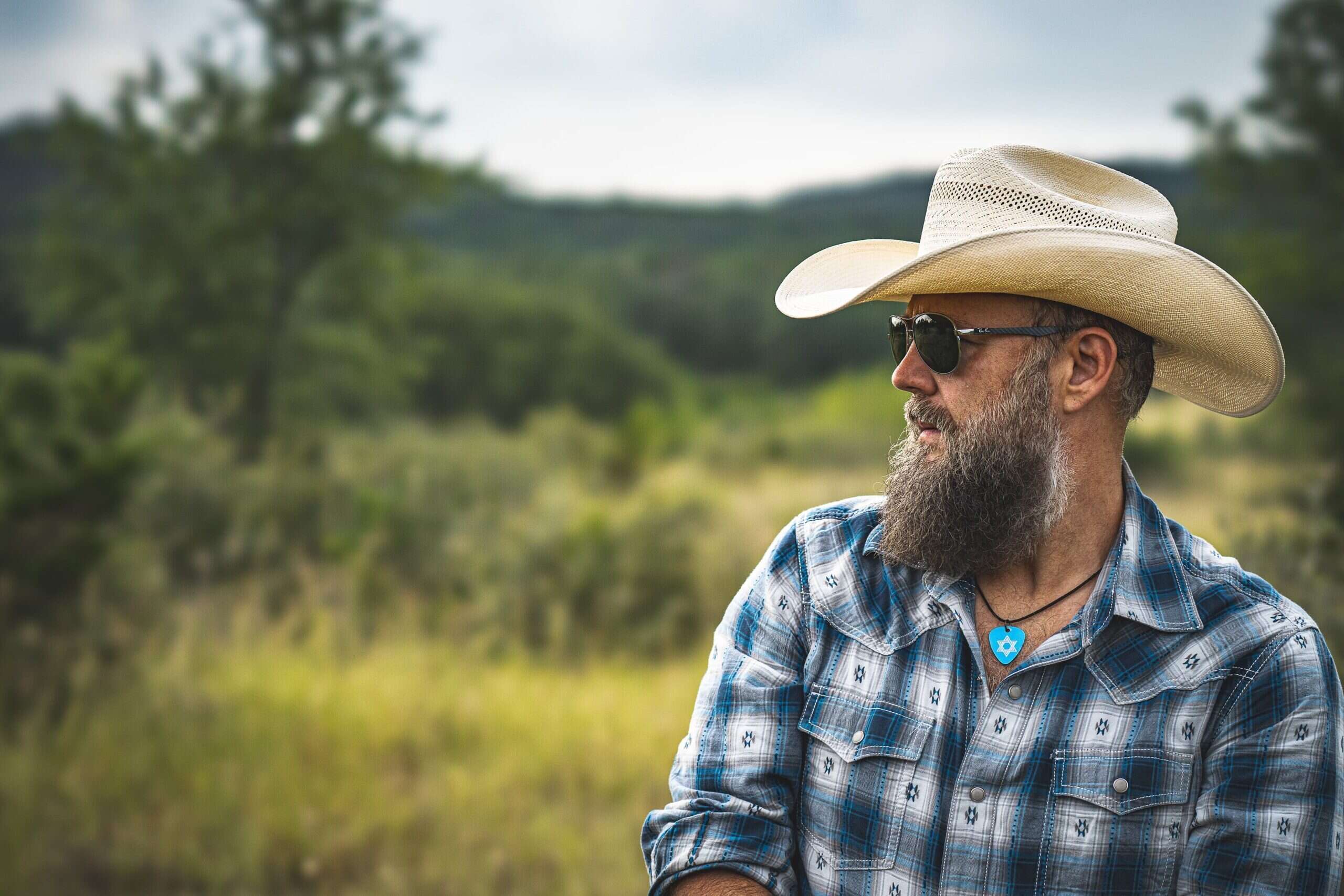
On stage, he looks like any other country singer from Texas – the southern accent, the ornate boots, the checkered shirt, and the horn-adorned belt buckle. But every morning, before Joe Buchanan puts on his cowboy hat, he stops to pray shacharit from the heart. This unexpected meeting – between old-movie Texas and a deep connection to religion – gives his music a unique sound.
For many years, he lived without knowing anything about Judaism. He didn't know any Jews, had never seen a kippah, and had never entered a beit midrash. "The Jewish community in Houston is huge, but I'd never seen a synagogue in my life," he tells Israel Hayom.
Everything changed that day when he visited the Holocaust Museum in Washington with his wife, from which the two emerged shaken and disturbed by what they saw. There, out of nowhere, she told him, "I want to reconnect with the faith of my people." Buchanan was surprised and asked what she meant – and was then amazed to hear for the first time the words "I'm Jewish." This wasn't just a surprising discovery for Joe, but also a door opening to an entire world he didn't know existed. "We never had a religious wedding ceremony; we just got married at city hall. The subject of religion never came up," he says.
The initial shock led the couple to the door of Rabbi Stuart Federow in Houston. Buchanan introduced himself simply: "My wife and son are Jewish – I'm not. None of us knows what that means." The rabbi's answer changed his life: "There is one God, and even if you don't believe in Him – there's nothing wrong with you. God loves you exactly as you are. The more good you do in the world, the stronger your faith will become."
Buchanan says this was the first time he heard an adult tell him he was perfectly fine exactly as he was, and the rabbi's words touched him to tears. At that moment, Buchanan decided he wanted to be part of this story – and so his conversion journey began. "Not everyone liked this idea of mine, to convert," he says sadly. "My immediate family stopped talking to me completely. For years now. But on the other hand, I discovered another close family, and the connection with my wife's family grew stronger," he says. "That's already in the past, there's not much to do about it."
As he deepened his Torah studies, he discovered that the most natural way for him to express what he felt was to write songs. "When I sit with the guitar and compose, I feel like I'm delving into the story and connecting to it," he says enthusiastically. This is how melodies were born based on Torah portions, on prayer, and on ancient Jewish stories, but with a distinct Texas country sound – the guitar, the deep voice, and the southern spirit. His rabbi heard one of the first songs and pushed him to perform in the community. What started as an assignment from the rabbi quickly became a real musical career, with three albums and performances throughout the US.
This connection between Texas and Judaism sounds almost impossible on its face – a cowboy with a southern accent playing and singing ballads about Abraham, Isaac, and Eve. But this very contrast has won over many communities. "Every verse in the Torah is actually a song waiting for someone to compose it," he says. His performances draw teenagers alongside adults, Jews and Christians, and everyone waits to hear how he connects prayer with country music. "There are those who tell me my songs bring them back to tradition, some say it gives them strength in moments of crisis – and there are those who simply enjoy the southern sound."
Has antisemitism reached you already?
"In my life, I never heard a bad word about Jews, it just wasn't part of my world," he says. "But the moment I got close to Judaism, it suddenly jumped from every direction, and online, it's endless. I do lives on TikTok, and people just curse me – only because I'm Jewish. Only because I'm excited about my Judaism."
He also experiences difficult moments offline: "Once at Disney World, someone saw the Star of David I wore around my neck, he approached me and whispered 'f--- you' and disappeared into the crowd. It was strange. All I wanted was for him to stay and we'd talk, but he ran away."
He says the hatred of Jews has escalated recently: "I was in synagogue one Shabbat, and suddenly a man entered and threw coins at our rabbi. He started cursing and shouting things against Jews," he recounts. "Without thinking twice, I got up – me and another worshiper – and we took him outside. I have no patience for this. There's no place for such hatred."
He sees this as personal responsibility: "In our community, we need to watch out for each other. We can't let this interfere with our prayers or our lives." And that's why on his social media, Buchanan doesn't let hatred affect his path: "I delete and block them – as far as I'm concerned, my pages where I sing and tell my story, that's my community, and there's no place for that there."
What are you experiencing in Texas since October 7?
"It's a subject that accompanies us every day. Every Shabbat and every performance. I come to communities and synagogues and see pictures of the hostages on the tables, we're constantly praying for them, talking about this subject all the time, and talking about Israel all the time."
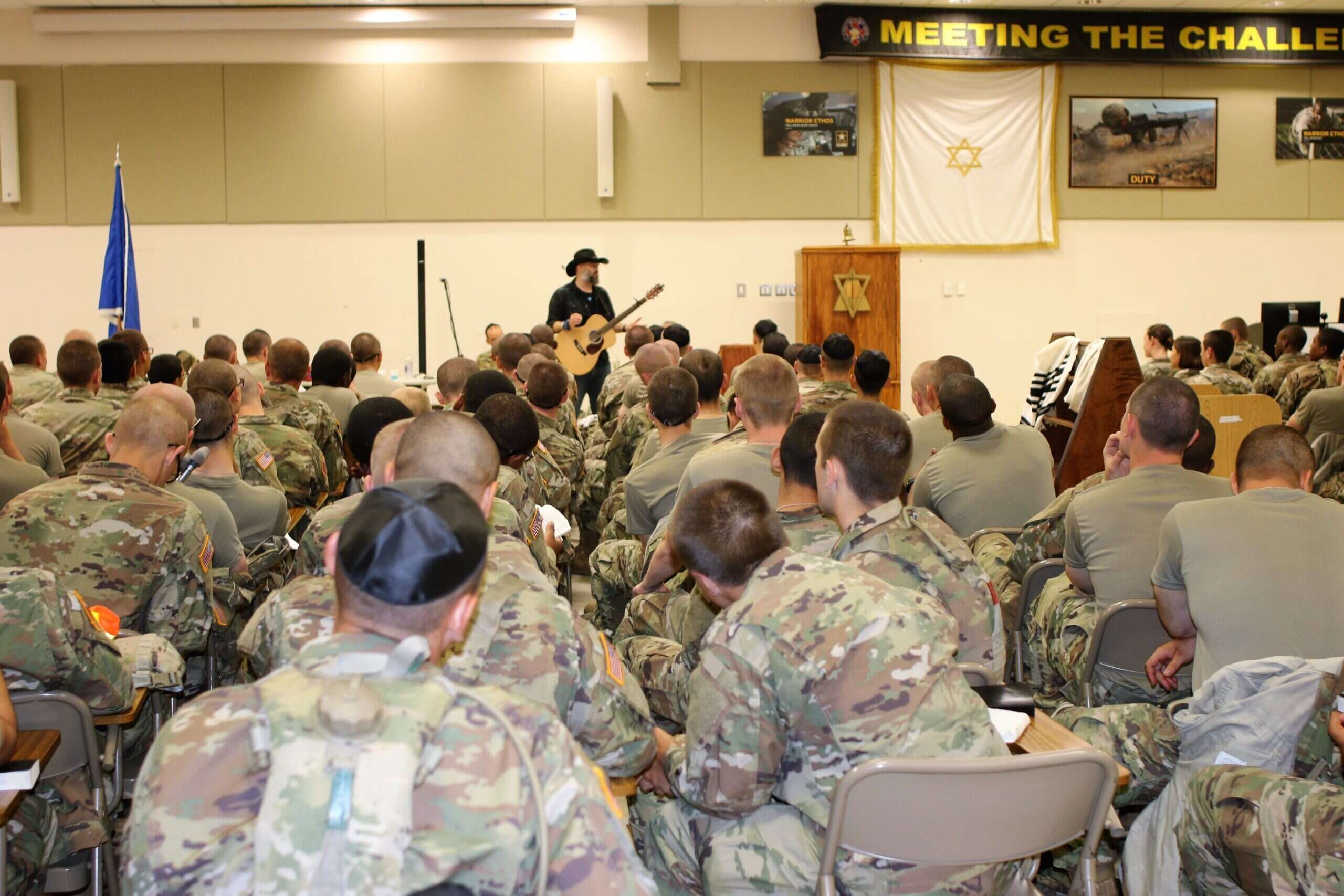
Buchanan describes how the disaster actually created moments of unity: "There are synagogues that never did anything together – and suddenly they're gathering for joint events. People want to be together, to stand together against the darkness." And he adds: "Everywhere I perform, there's a feeling of togetherness and pride. Even in places where there are security threats, audiences still come and aren't willing to give up."
In November, he will return to Israel – this time not just as a tourist, but as an artist bringing his guitar and Texas voice. "This will be the first time I'm performing in Israel," he says excitedly. "On Thursday, November 13, I'll play in Jerusalem, and I hope we'll do another show in the north." But not just music is planned in the schedule: "We'll visit Re'im at the Nova festival victims memorial site, we'll meet captivity survivors, we'll help prepare meals for security forces, and volunteer in kibbutz rehabilitation. My goal isn't just to sing and play – but also to be present, to help, to bring Texas love with me."
He says Israel is much more than a performance destination. "The last time I visited here, I saw people arguing at protests about the judicial reform, but everyone was waving the same flag," he says enthusiastically. "It was a moving sight – difficult disagreements, but with a deep sense of national unity." He sees the upcoming visit as an opportunity to deepen the connection: "I love Israel and want to return again and again. For me, it's a place that connects my spiritual roots with the people themselves. Every minute here is a gift."