

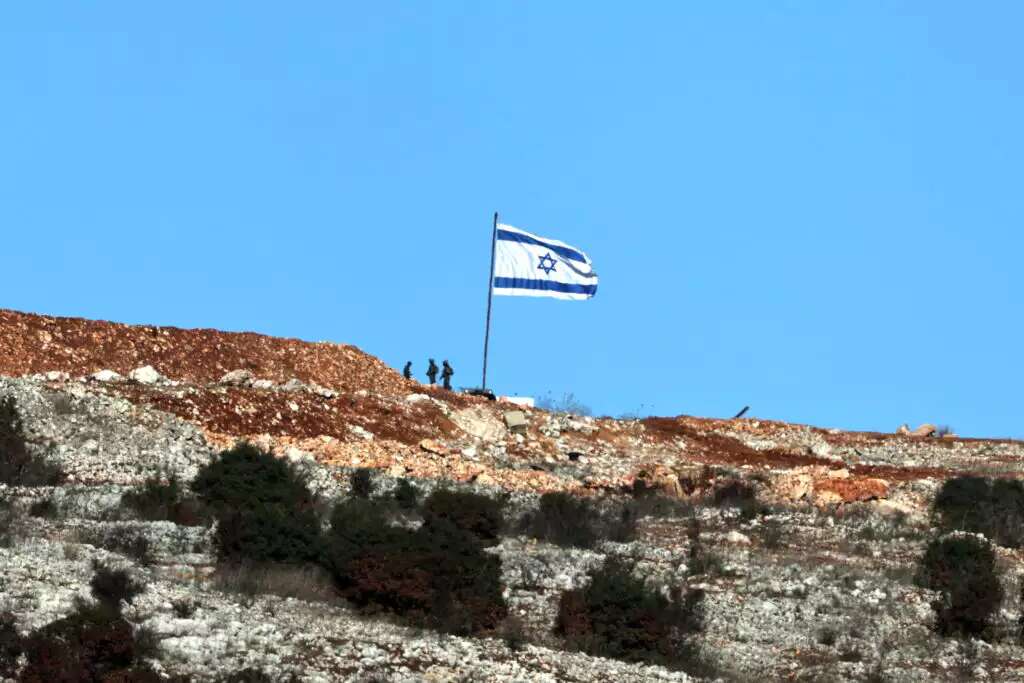
The Prime Minister's Office announced Monday that Israel welcomes the significant step taken by the Lebanese government under President Michel Aoun and Prime Minister Tammam Salam. Lebanon's decision to move toward dismantling Hezbollah's arsenal by the end of 2025 has been met with Israeli appreciation, along with a pledge of support and reciprocal measures to back these efforts.
In light of this development, Israel said it was ready to support Lebanon in its efforts to disarm Hezbollah and to work together toward a safer and more stable future for both countries. As part of this, Israel clarified that if Lebanese security forces take concrete steps to strip Hezbollah of its weapons, it will respond with reciprocal actions, including a gradual reduction of Israel Defense Forces presence in coordination with the United States.
The Prime Minister's Office said, "Now is the time for Israel and Lebanon to advance in a spirit of genuine cooperation, focusing on the shared goal of dismantling Hezbollah's arsenal and promoting stability and prosperity for both countries."
Dramatic developments
The past two weeks have marked a potential historic turning point, as for the first time in decades the possibility of security arrangements and recognition agreements with two of Israel's neighbors is taking shape, despite Hezbollah's staunch opposition.
On August 7, the Lebanese government held a dramatic session in which it approved, in principle, the goals of a US plan presented by envoy Tom Barrack to dismantle Hezbollah's arsenal by the end of 2025. Five Shiite ministers walked out in protest, but the decision passed, heightening tensions with the Iranian axis. At the same time, the Israel Defense Forces carried out a strike deep inside Lebanon, killing Dr. Alaa Hani Haidar of the Lebanese University, who was affiliated with Hezbollah.
Hezbollah's resistance
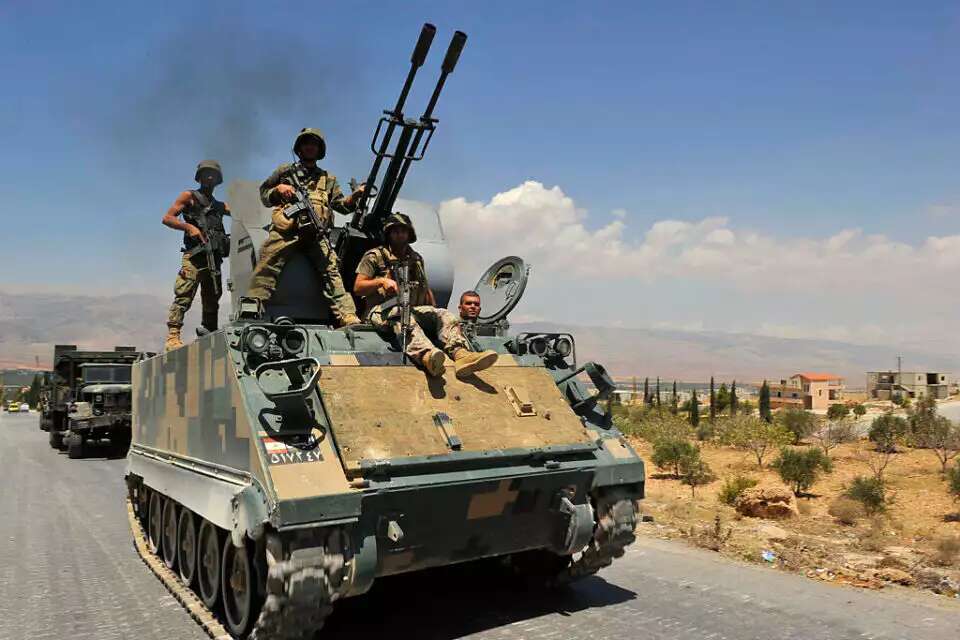
On August 23, Hezbollah escalated its response to the Lebanese decision. Representatives of the terrorist organization met with presidential and military envoys and delivered a clear warning: implementing weapons collection would mean confrontation. The group explicitly threatened to step up street protests and rejected even "formal steps" to centralize weapons under state control. Hezbollah lawmaker Mohammed Raad demanded that the government retract its approval of the US plan.
On August 24, US envoy Tom Barrack arrived in Israel for a series of meetings with Netanyahu, Defense Minister Israel Katz, Strategic Affairs Minister Ron Dermer and Foreign Minister Gideon Sa'ar. Talks focused on advancing normalization with Lebanon, with an Israeli official confirming that Washington views Lebanon as a priority for forging new agreements with Israel — beginning with a non-belligerency pact, followed by a broader recognition agreement.
Despite the reported progress, significant gaps remain. Between Israel and Syria, disputes persist over the 1974 disengagement agreement, the status of the Druze-majority province, and the level of Syrian military presence in the southern districts of Syria. In Lebanon, Hezbollah continues to fiercely oppose the plan and threatens confrontation if the decision is implemented.


