

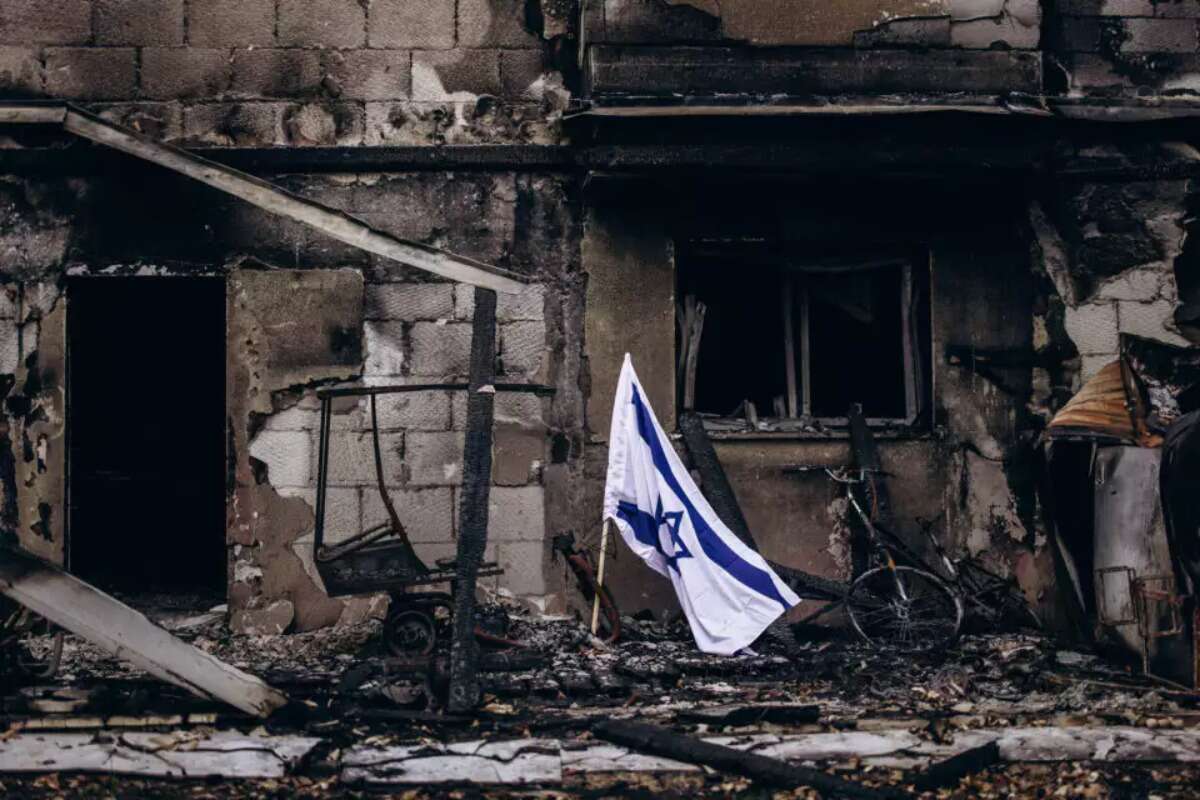
"Fire and Rescue Services, how can I help?" "In Sderot, near the library… many dead. Hamas came in here and shot everyone at the station by the library. Hurry, there are people here… many people dead. They're driving around in their vehicles shooting."
This was one of the calls that reached the Fire and Rescue Services hotline in the first hours of the October 7 massacre, revealed here for the first time.
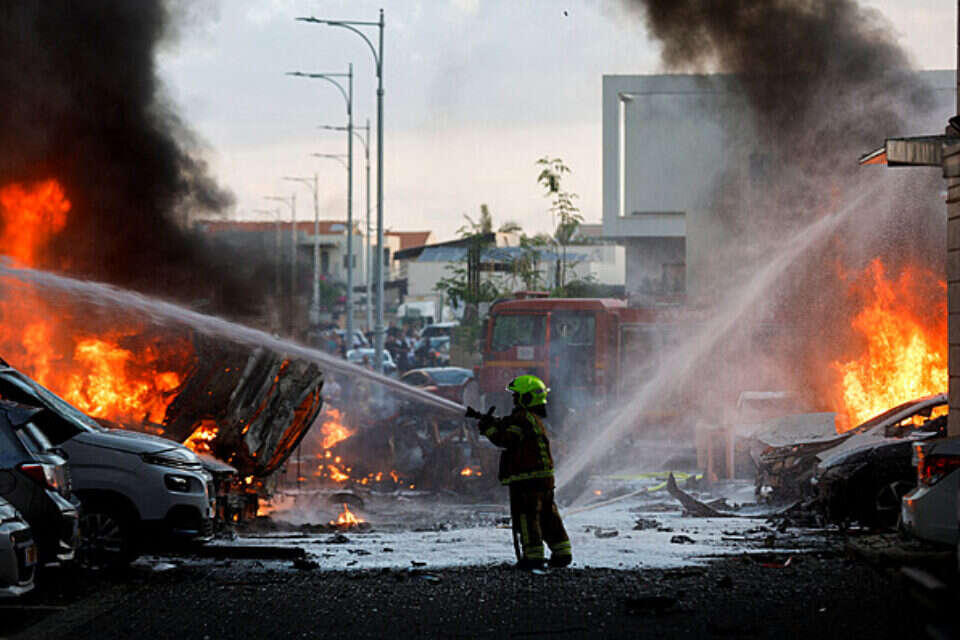
That morning, the calls flooding the hotline were unlike anything the operators had ever handled. Not a house fire, not a car accident. These were emergency pleas from residents of the western Negev, from Nova festivalgoers, from terrified people begging for help in their last minutes. The operators tried to calm them, to look for answers, to direct forces, but they knew the chaos outside was far beyond their reach. Calls were cut off suddenly. Sometimes by a burst of gunfire, sometimes by a heavy silence. What remained on the line were the sounds of fire, of weeping, of the devastating knowledge that no help was coming.
Since then, those operators have carried the invisible wounds of war. Not physical injuries, but searing memories of calls that never ended. They became unwilling witnesses to atrocities through a telephone line, young people who suddenly found themselves transformed from dispatchers into silent companions to death.
Idan Hazan, the shift commander at the Southern District command-and-control center, remembers the exact moment everything collapsed: "It was sudden. 6:30 - boom, like the world just crashed. I'd never experienced anything like it. The first calls poured into the center without pause. Not routine reports of fires or accidents, but choked whispers from my own firefighters on their way to work: 'Idan, they're shooting at me.'"
In those minutes, Hazan and his team realized they were facing a nightmare for which there had been no preparation. Operators had to answer mothers who could not reach missing fathers, desperate pleas for help tangled with reports of colleagues, firefighters and officers, who would never return. Minutes became hours. Calls ended in bursts of gunfire, in silence, or with the certain knowledge that the caller would never answer again.
Hazan recalls the shock of losing his own men: "Someone got a call from another center about one of our firefighters. At first I said, 'No way, I just saw him here at the station.' And then I realized it was true. Later I got word about another. Just the night before I had sent him to investigate a fire. He said, 'No problem.' By morning, I heard he'd been shot. How, God? How? I broke down at my parents' house. They had never seen me like that. My friends were murdered, and I will never see them again."

Amid the chaos, there were also the haunting calls from civilians: "I'll never forget a call from a family in Be'eri or in Kfar Aza. They were screaming: 'We're burning, they set our house on fire!' - and then the line went dead. And you know you'll never reach them. I felt powerless. My job is to save lives, and in that moment, I realized there was nothing I could do." Nearly two years later, those memories still accompany Hazan and the young operators who came to work that morning expecting a routine shift, only to leave scarred in ways no one can see.
Capt. Keren Hiba Naim, commander of the national command-and-control center, recalls the moment she grasped the scale of the massacre: "From the first barrage, at 6:30, we understood this was something different. A massive rocket attack, across the country. We immediately reported up the chain of command, and within half an hour, the emergency protocols were activated. Very quickly it was clear this was extraordinary, and the call load was climbing at a pace we had never experienced."
But these were not normal calls. This time, they were from people trapped in a nightmare with no escape: fire raging inside, terrorists outside. "We were used to telling civilians to move to another room, to open a window for fresh air. But here, we couldn't say that. On one side, terrorists. On the other, flames. What can you possibly say to someone in that situation? Every answer could be a death sentence."
The operators, most of them just 21 to 27 years old, were forced to confront unthinkable dilemmas. A voice screamed down the line: "They're shooting at me" - what do you say to that? A family trapped in a burning house begged: "We're holding the door shut, terrorists are outside. Can we let go? Can we stop holding?" Wounded civilians were given instructions on how to apply a tourniquet, something never part of the hotline's job.
Naim describes the operators' inner torment: "The DNA of an operator is to take a call and pass it on to field crews, and that's where it ends. On October 7, it was totally different. We couldn't send out firetrucks. There was no response on the ground. The calls began and ended with us. Some lasted 40 minutes, 50 minutes, an hour and a half. The operators stayed on the line, sometimes trying to calm people, sometimes just staying silent with them until the very last moment, until the call was cut by gunfire, or until there was no breath left to hear."
In retrospect, Fire and Rescue Commissioner Eyal Caspi says: "Today we are much better prepared, far more professional, more determined, and fully aware of the immense responsibility on our shoulders. I am proud of the service. It is small, but as I always say, these are people with soul. People willing to give everything, even their lives, for the residents of Israel. Our mission is to build the national resilience that will allow the security forces, the IDF, and all agencies to prevail on the battlefield, and to ensure the swift return of all the hostages and missing persons to their families."


