


Israel's political leadership is preparing to blame the IDF, and in particular Chief of Staff Lt. Gen. Eyal Zamir, if the operation to take control of Gaza City does not topple Hamas rule or secure the release of hostages. On the other hand, if the operation succeeds, the government intends to take credit. That is the assessment of senior IDF sources who spoke to Israel Hayom, voicing deep frustration with political leaders, who they say are deliberately keeping the top brass out of behind-the-scenes decision-making.
If the operation falls short, military sources say, the government will claim the IDF, and especially Zamir, was "dragging its feet." The recent attacks on the chief of staff, they argue, are a deliberate attempt to prepare a scapegoat, "so they will always have someone to blame." Zamir, for his part, has repeatedly stated in every forum that he opposes halting the war before Hamas is defeated. Just yesterday he reiterated that position in a video released by the IDF Spokesperson's Unit while speaking to reservists who had reported back for duty.

At the same time, he believes Israel should seize the current opportunity for a hostage deal. Otherwise, in a few weeks, the IDF could find itself fighting inside Gaza City under worsening international pressure, with dozens of soldiers killed, no hostages released and no agreement in sight. Zamir argued in cabinet discussions that Israel must free as many hostages as possible now, and during the 60 days of a proposed cease-fire negotiate a comprehensive hostage deal and an end to the war. He stressed that such efforts should be tried before sending tens of thousands of soldiers into combat.
Toward military rule
It should be noted that the plan the IDF is set to carry out in the coming days, unless a hostage deal materializes, is not the original plan that Zamir had opposed and described as a "strategic trap." Rather, it is a revised operational plan drawn up by the Southern Command and approved by him.
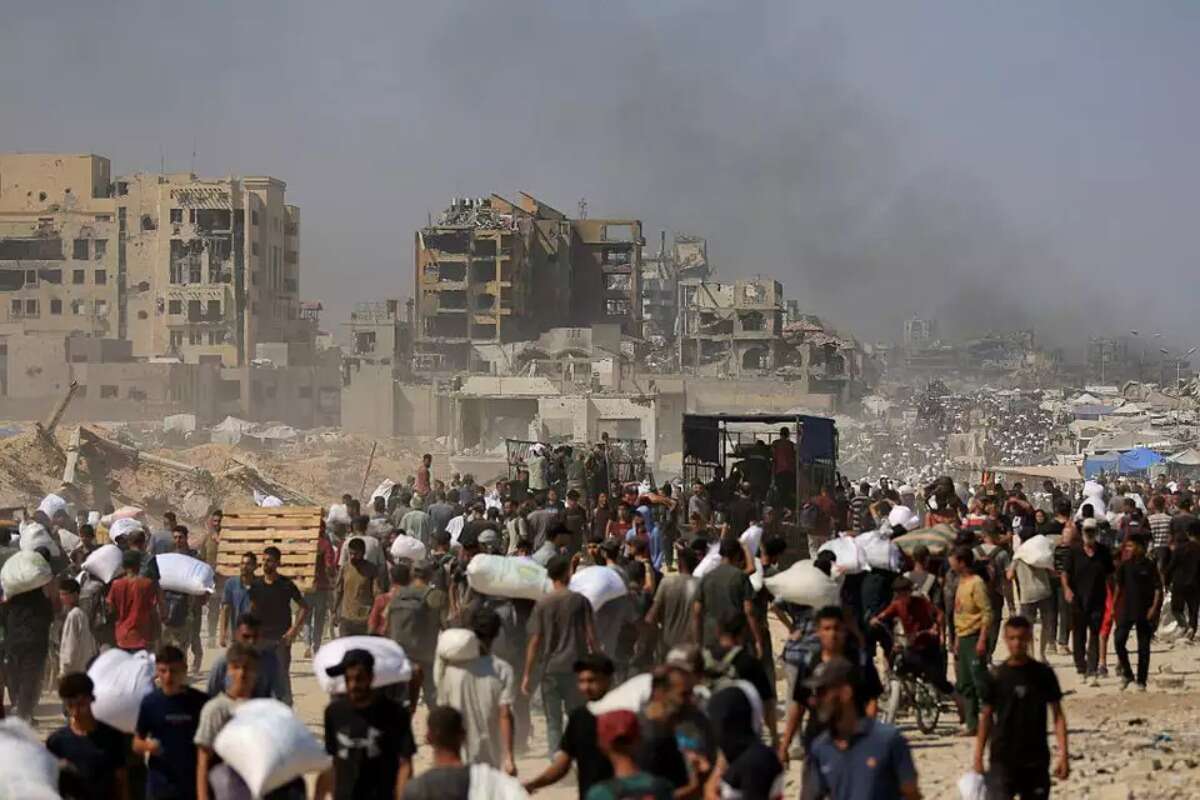
Still, Zamir presented the cabinet with the difficulties ahead, stressing that combat in Gaza City will be far from simple. The city is densely populated, with some 800,000 Palestinians still there. According to military estimates, Gaza is laced with explosives and underground networks that will inevitably endanger Israeli troops. Senior officers say they are prepared for the mission, but for the sake of protecting soldiers' lives, operations will be slow and heavy with firepower, an approach expected to cause considerable "collateral damage," meaning many Palestinian civilians could be killed. Defense officials continue to warn that without a different strategic decision from the government, the current course is leading toward Israeli military rule over Gaza.

The IDF intends to intensify pressure in the coming days, hoping that secret negotiations behind the scenes will bring about greater Hamas flexibility and avert the operation for now. If not, the operation will proceed.
One of the most serious challenges will be evacuating hundreds of thousands of civilians from Gaza City to already overcrowded humanitarian zones. So far, only a few tens of thousands have left. The IDF expects, and hopes, that the pace will pick up once residents hear the artillery fire. Still, defense officials told Israel Hayom that Hamas is actively trying to block civilians from heading south. They stressed that the slower the evacuation, the longer it will take to secure the city. "There are no shortcuts," said one senior source familiar with the details. "This isn't a blitz. The IDF must work systematically and professionally."
A solid plan
In the meantime, the IDF has already begun implementing the plan. Currently, four brigades are operating in Gaza City alone, and roughly 40% of the city is under Israeli control, particularly the Zeitoun and al-Furqan neighborhoods. According to general assessments, once fully underway, it will take two to three months for the IDF to take control of the entire city, assuming civilians evacuate southward at the necessary pace. But Zamir told the cabinet that clearing the city of terrorists could take a year or more.
On Monday, Zamir visited the Nahshonim Base and met reservists from the Yiftach Brigade (11), some of whom will replace regular forces in other sectors while others will fight in Gaza itself. He sought to instill confidence in them: "We are going to intensify and expand our operations, and that is why we called you up. Nowhere is the IDF proposing anything short of decisive victory. We will not halt the war until the enemy is defeated," he told the troops. "We have already begun maneuvering in Gaza. Make no mistake. We are entering areas never entered before, and we are operating there with strength, bravery and an extraordinary spirit. Nowhere is the IDF proposing anything less than decisive victory."


