


A new survey conducted among approximately 950 employees at Jewish institutions across the US reveals a grim picture: less than a quarter of respondents feel hope regarding the future. By comparison, in previous surveys, 82% of respondents from the general American public reported feeling hopeful.
The survey findings, conducted by the M² Institute for Experiential Jewish Education, are surprising primarily because the main factor behind the lack of hope is not antisemitism or the war in Israel. "Internal division in the community" ranked first – almost twice as much as any other reason. Following it were ranked "leadership failures," "external hostility and antisemitism," and "difficulty conducting discussion about Israel."
"Discussions about Israel – a polarizing factor"
Claire Goldwater, Vice President of Strategy at the M² Institute, explained that "it appears discussions about Israel have become a very polarizing factor in community spaces. People don't feel safe to say what they think in workplaces. The existing culture doesn't allow for processing and constructive discussion of complex issues."
The responses to the survey even forced a fundamental change in the questionnaire itself. Initially, the question asked was: "Where do you find hope?" but according to Shuki Taylor, founder and CEO of the institute, the answers were almost uniform. People responded: "Why do you assume people have any hope at all now?" Following this, the question was changed to "Do you feel hope?"
The survey was conducted between July and August, after the 12-day round of fighting between Israel and Iran, "Rising Lion" – but before the global media's focus on reports of "hunger in Gaza." Now, the survey is published against the backdrop of internal tensions that have also erupted into the public sphere. For example, in early August, two British rabbis were removed from a stage at a rally supporting the hostages after they called for a ceasefire – and encountered boos from the crowd.
Values clash
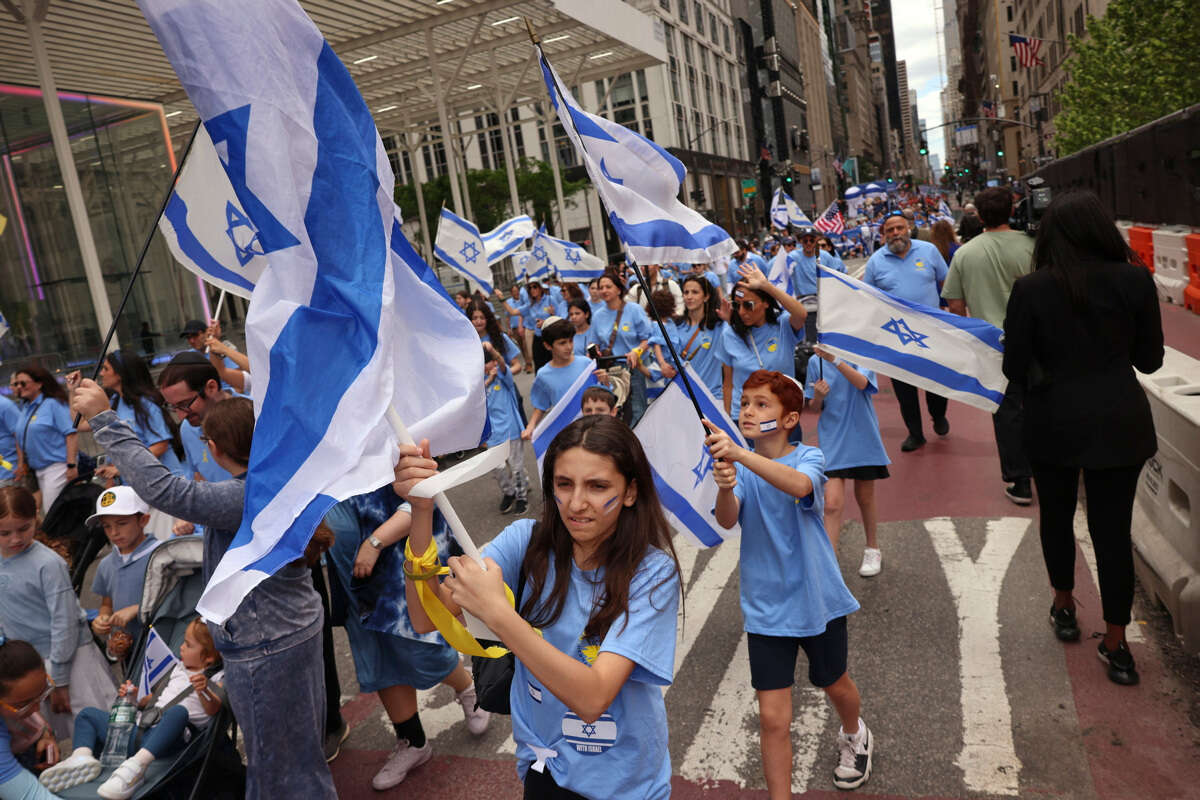
The phenomenon, as noted by the report's authors, reflects a broader trend. It's also expressed in public opposition by employees at Jewish organizations to displaying Israeli and US flags (as happened at the Museum of Jewish Heritage in New York), as well as in ongoing tensions at Jewish schools, synagogues, and discussion groups on social networks.
Taylor himself filled out the survey and identified with the feelings of many respondents. According to him, the difficulty stems from the conflict between his clear view regarding Israel and the values and perceptions held by some colleagues in the community, which makes open discourse difficult.
"As an enthusiastic Zionist and strong supporter of Israel, there are times when this clashes with certain progressive values," he said. This tension, he explains, creates daily challenges in expressing opinions and conduct in the workplace. "It's really challenging," he added.
The data shows that two-thirds of respondents feel the situation in Israel affects their personal wellbeing, and 59% are very concerned about antisemitism. However, only a quarter of them reported that antisemitism materially affects their work and daily routine.
The report included four recommendations for Jewish organizations: develop principled leadership, provide training in dialogue management, highlight the organization's contribution, and strengthen identity and community feeling. "A culture must be created where people can process their feelings, feel safe to speak their minds and hold constructive discussion," Goldwater said.
However, she pointed to a paradox. "On one hand, it's clear people want moral clarity from their leaders. They want them to say something clear and meaningful. On the other hand, when leaders express a position that doesn't align with their views – this could only deepen the rift."


