
Thursday Dec 4, 2025
NEWSLETTER
www.israelhayom.com
  • Home
  • News
    • Israel
    • Israel at War
    • Middle East
    • United States
  • Opinions
  • Jewish World
    • Archaeology
    • Antisemitism
  • Lifestyle
    • Food
    • Travel
    • Fashion
    • Culture
  • Magazine
    • Feature
    • Analysis
    • Explainer
  • In Memoriam
www.israelhayom.com
  • Home
  • News
    • Israel
    • Israel at War
    • Middle East
    • United States
  • Opinions
  • Jewish World
    • Archaeology
    • Antisemitism
  • Lifestyle
    • Food
    • Travel
    • Fashion
    • Culture
  • Magazine
    • Feature
    • Analysis
    • Explainer
  • In Memoriam
www.israelhayom.com
Home Science & Technology

Microsoft cuts Unit 8200 off its cloud and AI services

Microsoft has blocked IDF Unit 8200 from using some of its cloud and artificial intelligence services, citing mass surveillance of Palestinians. The unprecedented move raises questions about the IDF's dependence on American tech giants and its operational capabilities in the Gaza war.

by  Roi Bet Levi
Published on  09-26-2025 09:15
Last modified: 09-26-2025 15:57
Microsoft cuts Unit 8200 off its cloud and AI servicesYehoshua Yosef

Microsoft. Photo: Yehoshua Yosef | Photo: Yehoshua Yosef

Share on FacebookShare on Twitter

Microsoft announced Thursday that, following a report in the British newspaper The Guardian based on information from the left-wing Israeli websites +972 Magazine and Local Call, it determined that Unit 8200 used Microsoft's Azure platform to store and analyze millions of phone conversations of Palestinians in Gaza and in Judea and Samaria. After an internal review, Microsoft ruled that this violated its terms of service, stressing that it "does not provide technology enabling mass surveillance of civilians."

The IDF and the Defense Ministry have long worked with Microsoft, not only in cloud computing but also in IT systems, enterprise software, cybersecurity, and development tools. Microsoft operates major research and development centers in Israel, some of which are tied to cloud and AI solutions, making the partnership strategically significant both for Israel's tech sector and for the IDF, particularly Unit 8200.
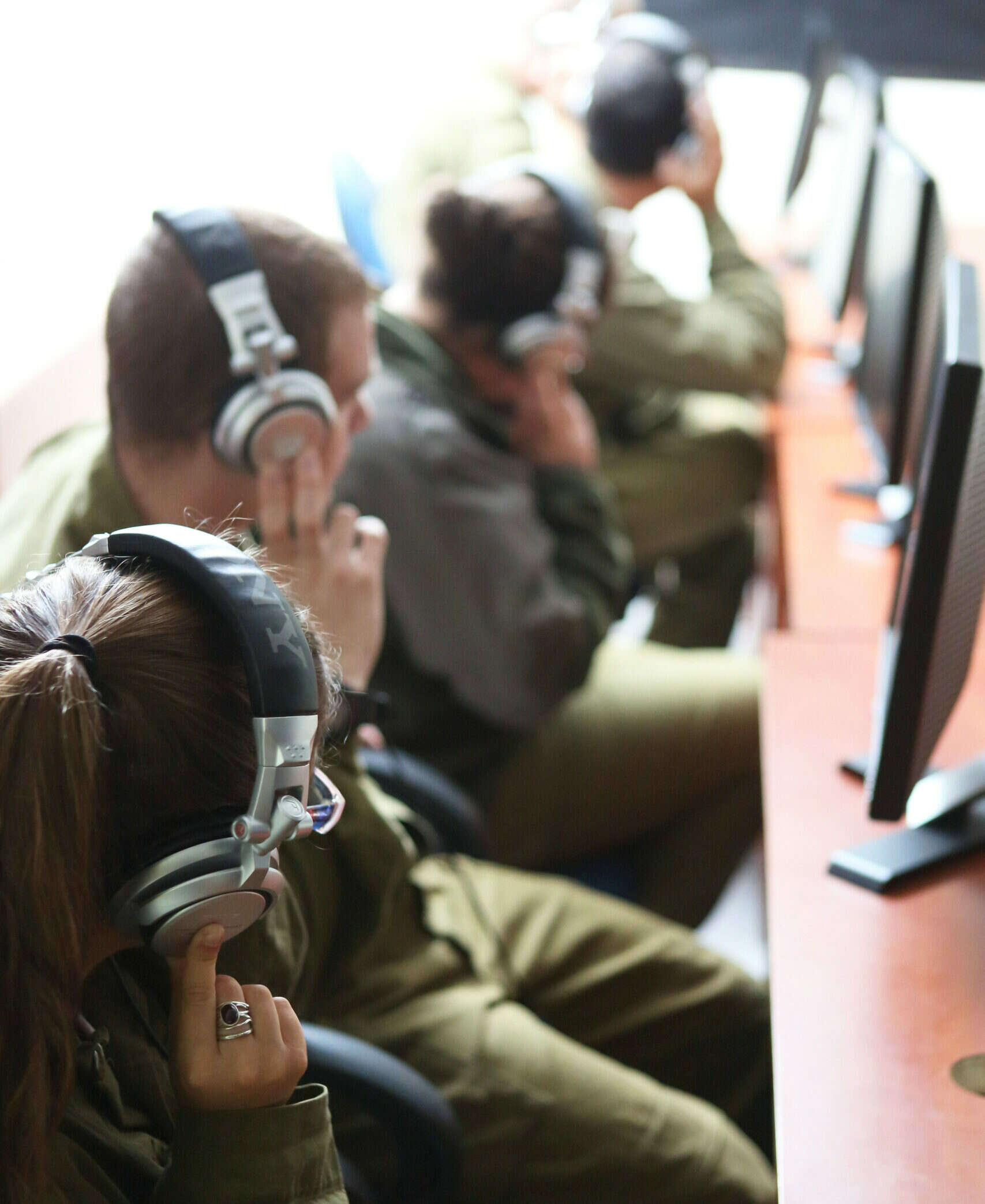
אנשי 8200 (למצולמים אין קשר לכתבה) , יהושע יוסף
Unit 8200 personnel. Photo: Yehoshua Yosef

In late 2021, then-Unit 8200 commander Maj. Gen. Yossi Sariel met with Microsoft CEO Satya Nadella at the company's headquarters in Seattle. The meeting aimed to advance cooperation on transferring vast amounts of sensitive intelligence, including recorded calls, to Microsoft's servers in Europe, mainly in the Netherlands and Ireland. Azure's immense storage capacity enabled the unit to handle data at a scale not possible with existing military servers.

What does the decision mean in practice?

Unit 8200 has lost access to Microsoft's large-scale data processing capabilities, including AI-powered analysis tools.

Even so, Microsoft remains a key supplier to the IDF. The restrictions apply primarily to cloud and AI services that were used for broad surveillance.

מנכ"ל מיקרוסופט סאטיה נאדלה , אי.אף.פי
Microsoft CEO Satya Nadella, who met with the commander of Unit 8200. Photo: AFP

Since the start of the current war, the IDF has increased its reliance on cloud and AI technologies to process enormous amounts of data: phone intercepts, video from drones, satellite imagery, and footage from surveillance cameras. Azure's advantage was not only storage but also real-time processing and advanced models for pattern recognition, target identification, and large-scale communications analysis.

Shifting to another cloud provider, reportedly Amazon Web Services, will require time and technical effort, but analysts say it is unlikely to paralyze Unit 8200's intelligence-gathering capabilities. In the short term, however, there could be a drop in the efficiency of intelligence analysis, which is used to prepare strikes in Gaza.

This marks the first time an American technology corporation has cut off services to the IDF since the Gaza fighting began. Microsoft's decision followed pressure from employees, investors, and human rights groups, signaling a growing sensitivity among US tech firms over the military use of their platforms.

The fact that sensitive intelligence data was stored on Microsoft's servers in Europe, especially in the Netherlands, further complicated matters and raised legal questions, both with the European Union under its GDPR privacy regulations and with other partners.

The larger question is whether other companies, such as Amazon or Google, will follow suit. If so, Israel's defense establishment may face serious challenges relying on Western technology corporations, which are subject to political pressure, public opinion, and US law.

The "Spartan model"

Israel is expected to find technological alternatives to Microsoft's services. But the company's move highlights the extent of the IDF's reliance on foreign tech giants and international cloud infrastructure for intelligence and combat operations. It also bolsters Prime Minister Benjamin Netanyahu's recent argument, made in a widely cited speech earlier this month, that Israel must develop self-sufficiency in security-related industries.

Tags: MicrosoftUnit 8200

Related Posts

Why Nvidia exec became hostage families' voiceYehoshua Yosef

Why Nvidia exec became hostage families' voice

by Roi Bet Levi

"Before October 7, I never led a convoy and never spoke at a demonstration. I volunteered in parent leadership at...

Israeli tech firm finds AI vulnerability – Gemini susceptibleReuters/Dado Ruvic/Illustration

Israeli tech firm finds AI vulnerability – Gemini susceptible

by ILH Staff and Miri Weissman

They exploit how AI browsers interpret instructions after the hashtag symbol. This effectively creates a new subcategory of cyber threats...

Nvidia vs. Google: Chip war escalatesJim WATSON / AFP; AP Photo/Jeff Chiu, File; Yossi Hai Hanuka;

Nvidia vs. Google: Chip war escalates

by Erez Linn

Nvidia shares fell 3% after reports that Meta, a major customer, may switch to Google's TPUs. CEO Huang claims its...

Menu

Analysis 

Archaeology

Blogpost

Business & Finance

Culture

Exclusive

Explainer

Environment


Features

Health

In Brief

Jewish World

Judea and Samaria

Lifestyle

Cyber & Internet

Sports


Diplomacy 

Iran & The Gulf

Gaza Strip

Politics

Shopping

Terms of use

Privacy Policy

Submissions

Contact Us

About Us

The first issue of Israel Hayom appeared on July 30, 2007. Israel Hayom was founded on the belief that the Israeli public deserves better, more balanced and more accurate journalism. Journalism that speaks, not shouts. Journalism of a different kind. And free of charge.

All rights reserved to Israel Hayom

Hosted by sPD.co.il

  • Home
  • News
    • Israel at War
    • Israel
    • United States
    • Middle East
    • Sports
  • Opinions
  • Jewish World
    • Archaeology
    • Antisemitism
  • Lifestyle
    • Food
    • Travel
    • Fashion
    • Culture
  • Magazine
    • Feature
    • Analysis
    • Explainer
    • Environment & Wildlife
    • Health & Wellness
  • In Memoriam
  • Subscribe to Newsletter
  • Submit your opinion
  • Terms and conditions

All rights reserved to Israel Hayom

Hosted by sPD.co.il

Newsletter

[contact-form-7 id=”508379″ html_id=”isrh_form_Newsletter_en” title=”newsletter_subscribe”]

  • Home
  • News
    • Israel at War
    • Israel
    • United States
    • Middle East
    • Sports
  • Opinions
  • Jewish World
    • Archaeology
    • Antisemitism
  • Lifestyle
    • Food
    • Travel
    • Fashion
    • Culture
  • Magazine
    • Feature
    • Analysis
    • Explainer
    • Environment & Wildlife
    • Health & Wellness
  • In Memoriam
  • Subscribe to Newsletter
  • Submit your opinion
  • Terms and conditions

All rights reserved to Israel Hayom

Hosted by sPD.co.il