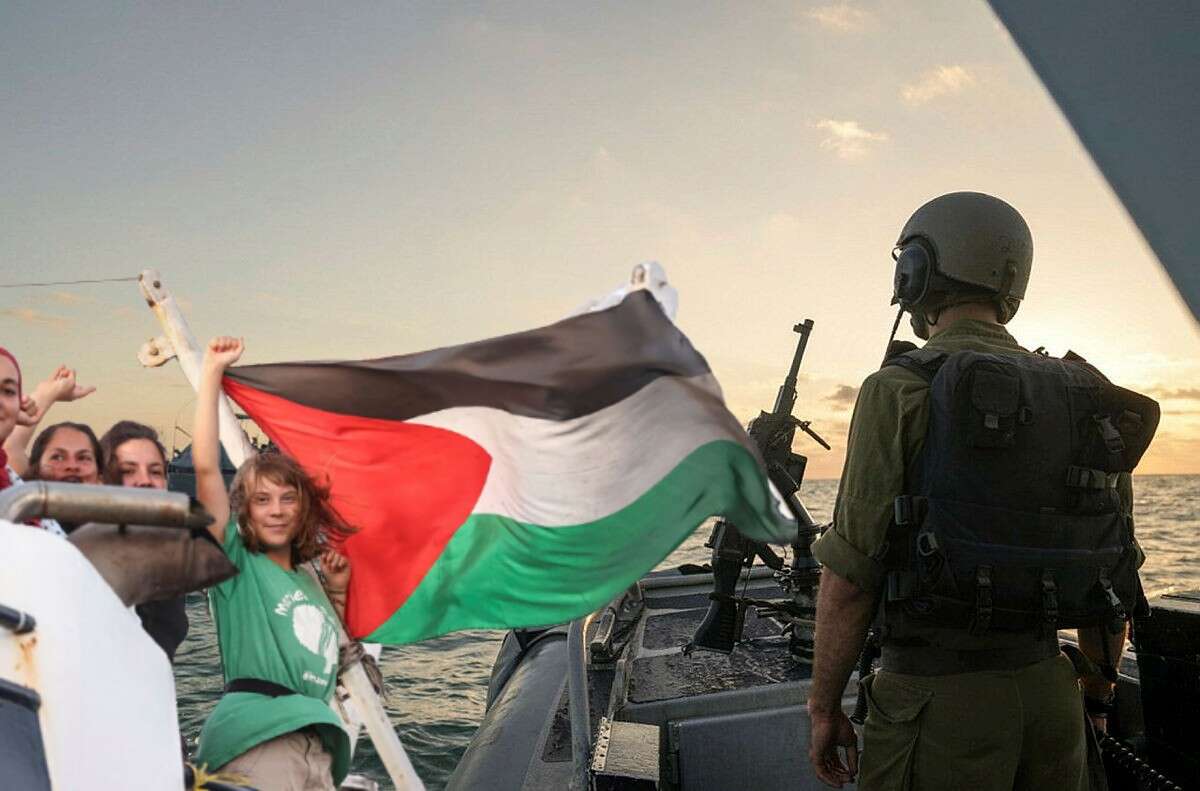
Israel Hayom has learned that the political and security systems are preparing to deal with the new flotilla headed for Gaza, either during the weekend or early next week. Over recent weeks, intensive discussions have occurred at all administrative levels regarding how to manage the new flotilla, which is considerably larger than the previous one. The option of permitting the boats to sail directly to Gaza, as planned by the participants, was considered as a way to avoid images of confrontation with the military. Nevertheless, due to security and legal concerns, the final decision was not to permit it.
The legal officials clarified that since Israel has declared a naval blockade, it must be consistently enforced without exceptions, and therefore the flotilla must not be allowed to pass. Security officials noted that the ships might contain ammunition that would aid Hamas, making it mandatory to inspect the contents before they are permitted to pass. For these reasons, it was decided that the new flotilla will be handled in a manner very similar to how the previous flotilla was managed.

Accordingly, once the flotilla reaches the maritime border of Gaza, IDF forces, led by the Israeli Navy, will operate according to international regulations and will warn the boats not to advance further. If they cooperate, they will be redirected to one of Israel's ports. If they refuse, the IDF will forcibly seize control of the boats and tow them to Israeli shores. Following their arrival in the country, the participants will undergo a legal procedure similar to what took place the last time. However, urgent discussions are being held in Israel on the question of whether to release them, especially regarding participants for whom this will be their second attempt to breach the blockade, such as Greta Thunberg.

It should be noted that based on intelligence information gathered in Israel, the flotilla is not only designed to assist Hamas propaganda but was also funded and organized by the organization, meaning the flotilla was intended to be a media gimmick from start to finish. Against this backdrop, alongside the operational preparation, there is an extensive and coordinated public relations effort by the Foreign Ministry, the IDF, the Israel Police, and the other agencies that are monitoring the flotilla and preparing to address it. This is intended to provide a real-time media response to any expected provocation from the participants. It should be noted that already, Israel's messages regarding the flotilla have garnered millions of views on social networks, whereas the participants' publications are receiving comparatively little and small attention.
Israel and Italy have offered the flotilla participants the option to unload the contents of the boats at legitimate ports in the Middle East, so that the contents could undergo a security inspection and then be transferred to the Gaza Strip through the conventional routes. Nonetheless, all the offers were rejected by them. Foreign Ministry Director General Eitan Bar Tal stated on Thursday in a response during a press conference for the foreign media, "The flotilla's refusals prove once again that its real purpose is not the transfer of humanitarian aid, but rather provocation and service to the terrorist organization Hamas. Israel reiterates: the entry of vessels into an active combat zone will not be permitted and the violation of the lawful naval siege will not be allowed."