

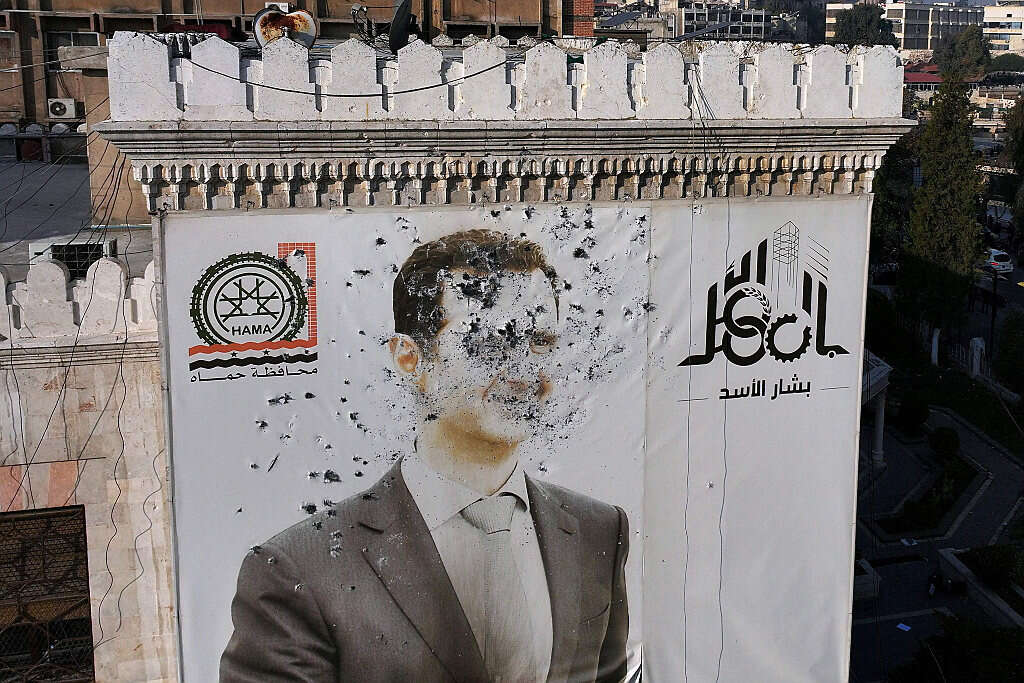
About 10 months after his overthrow, the Damascus court approved on Saturday the issuance of an arrest warrant against ousted Syrian President Bashar Assad.
This represents the first arrest warrant by the Syrian state against the dictator living in exile, based on accusations of war crimes in Daraa province in 2011. The rebellion against Assad's regime erupted in March of that year after three children in Daraa province spray-painted graffiti against the government and were murdered. November 2011 was one of the bloodiest months, during which hundreds of civilians were killed.
The judge in the case, Tawfiq al-Ali, explained to the Syrian Arab News Agency (SANA) that the arrest warrant includes charges of premeditated murder and responsibility for torture that led to death and deprivation of liberty. According to the judge, the arrest warrant opens the door to an Interpol warrant and international involvement in the case. Those who filed the lawsuit were families of victims from the Daraa events in November 2011.
Against this backdrop, the head of the Syrian Authority for Justice, Abdul al-Basit al-Latif, said that communication channels were opened with Interpol and other international bodies to pursue Assad family members. He emphasized that this primarily concerns Bashar and his brother Maher Assad (former commander of the Fourth Division), on charges of serious violations against the Syrian people.
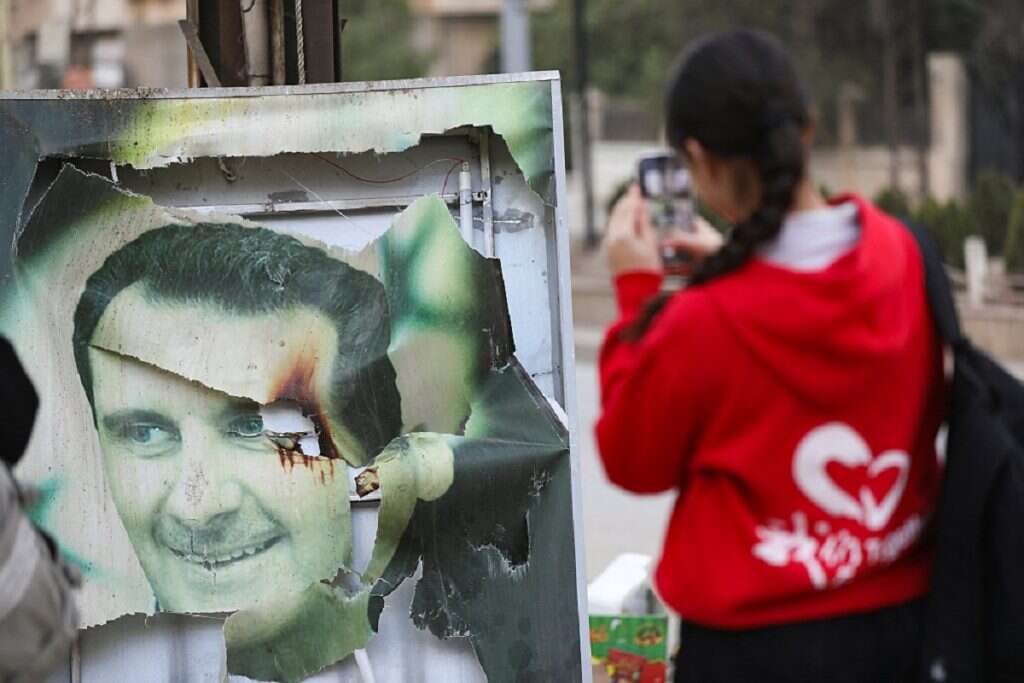
Multiple cases are proceeding simultaneously against Bashar Assad and his associates related to his crimes in the civil war. Just at the beginning of the month, the French justice system issued new arrest warrants for the tyrant and six former senior officials in his regime, including his brother Maher. The basis for these warrants was the bombing of Homs city on February 22, 2012. Two foreign journalists were killed in the attack: Marie Colvin (56), an American working for the British Sunday Times, and Remi Ochlik (28), a French photographer.
The former Syrian president resides in Moscow after being overthrown in December 2024. His regime collapsed in an attack by the Islamist rebel coalition of Ahmed al-Sharaa (also known as Abu Mohammad al-Julani), who became Damascus' ruler. Following this, Assad fled to Russia and has since remained in exile under the protection of Russian ruler Vladimir Putin. Al-Sharaa recorded a historic achievement in recent days when he spoke as Syria's president at the UN podium after more than six decades.
The collapse of Assad's regime ended an era of more than 50 years during which the Assad family ruled Syria with an iron fist. The rule of Hafez Assad and his successor Bashar, was known for boundless cruelty. Countless Syrians were murdered, tortured, kidnapped, humiliated, and oppressed by the terror regime's agents. One of the notorious symbols of Assad's rule was Sednaya prison in the Damascus area. With the regime's collapse last year, the prison was breached by rebels, revealing facilities for destroying bodies and records of executions.


