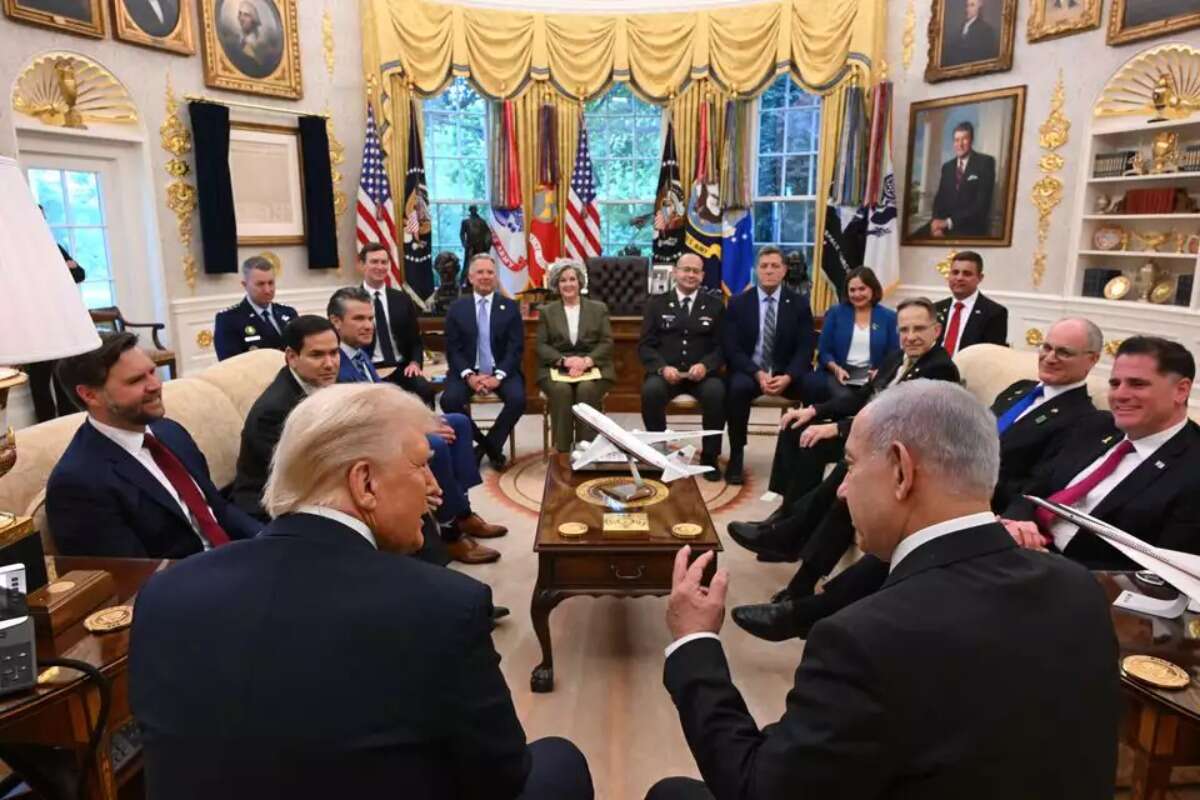
The White House has unveiled US President Donald Trump's comprehensive plan to end the war in Gaza. Israel Hayom has learned that Prime Minister Benjamin Netanyahu conveyed his approval of the proposal.
According to the statement, if both sides approve the agreement, hostilities would cease immediately. Israel would withdraw to a designated line and begin preparations for the release of the hostages, while all military activity – including airstrikes and artillery fire – would stop. Within 72 hours of Israel's acceptance of the agreement, all hostages, both living and deceased, would be returned to their families.
At the same time, Israel would release 250 terrorists serving life sentences, along with 1,700 detainees from Gaza held since Oct. 7, 2023, including women and minors. In addition, for every body of a hostage returned, 15 bodies would be transferred to the Palestinians. Hamas members who choose to lay down their arms and accept the principle of coexistence would be granted amnesty, while those seeking to leave the Strip would receive safe passage to countries willing to accept them.
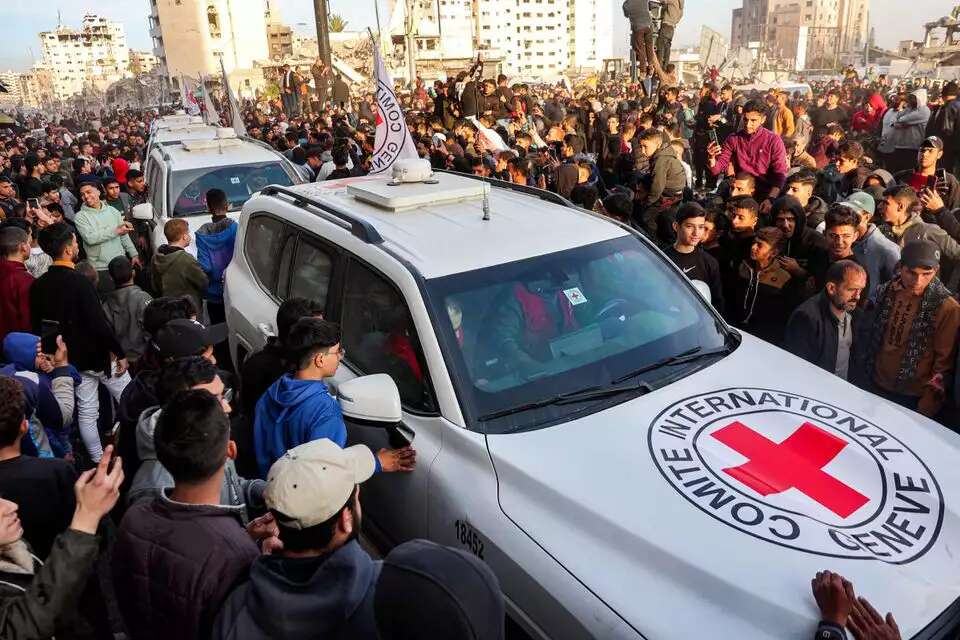
Upon the agreement's approval, immediate humanitarian aid would be delivered to Gaza under the understandings reached in January 2025. This includes the restoration of water, electricity and sewage infrastructure, rehabilitation of hospitals and bakeries, and the entry of equipment for debris removal. Distribution of aid would be handled by the UN, the Red Crescent and other international bodies, without Israeli or Palestinian involvement.
For day-to-day administration in Gaza, a temporary Palestinian technocratic committee would be formed under the supervision of a new international body, the "Peace Council," to be headed by Trump himself. Other leaders, including former British Prime Minister Tony Blair, would also participate. The council would oversee reconstruction until the Palestinian Authority completes reforms and is able to resume control in Gaza.
In addition, an international economic mechanism would be established to develop Gaza, including a special trade zone and the creation of employment and infrastructure projects inspired by Middle Eastern "miracle cities." The plan emphasizes that no one would be forced to leave the Strip, but freedom of movement would be granted to those who wish to depart, alongside encouragement for the population to remain and take part in building a "New Gaza."