

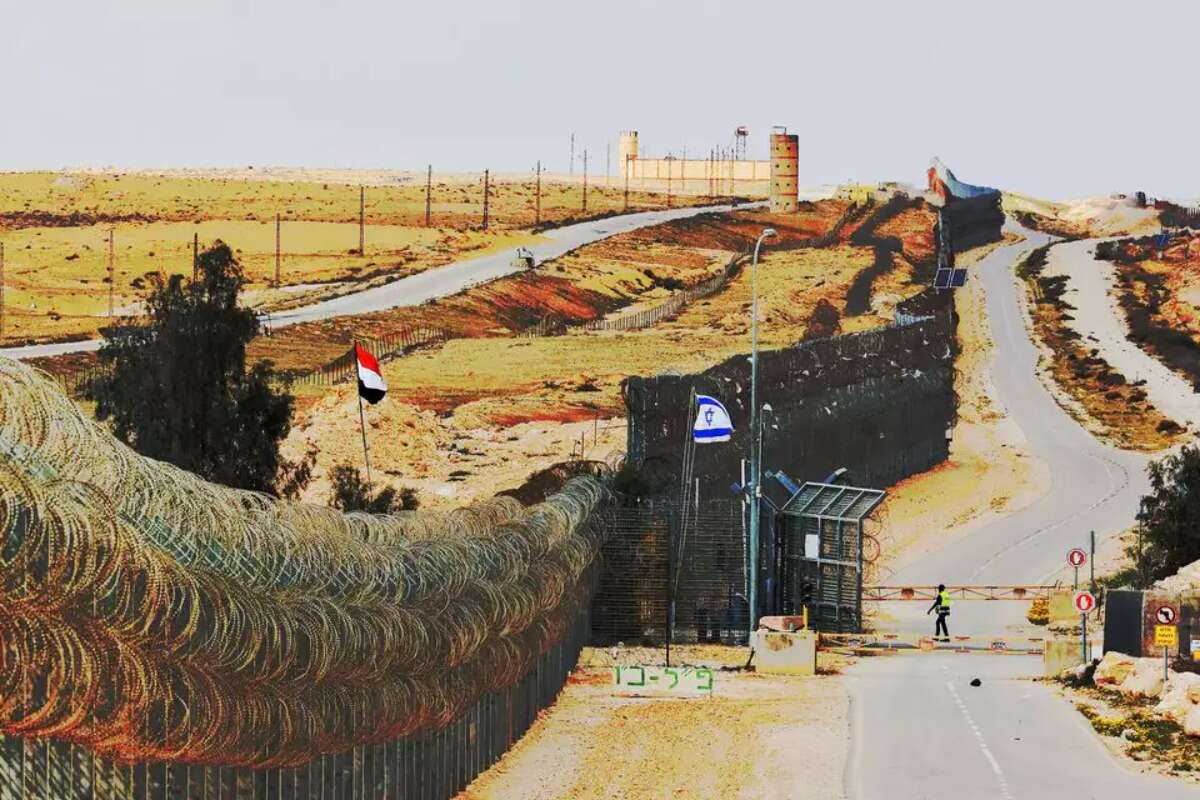
"I've been in Moshav Kadesh Barnea since 1977. I've seen the entire evolution of smuggling. You know what it started with? Cheese from Sinai and mango juice! Yes, what you're hearing. Arabs are crazy about those cheeses. They'd load everything on a camel in Sinai, give it a slap, and by its memory – the package crosses. After that, they moved to cigarettes, hookah tobacco, then hashish. For years, they've been throwing packages over the border fence with Egypt. From there, it developed into workers and women in prostitution. Two jeeps stand on both sides of the fence and transfer the 'goods' from side to side with a ladder.
"I once knew a contractor who said he had a 'distribution line.' He'd receive several women from the other side of the border, leave them in the tribe for a week or two, and then 'distribute.' I'd wake up in the morning and see women standing with information cards about who to call, asking me where the 'club hotel' is. They knew they'd be in jail for two weeks, then go out to work. Unfortunately, it was a completely free market. All the smugglers needed to make it an organized border crossing was duty free. And now? Now it's drones and weapons."

Alon Tzadok laughs into his wine. The joy of bubbling grapes softens the bitterness at the edge, but can't completely hide it. Friday morning, the "End of the World to the Right" parliament convenes beside Ramat Negev Winery in Kadesh Barnea. Tzadok grows grapes and makes strong wine from the desert. His friend Eilon grows tomatoes and passion fruit.
Alon and Eilon laugh that their friend Muki Azoulay is unusual among the moshav's farmers. "He's a lawyer," the three cheer. Fine wine is sipped, cheeses and cherry tomatoes disappear from the tray with the speed of pleasure. The picture of good life and wine almost makes me forget the reason I came here, 656 feet (200 meters) from the Egyptian border, to the land of drones. To the new era of smuggling at Israel's borders.
The phenomenon is known to the military
"My desert is mine," smiles Oksana Tzemach from the moshav. "Every day I finish work and go out to the field, photographing animals, sun, moon, and everything that enters the lens between Nitzana and Azuz. The factory is my work, but the camera is my best friend."
Oksana, owner of the "Desert Magic" jam and spread factory, photographs the desert and its animals every day. "I even presented an exhibition called 'Desert Love' at a gallery in Ramat Aviv, and next month an exhibition will also be presented at the photography gallery in Beersheba, where they'll call it 'Eye Contact – Animal Portraits.'"
Between the romance of the wild and portraits of little owls, in the past year, the desert skies have filled with a new creature. "A few months ago, I heard the drone above me for the first time. On the hill where I stop, you can see the border very clearly, when the Egyptians change shifts and everything, and I immediately heard that the drone was coming from Sinai. I reported to the army – they told me 'known,' and that's it.
"Last week I photographed the drone with my phone. I didn't need a big lens or any special equipment, it was simply above me. The drone was doing loops back and forth from Sinai. After that, there was machine gun fire from the Egyptians. Then the drone returned to Sinai, and after a few minutes came out again toward Israel. That day, there were clouds, and I clearly saw that a sack was attached to it. The drone passed over me, then returned to Sinai without the sack, and came back again – with another sack."
You've probably seen the video Oksana filmed. With desert indifference, the metallic buzzing emerges from the horizon. A drone penetrates from Egypt to Israel undisturbed and wanders in Israel's skies like a homeless person at a wedding. Somehow, this video went viral and "jolted" public attention from its slumber. Israeli media also rushed to cover the phenomenon from Tel Aviv studios, and this week, it was reported that hundreds of drones had penetrated the area in recent months. Indeed, the phenomenon is neither new nor rare.

A slow military jeep in pursuit
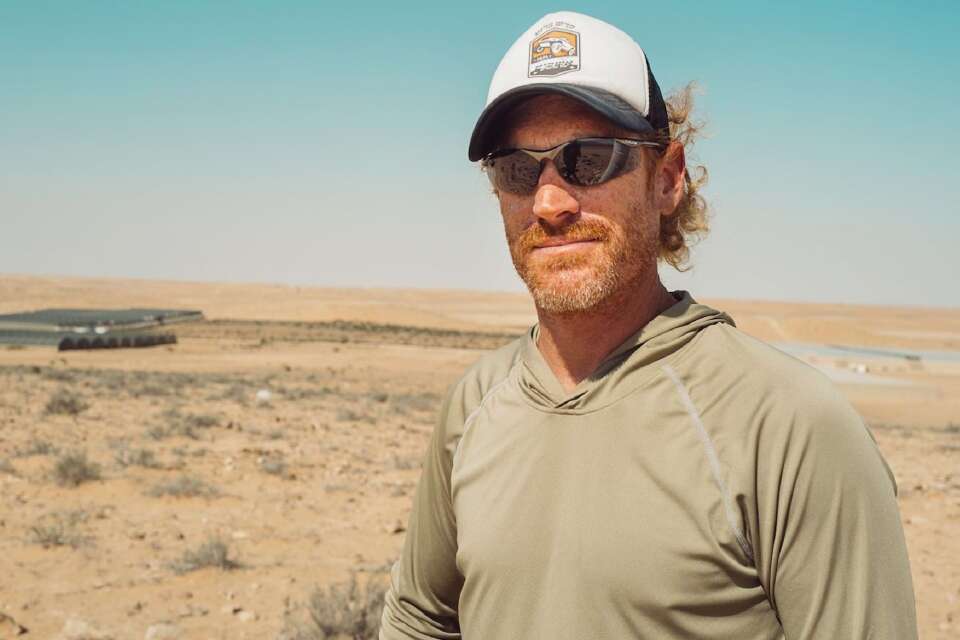
Topaz Kaplan (43), also from Kadesh Barnea, is the new Israeli farmer. A redhead by nature, with a pistol in his pocket, by day he grows onions and four children, and at night is a member of the Peled team. "The Peled team is a body we established here, in the Nitzana opening settlements, inspired by LOTAR Eilat. We established an intervention team here that provides a quick response to any incident that might come. We did this following the 'burning wheels' attack (a coordinated terror attack that occurred in August 2012 at the Israel-Egypt-Gaza Strip border junction.) We knew that if something happened here – there wouldn't be a quick response from forces, so we established the team and started training.
"On October 7, at a very early hour, we were already alerted and left Nitzana opening. The team commander was a good friend of Southern Brigade Commander Col. Asaf Hamami of blessed memory, and he called us to come. We drove north via the operational road, along the border, and arrived from below, surprising a battalion of Nukhba forces on their way to Moshav Sdei Avraham and settlements in the south.
"They engaged us on the road, and that's where Yiftach Gurney of blessed memory was killed, a team member from Be'er Milka, but that engagement also stopped their entire attack toward the southern Strip. From there, we reached Holit, and there Liran Almosnino of blessed memory was killed, a friend from Moshav Kamhin. You see that tree there, the lone one by the border? We called it 'Liran's tree,' because he always made stops there. During Sukkot, they'll also open a mountain bike single track trail, which will be in memory of Yiftach, who was a cyclist in the area."
Topaz navigates the jeep with native skill. Where's the amusement park and where's the roller coaster between desert hills and dry riverbed cliffs, on the road leading to Flag Hill – an observation point over the area where an Israeli flag flies for miles. "My plot ends at the edge of the border," Topaz points with his finger to a green wonder in the brown that ends by the fence. "A large part of the chases after smugglers happen in my field – and that means lots of damage. Look, this morning I had to report that a military patrol crushed my water pipeline, simply because the chase passed there. It's become part of our routine."
From Flag Hill, you can clearly see the tangles of Israeli bureaucracy. Topaz marks the areas of responsibility: "From the fence to the settlement – that's the army's. After that, it's the Shin Bet's and police's. So a drone that crosses the border and flies a kilometer inland, who's supposed to stop it? And if the vehicle waiting for it by the fence left the border area and managed to escape inland, who will chase it?"
We descend from the hill and approach Topaz's fields. On the way, we wave hello to a thermal camera that Ramat Negev Regional Council installed on a hill above the border. Another layer of security that doesn't really contribute to the sense of security. The Thai workers' residences are in the frontier area at the edge of the moshav, near the fields, and Topaz clarifies that the drone phenomenon also has implications for livelihood capability in the place.
"A few weeks ago one of the Thais simply got up in the morning, and without saying a word got on a bus and left. When the drone passes, the Egyptians allow themselves to shoot without asking permission and without anything. It directly affects our livelihood. Look at the quarters they sleep in, suddenly bursts start being heard in quantities from the direction of the Egyptian positions. You're sitting at home or in the greenhouse and hearing gunfire. It's not far, it's here, above you, beside you."
I look at the Thai workers' caravans, measure with my eye the distance from them to the Egyptian guard tower, and understand that the Egyptians could hit the caravans with a stone. The Israeli mind, accustomed to a distant border, refuses to understand how one can live so close.
Topaz clarifies the impact of proximity on daily life: "The Thais didn't come to wake up in the middle of the night from bursts. Every morning we wake up and ask if the workers stayed or fled, and I don't blame them. You also wouldn't want your child to sleep on this border, even if the shooting at the drones is 'supposedly' not at you."
Tourists hear and flee
Even at the clearest border in the country, intentions are murky. Eilon Shelo doesn't believe in the innocence of Egyptian intentions: "I'm fixing a tractor, and suddenly from the tower they're shooting. It's like they're shooting at the sky. Well, how do I know what this Egyptian soldier is going through now, and what he's accusing us of? But he shoots, and it's like not an aimed bullet, but suddenly there are holes in the greenhouses. And it's not one or two. That's how we live."
With perfect timing comes Tal Biron-Azoulay, Muki's energetic daughter, to take some wine crates for guests of the local tourism venture she manages – Desert Rider. "The shots scare us more than the drones. The moment you hear shots at night – it disturbs, deters, and we brief the guests so they know that sometimes gunfire is heard and there's no need to panic."
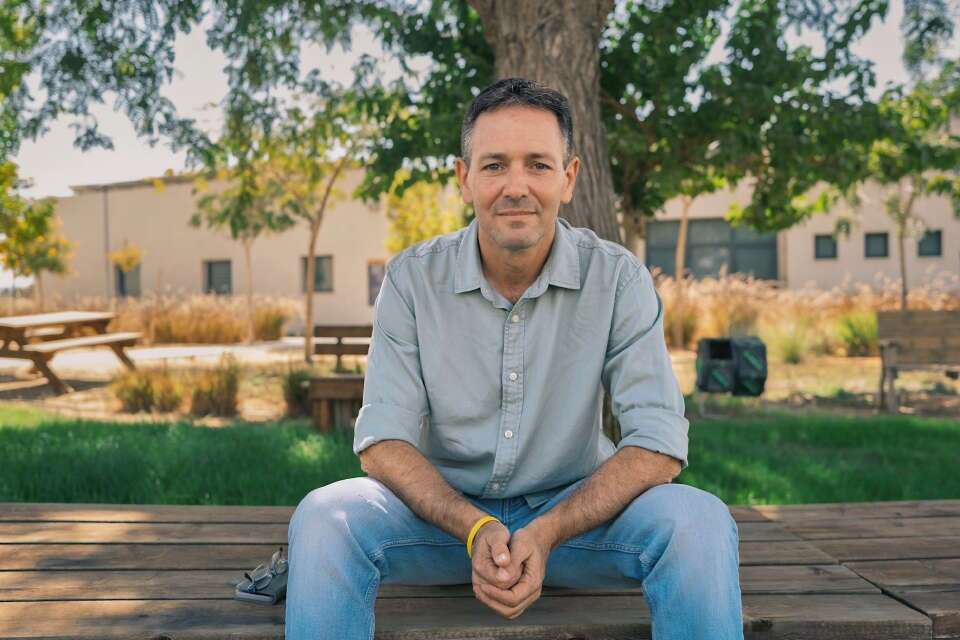
Tal hurries back to prepare the tourism site for weekend adventures, hoping they won't be too extreme. Muki completes her words and sharpens: "I'm not afraid of the drones. I'm afraid of the abandonment. We're living in la-la land. The border is breached, and nobody really deals with it! The authorities' disregard is a disgrace. That we haven't been hurt yet – it's a miracle. But the possibility that this will turn on us at any moment is tangible. We're sitting here and it can fall on us exactly like on the Gaza periphery. We're completely living on October 6."
Muki touches the heart of the problem. Even two years later, it seems the "it'll be okay" policy continues lazily – as long as there's no disaster. Topaz aims to clarify the security concerns that residents face. "We love the army, do reserve duty, it's not that we're going against the IDF or the forces here who do excellent work. We're discussing strategic decisions at this level. We know there are systems that no drone would pass, so why don't they put those systems here?"
Military sources clarified in the background that there's a concentration of effort to reinforce technological means at the borders, for better dealing with the phenomenon. Turning Nitzana opening into the smuggling gateway into the State of Israel also brings demographic change across the border. "In the past, there was no settlement on the Egyptian side of the border, it was just us and the Egyptian guards," Topaz diagnoses, "today even with the naked eye you'll see how much settlement is created there. It's all a result of the smuggling economy that's intensifying here."
At her home in the desert, Oksana summarizes the transition to life under drones: "I don't live in fear, but when I go out to the field it's clear to me that the drones above me aren't just transferring things – they can also photograph, gather intelligence, know exactly how my settlement looks, and that's a completely new reality in this area."
Oksana isn't worried about theft of the secret recipes for the wonderful salads created in the family factory. In the parliament conversation, it becomes clear that the drones themselves are becoming more powerful. Topaz tells about a drone worth hundreds of thousands of shekels that was caught, with a carrying capacity of up to 209 pounds (95 kilograms). The parliament members begin arguing whether the local legend that a drone transferred a woman across the border is even physically possible.
Meanwhile, they say that drone operators are so unafraid that they use drones for Wolt deliveries, transferring cold cans and snacks from one side of the border to the other. It quickly becomes clear that the real fear isn't women falling from the sky, or flying XL cans, but the hot smuggling product of the period – weapons.
"My doomsday scenario is drones with weapons or explosives, that will release their cargo at strategic facilities for Israel's security," warns Eran Doron, head of Ramat Negev Regional Council.
Doron looks from his office at the beautiful skies outside. "Imagine a swarm of drones with 198 pounds (90 kilograms) of weapons, that can cross the border like that. Do you understand what that means?" He tenses up, his face worried. It seems there's no person in the State of Israel today who doesn't understand the full size of the threat.
"We mustn't think that the drones are just 'smuggling,' and that their operators aren't interested in the settlements of Nitzana opening! We learned from the Gaza periphery that Nir Oz and Ofakim also interested the terrorists. When there's capability – it doesn't matter if there's also intention or not. The moment there's capability – it must be eradicated."
Preventing penetration in advance
You've surely seen videos recently documenting criminals standing in broad daylight in the middle of a main street firing bursts. Whether in Tel Sheva, Omer or Rahat – it all starts in the skies above the Nitzana opening settlements, the preferred smuggling route for drone smugglers.
"They know that if they pass over our settlements the IDF won't shoot them down to not endanger residents' lives. But these drones endanger the State of Israel," Doron marks on the map with a red laser pen the smuggling route from Egypt to Beersheba.
"We must act on three axes for immediate solution," he clarifies. "First – technological prevention, to prevent penetration before it begins. Second – Shin Bet and police involvement. Don't be confused, friends, when someone sends a drone – someone receives it, and it's not just an IDF matter, but also police and Shin Bet. And third – strengthening settlement, and even the army tells us this: it's easier to defend a settlement with a standby squad and lookouts than empty territory."
Like almost everything in Ramat Negev Regional Council, Doron is an optimistic person looking throughout the desert for opportunities to change time and place. I ask about drones, and he tells about a national plan to develop Nitzana opening.
"The State of Israel cannot give up on this area. We must transform Nitzana into a settlement center, expanding it from a thousand people to a thousand families, and strengthen agriculture and tourism, because without it, the area will become deserted. Nitzana opening is actually the only settlement between Moshav Bnei Netzarim in the southern periphery and Eilat – altogether 200-something families. We need to bring thousands of new families here, otherwise, we won't survive here in any respect."
Just before the parliament in Kadesh Barnea disperses to its affairs, Alon brings us into the holy of holies of the winery – his private wine library. The transition from the tired, messy warehouse outside to the wine library is impressive. The winery, launched in 1997, currently produces 400,000 bottles a year. The space is filled to the ceiling with wine bottles, and one can only marvel at the wealth of shades and flavors the winery has created.
I examine the changing bottle labels. Together they tell a pioneering history of all the people of the opening – despite everything and despite the sand. Even when photographed, Alon and Muki continue with friendly teasing, but when they talk about their sons returning to the moshav they fill with pride about their children's choice to return and live in this place. At the end of the day, I completely understand the choice. Empty and distant as it may be, the beauty of the desert expanse is mesmerizing.
"We bring the people of Israel here for trips to create life in the desert," says Topaz. "Look at the road here – 30 minutes after Ramat Negev Council, and you already feel like the end of the world. There's nothing more beautiful than this, but all the beauty around isn't worth it if you understand that the drone buzzing above you is carrying weapons."
The Southern District Police spokesperson clarified in response that handling border penetrations is the army's responsibility.
The IDF spokesperson said: "The IDF operates for and on behalf of residents' security, and is aware of the development of the drone smuggling phenomenon. The IDF operates in cooperation with police, with close monitoring through various ways and means, including lookouts, collection means, and intelligence. Staff work is being conducted on the issue to improve the operational response in the area."


