


During an archaeological excavation currently underway at the Yahudiya Nature Reserve, an ancient synagogue whose location was previously unknown has been revealed. During the excavation, conducted by the Zinman Institute of Archaeology at the University of Haifa in collaboration with the Department of Land of Israel Studies at Kinneret Academic College and licensed by the Israel Antiquities Authority, dozens of decorated items, lintels and basalt columns were found confirming the existence of the ancient synagogue at Yahudiya, adding a new and exciting chapter to the story of Jewish settlement in the Golan.
"As part of extended research documenting architectural items from villages in the Golan together with Prof. Haim Ben-David and Dr. Benny Arubas, we documented over 150 items in the Yahudiya Nature Reserve, most of them in secondary use in the abandoned Syrian village. But the synagogue's location wasn't known until now," says Dr. Mechael Osband from the Zinman Institute of Archaeology at the University of Haifa and senior lecturer in the Department of Land of Israel Studies at Kinneret College.
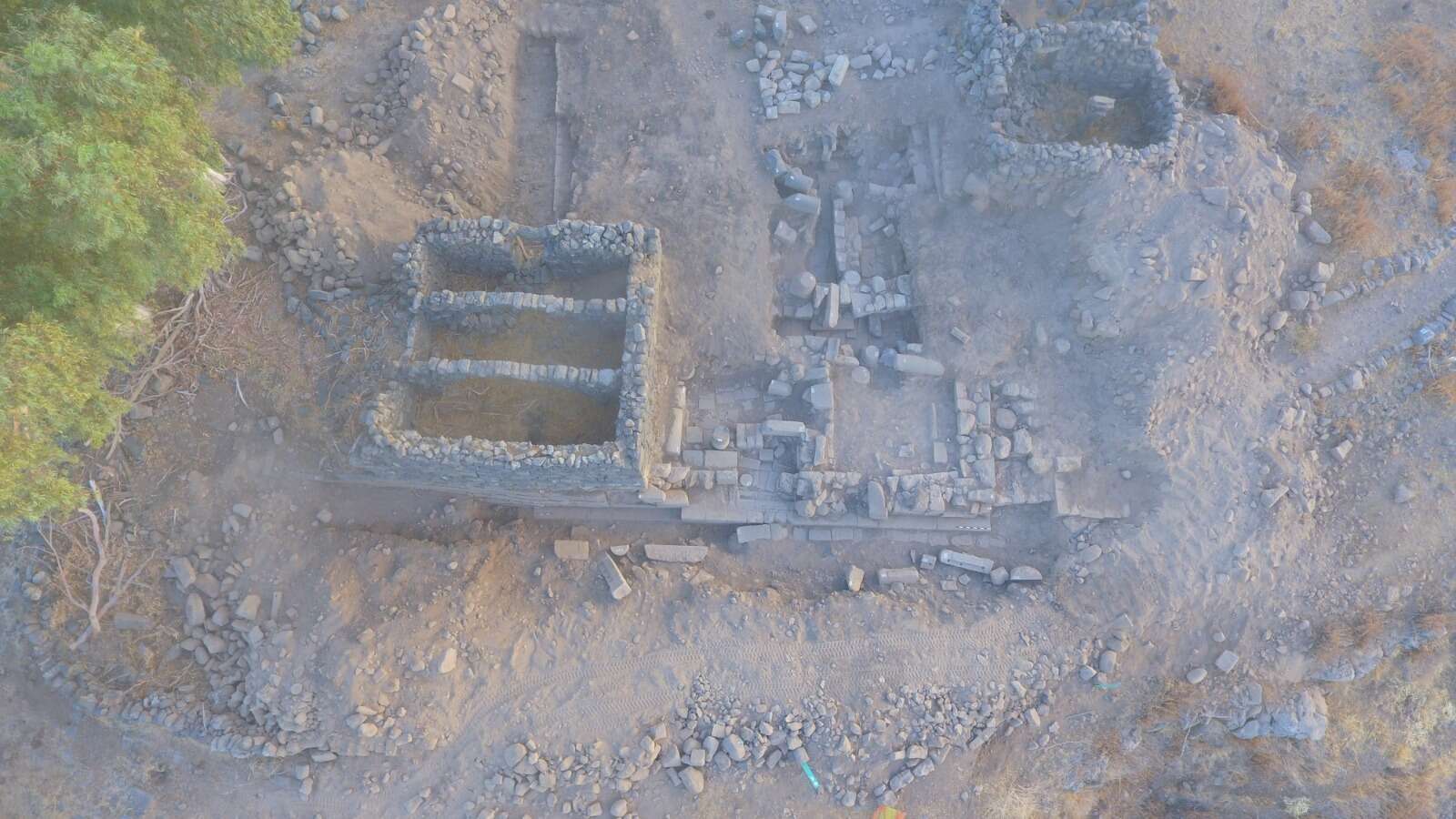
"We identified an unusual concentration of items and column segments placed on a path in the abandoned modern village, and there we decided to conduct an examination. Already at the beginning of the excavation, dozens of architectural items were revealed, and later, to our surprise, the southern wall of the building was also revealed with three openings facing toward Jerusalem," he added.
Although hundreds of architectural items from the Byzantine period were previously documented in the Yahudiya Reserve area, the location of the synagogue remained a mystery. In previous archaeological surveys, more than 150 items were collected and documented, including lintels, column segments, and decorated basalt stones, most of which were reused in secondary applications within the abandoned village within the reserve.
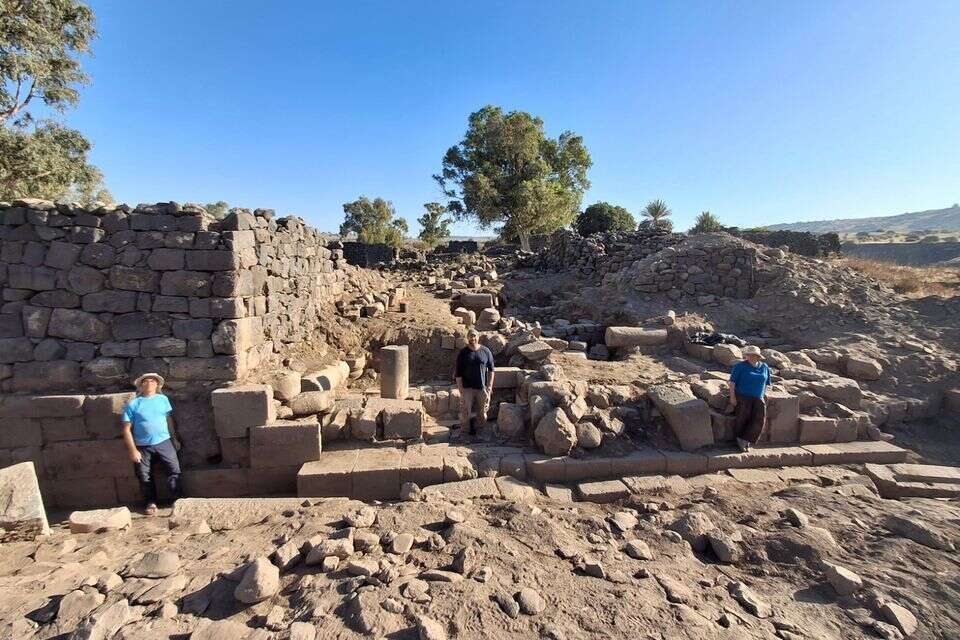
Now, following a focused excavation, the building itself has been revealed for the first time: two rows of stones from the building's southern wall built from hewn stones with three openings. Next to them, two lintels were discovered close to their original location, opposite the openings, one of them decorated.
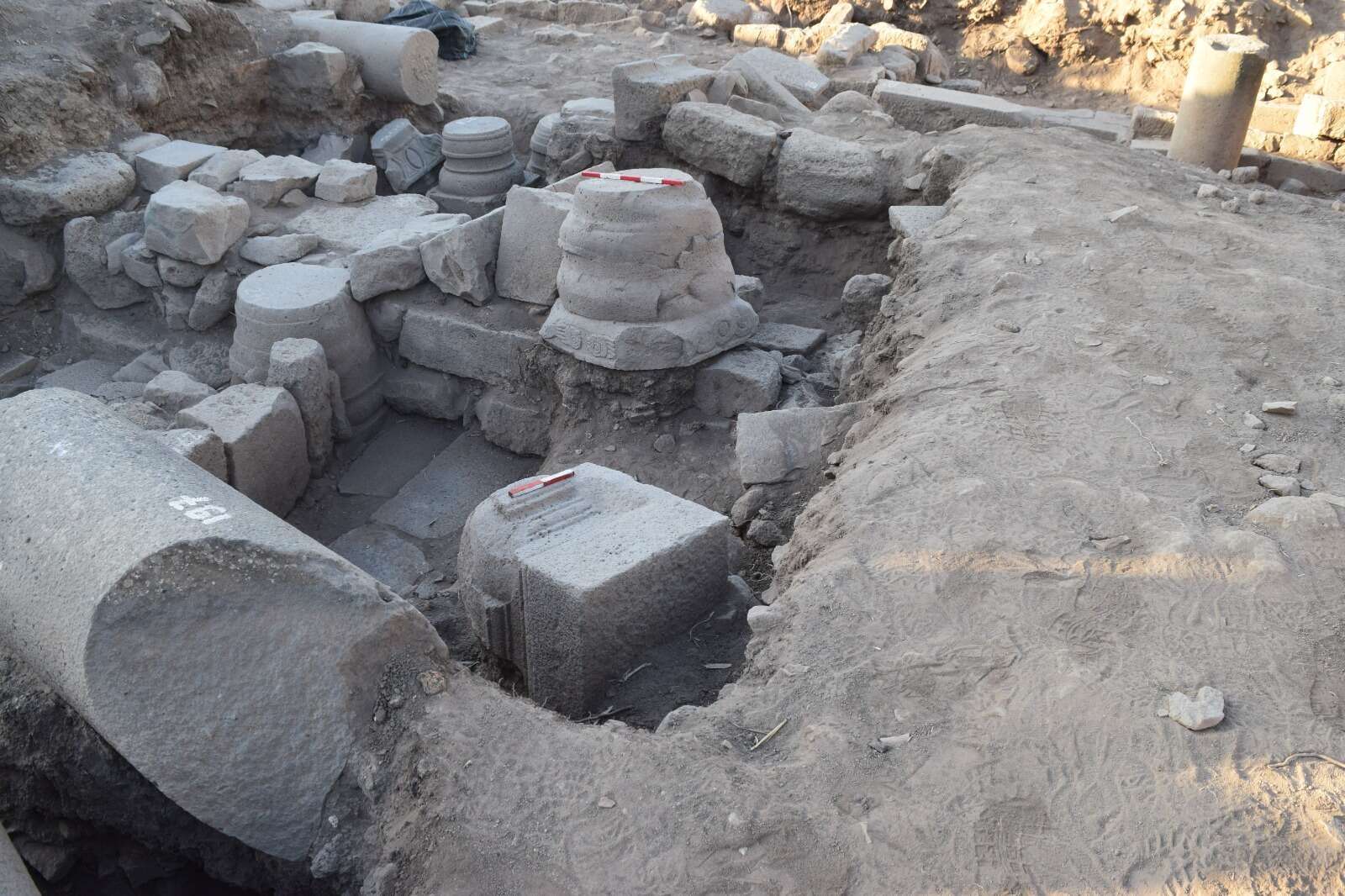
Additionally, many decorated items were discovered outside the southern wall and inside the building – some in stone collapses and earth fill, and some in secondary use from later periods. In past surveys conducted at the site, many items of monumental and public construction were discovered, including menorah decorations. The Golan region, where the synagogue is located, was formerly a Jewish area during the Roman and Byzantine periods – from the first century BCE until the 7th-8th centuries CE. The building's outline, approximately 13 meters wide and about 17 meters long, indicates that it was built in the basilica style – a rectangular building with two rows of columns and benches built along the walls – an architectural form characteristic of ancient synagogues in the Land of Israel.
According to Dr. Osband, the discovery of the southern wall, which is over 13 meters long and has openings facing toward Jerusalem, combined with items found and known from other synagogues previously revealed – such as Holy Ark shelf fragments and more – constitutes clear evidence of the building's designation as a synagogue.
The Israel Nature and Parks Authority notes that the excavation is being conducted in collaboration with the University of Haifa, with assistance from the Hecht Foundation, the Department of Land of Israel Studies at Kinneret Academic College, and assistance from reserve manager Nael Daabous and the staff working at the Yahudiya Reserve.
According to Dr. Dror Ben-Yosef, archaeologist from the Israel Nature and Parks Authority: "The discovery of the ancient synagogue at Yahudiya testifies more than anything to Jewish settlement in the Golan already 1,500 years ago, when the Jewish community flourished in the Golan. Besides this synagogue, about 25 other ancient synagogues have been discovered in the Golan, testifying to the strong Jewish presence in the Golan. These synagogues served not only as places of prayer but also as centers of learning and the core of Jewish identity. The Sages frequented these buildings and disseminated Jewish knowledge to all community members, from children to the elderly. We intend to complete the excavation of the magnificent synagogue at Yahudiya in the future and make it accessible to all reserve visitors."


