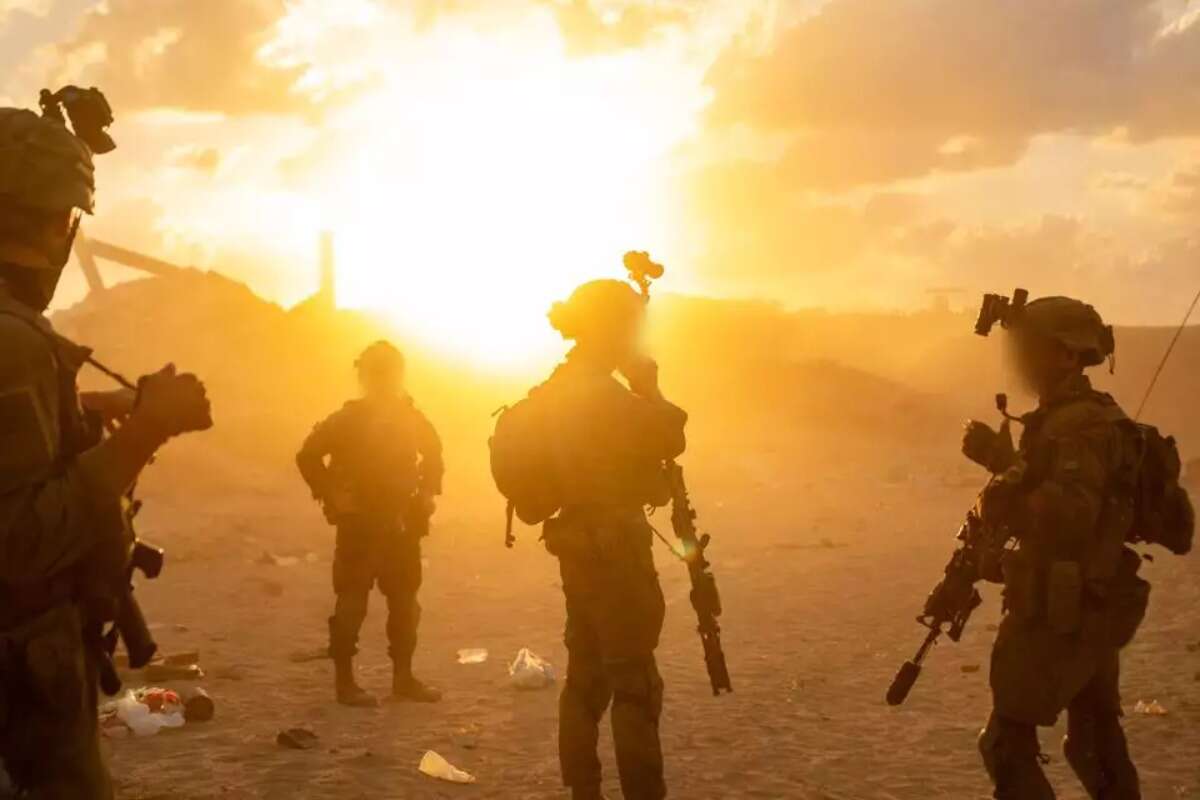
The Trump plan for ending the war in Gaza remains unclear on many points. One of the central unknowns is who will provide security in the Gaza Strip after the IDF withdraw. Under the plan, once hostages are released Israeli forces would pull back to the "yellow line" described in the original proposal and republished by President Trump. That would return Israel to positions held before Operation Gideon's Chariots.
In a later phase, an international force would take over administration of the strip and IDF units would withdraw further, to the perimeter on the Gaza-Israel border. It is not yet clear which countries would make up that international force.

Who will stop threats?
If and when that stage is reached, the crucial question becomes who will thwart threats coming from Gaza once the IDF no longer controls the territory. Israeli experience, the source noted, has been bitter when security responsibilities were handed to foreign subcontractors or outside forces. UNIFIL did not stop attacks in southern Lebanon, and past attempts by Egypt in the 1950s and the Palestinian Authority in the 1990s and 2000s failed to prevent Gaza-based terror capabilities from reemerging.
The Israel Defense Forces and the security apparatus drew a central lesson from the October 7 surprise attack: prevent Israel's adversaries from rebuilding the ability to hit it, rather than trying to guess the enemy's intentions. But if the IDF is not in Gaza and the international force does not perform, who will stop threats emanating from the strip?

"We will thwart threats without asking anyone"
Two senior officials familiar with the plan said details of the Trump framework are still subject to negotiation and that the demilitarization mechanism is one of the issues to be worked out. Still, officials in Jerusalem are betting that President Trump, who will chair the senior committee overseeing Gaza, will permit Israel to act against terror regrouping there if it occurs.
"The current government has proven over the past two years that it thwarts threats without asking permission from others, and that policy will not change toward Gaza," one senior official said. "The aspiration is to have an arrangement similar to what we have in Lebanon, where we thwart threats without asking anyone. It does not matter if there are Malaysians, Indonesians or any other force there. If they do the job, fine. But if they do not, we will."
The official added that just as Israel eliminated Syria's army after the fall of Bashar al-Assad "and did not ask anyone. the same approach will apply in Gaza."
The official also claimed that "90 to 95 percent of Hamas's terror infrastructure no longer exists. The workshops for producing rockets, the offensive tunnels, the labs — everything has been destroyed. The goal will be to prevent them from rebuilding. The smart approach is not to let it reform from within and to stop the inflow of munitions from outside, and we will watch over that."