As technical discussions advance on the initial stages of the ceasefire, including the release of hostages and the entry of humanitarian aid into Gaza, Hamas has presented new demands that may obstruct the agreement altogether.
Among these demands are the release of senior and notorious terrorists, international guarantees to prevent renewed fighting, and the deployment of an Arab security force to block IDF operations. These details were confirmed by Arab and American diplomatic sources involved in the negotiations.
Only technical issues left
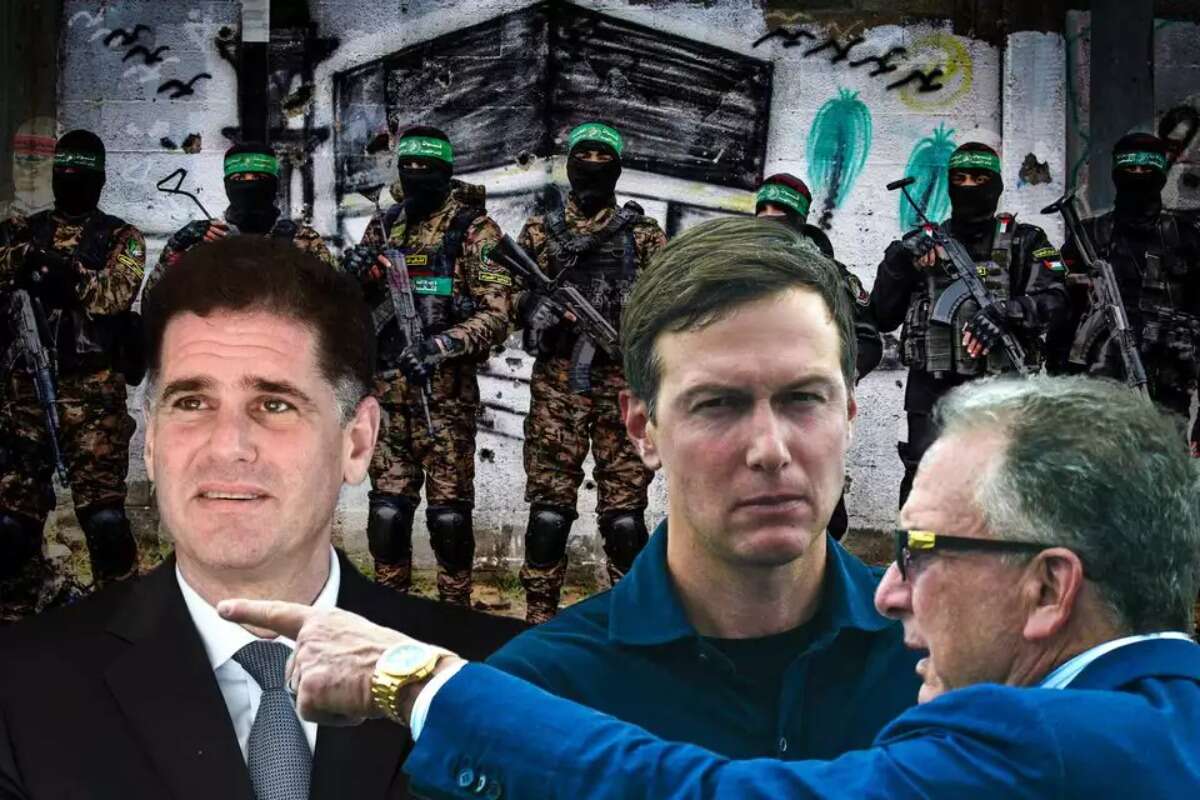
According to the same sources, the arrival of US President Donald Trump's special envoy to the Middle East, Steve Witkoff, along with senior adviser Jared Kushner, is expected to help bridge the major gaps and leave only technical issues to be finalized. Strategic Affairs Minister Ron Dermer is also expected to join the talks tomorrow.

President Trump expressed strong optimism Monday night, saying there is "a real opportunity for a deal." Speaking at the White House alongside Canadian Prime Minister Mark Carney, Trump said he planned to discuss the Gaza situation with him as well.
He said he believes there is a genuine possibility of achieving peace in the Middle East. Regarding the talks aimed at freeing the hostages and ending the war, Trump stated firmly that he "wants the release of all the hostages immediately." He added that "once the deal happens, we will do everything possible to make sure everyone honors the agreement."
Meanwhile, Qatari media reported that Qatar's Prime Minister Mohammed bin Abdulrahman al-Thani is expected to join the negotiations in Sharm el-Sheikh on Tuesday morning.

Palestinian sources said there is a dispute between Israel and Hamas over who decides which prisoners will be released. Hamas insists the releases must be based on clear criteria, not according to Israel's discretion.
Reports from Arab media and diplomatic updates indicate that the negotiations, which began Monday, have established the framework for talks, focusing first on the technical and organizational aspects of the initial stage.
In those discussions, real progress and understandings have been reached, including allowing Hamas to conduct searches for the bodies of operatives in areas it claims were destroyed in Israeli airstrikes. Egypt has promised to allow engineering equipment to enter Gaza for that purpose.
There is also a general agreement on Trump's basic terms: the release of all living hostages within days of signing the first-stage deal, alongside the release of thousands of prisoners, including 250 archterrorists serving life sentences for the murders of hundreds of Israelis.
Positive atmosphere
Diplomatic sources described a "very positive atmosphere" in talks about the entry of aid. Hamas's demands are higher than in past negotiations, but the current dispute revolves mainly around how to secure convoys from looting and where the supplies will be distributed.

Despite the progress, Hamas has raised several sensitive and complex issues that are causing dilemmas on the Israeli side and may delay an agreement.
One specific demand concerns the names of those to be released. According to the diplomatic sources, Israel has yet to respond to Hamas's demand to release Fatah leader Marwan Barghouti, Popular Front for the Liberation of Palestine Secretary-General Ahmad Saadat, and senior Hamas terrorists Ibrahim Hamed, Abdullah Barghouti, Hassan Salameh and Abbas al-Sayyid, all serving multiple life sentences for orchestrating attacks that killed hundreds of Israelis.
Hamas is also demanding stronger assurances that Israel will not resume fighting after the hostages are released.
Israel ready to commit
Some Arab officials have claimed that Prime Minister Benjamin Netanyahu may face pressure from ministers Itamar Ben-Gvir and Bezalel Smotrich to stop withdrawals and resume fighting to achieve their political goal of expelling Palestinians and expanding settlements.

Hamas, for its part, demands international guarantees beyond those of the US, or alternatively, the deployment of an Arab force to prevent the IDF from resuming operations. At this early stage, however, no such force is ready. Although several Arab states have expressed willingness to take part after hostilities end, they have agreed to do so only once Hamas surrenders its weapons.
Israel, for its part, is prepared to commit to a ceasefire under the Trump plan, meaning the release of all hostages and a complete halt to hostilities and preparations for renewed attacks. Israeli officials fear, however, that Hamas will use the ceasefire, as it has in the past, to rearm, strengthen its forces, plant explosives and other weapons, and target rival clan-based militias within the Strip.
Separately, an Arab intelligence source said that Hamas negotiator Zaher Jabarin, known for his particularly close ties with Iran, is present at the talks. Israel Hayom reported Monday night that Iran had influenced Jabarin and another senior Hamas leader, Nizar Awadallah, to derail previous deals.

That occurred most notably with the rejection of Witkoff's second proposal in Doha, which led to a suspension of the talks. Within Hamas's leadership, deep divisions remain over Trump's plan, and Jabarin's participation appears to strengthen the hardline faction.