This year, Sukkot will begin on the evening of Monday, October 6, and end the following evening, Tuesday, October 7. The intermediate days of Sukkot, known as Chol Hamoed, will continue until Hoshana Rabbah on October 13. Shemini Atzeret and Simchat Torah will be marked on October 13 and 14.
Sukkot is one of the most distinctive holidays in the Jewish calendar, when a temporary structure becomes the lively center of family life for seven days. The Torah commands: "You shall dwell in sukkot for seven days," in remembrance of the Clouds of Glory that surrounded the people of Israel as they left Egypt.
Beyond its halachic (Jewish legal) aspect, the holiday carries a deep spiritual and family dimension, stepping out of routine and comfort, and sitting under the shelter of God's presence beneath the open sky.
To ensure the sukkah is kosher and that one can properly fulfill the mitzvah, it's essential to know the main laws: how to build the sukkah, what qualifies as valid schach (the roof covering), when to recite the blessing, and what to do if rain begins to fall during the holiday meal.
Building a Kosher Sukkah
To fulfill the mitzvah properly, the sukkah must be sturdy enough to last all seven days, and its schach (roof covering) must provide more shade than sun. A sukkah that fails to meet these conditions is invalid from the outset.
It is permissible to place the schach—branches, bamboo, or similar materials—on metal poles. While some Ashkenazim avoid placing the schach directly on metal, there is no problem if the poles are fixed to the ground or walls. The schach may be tied to these poles with plastic zip ties or rope.
Sukkah walls may be made from any material, but fabric walls must be secured so they don't sway in the wind. Alternatively, one may install four horizontal bars or poles along the lower part of the walls, keeping them within 27 centimeters (about 10.5 inches) of the ground and at least one meter (about 3.3 feet) high.
It is forbidden to use schach that emits a bad smell or to build the sukkah near foul odors, such as a sewage pit. The sukkah should also not be so hot that it becomes uncomfortable to sit in.
If rain falls, it is permitted to cover the sukkah temporarily with a plastic sheet until the rain stops, but the blessing "leishev basukkah" (to dwell in the sukkah) should not be recited while the cover is in place, even if it's transparent. On Shabbat or the festival itself, the cover must be prepared beforehand and rolled up at the edge of the sukkah so that unrolling it does not constitute building.
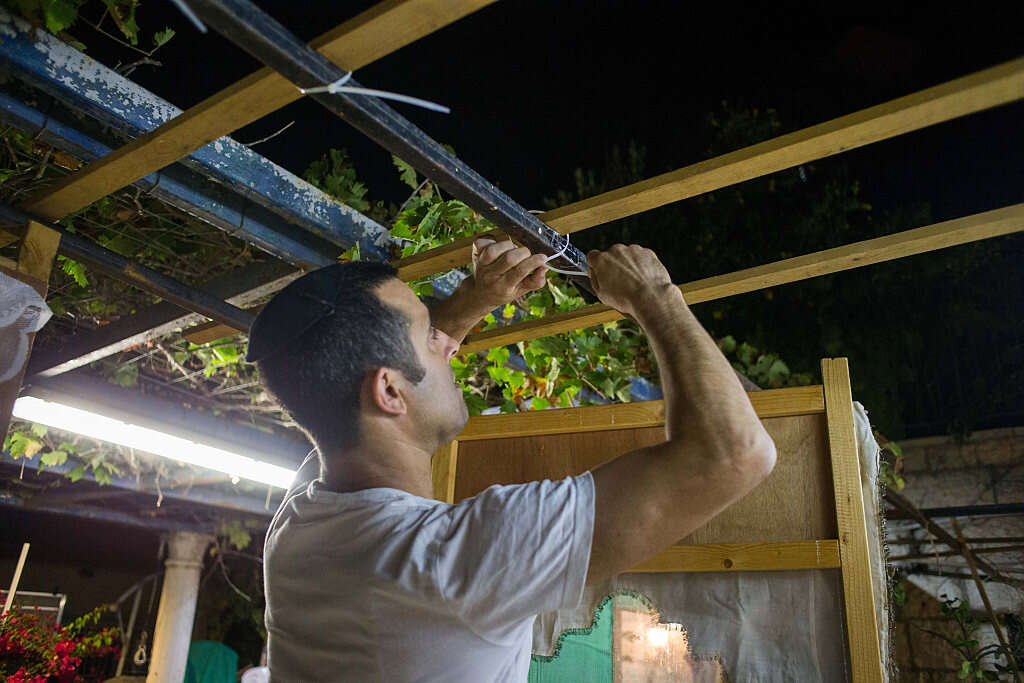
A roof made entirely of wooden planks is not valid, though thin planks up to nine centimeters wide (about 3.5 inches) are acceptable. The schach should allow some sunlight through but not necessarily the sight of stars.
If using a permanent pergola or structure, something new must be added for the sake of the mitzvah—either by replacing even a small section of the roof with new schach or by adding new schach along the entire length. Each section of the roof should be adjusted individually.
The sukkah should not be dismantled before the end of Simchat Torah, and household items should only be removed from it on the eve of Simchat Torah, about two hours before the holiday begins.

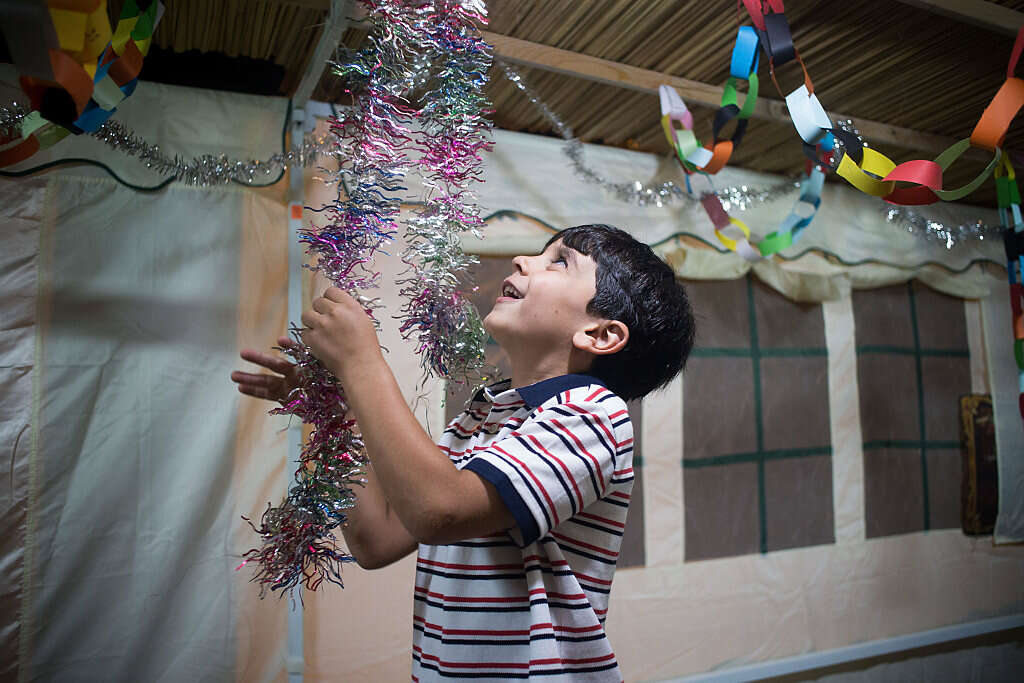
Decorating the Sukkah
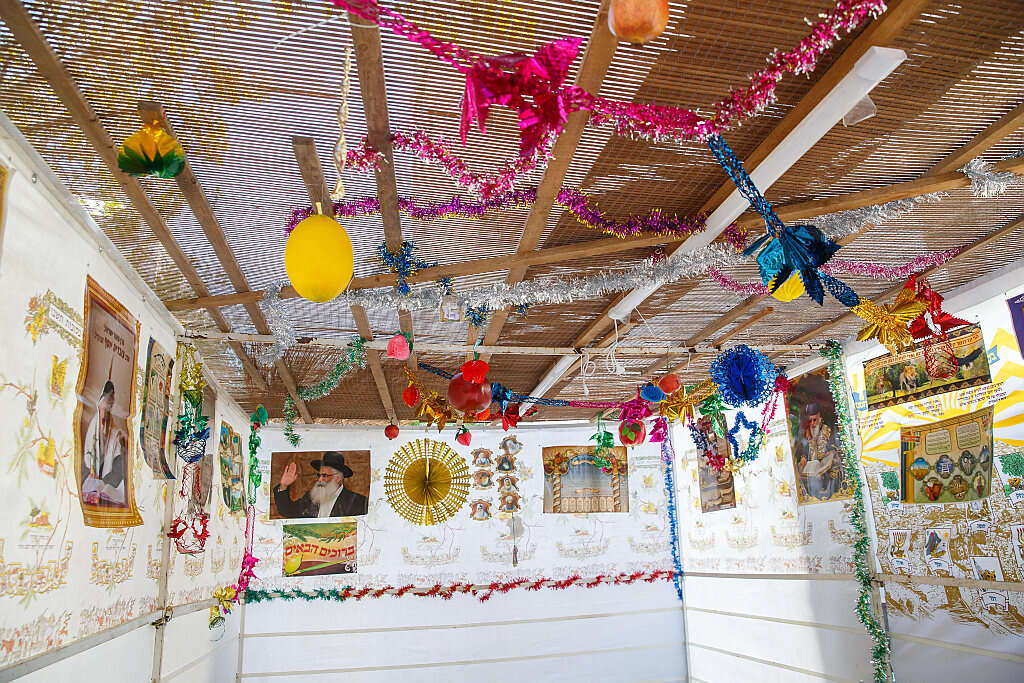
Sukkah decorations and fruits hung for adornment may not be used or removed throughout the holiday, including Simchat Torah. They may only be taken down if rain falls, and must be replaced immediately afterward. Decorations may not be removed on Shabbat or the festival itself. Fruits that fall during the holiday may not be eaten unless one made a condition before the holiday allowing it.

Dwelling in the Sukkah
In Israel, the mitzvah includes both eating and sleeping in the sukkah, even for short naps. Outside Israel, some communities refrain from sleeping in the sukkah due to cold weather or safety concerns.
All meals should ideally be eaten in the sukkah, though snacks are exempt. Those who choose to eat or drink nothing outside the sukkah are praiseworthy. The sukkah should serve as one's main dwelling, furnished with a table, chairs, and attractive items, but disrespectful activities should be avoided, and dirty dishes should not be left inside.
If rain begins during a meal, it is permitted to move indoors. Similarly, one sleeping in the sukkah may move inside if rain starts during the night. However, once the rain stops and dawn breaks, he should return to the sukkah.
A child who needs his mother at night is exempt from sleeping in the sukkah, but one who can sleep alone should be trained to do so. Anyone who suffers from discomfort, such as sleeplessness or mosquitoes, is exempt, though it is preferable to take preventive measures like using repellents.
Travelers during the holiday are still obligated to eat in a sukkah whenever possible.
No meals are eaten in the sukkah on Simchat Torah.
The blessing "Leishev Basukkah"
Anyone who enters the sukkah for eating, studying, or sleeping should recite the blessing "leishev basukkah." In the Diaspora, due to past dangers from antisemitism, it became customary to say the blessing only during meals. If one remains in the sukkah all day without leaving, the blessing does not need to be repeated for subsequent meals.
The blessing does not require literal sitting, since "dwelling" refers to living in the sukkah, as in the verse "And Jacob dwelled in the land of his father's sojournings."
Women are exempt from the mitzvah of sukkah but may still recite the blessing if they wish. The same applies to the Four Species (lulav, etrog, hadassim, and aravot).
Courtesy of Rabbi Chananel Zeini, head of the Torah Institute at the Or V'yishuah Hesder Yeshiva in Haifa.