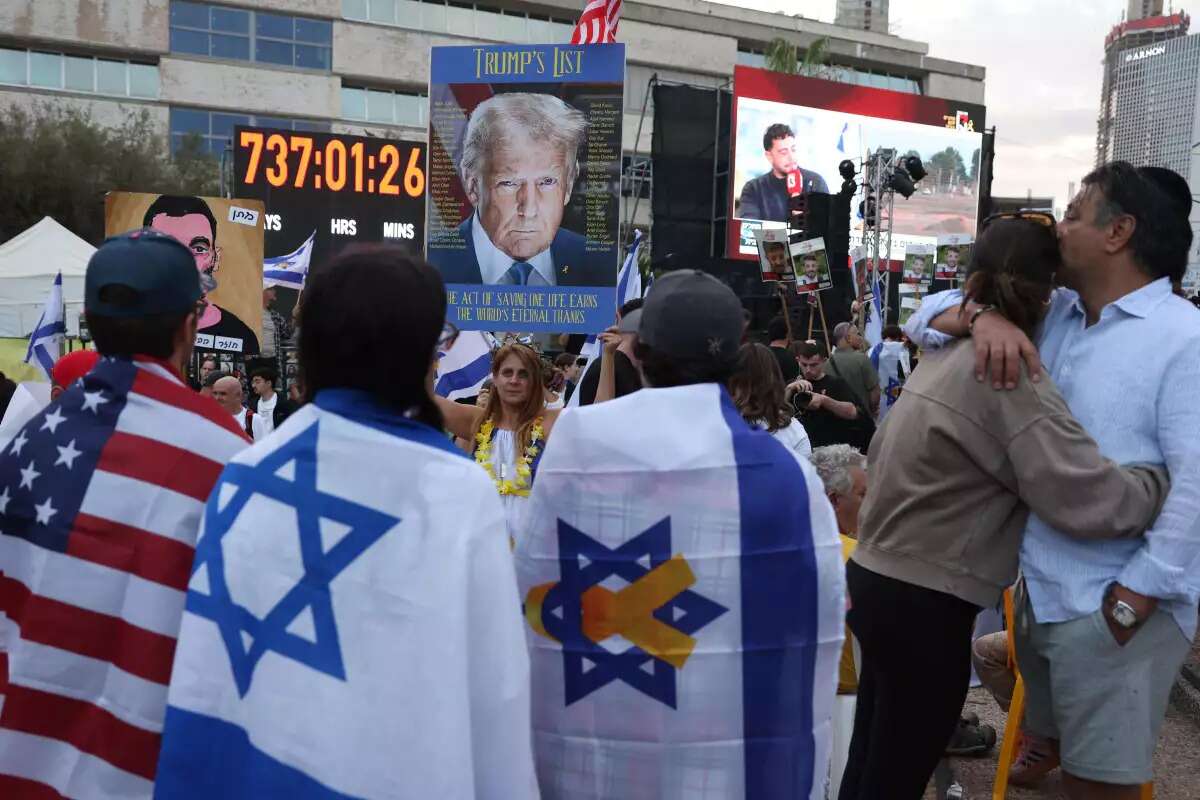
Even before sunrise, the square was already full. By 4 a.m., people were gatheringm, silent, tense, some wrapped in Israeli flags printed with the emblem of the hostages. Others sat on plastic chairs facing the large screens set up on the main stage, watching the morning broadcasts and waiting for a moment that would go down in history: the hostages' anticipated release from Gaza.
Unlike previous rounds of releases, this time everyone knows, it's happening all at once. No more partial lists, no more anxiety over who will return and who will remain. Under the agreement, all are coming home. According to the Palestinian Quds channel, the first transfer is expected at 8 a.m., with the second at 10 a.m., the same hour that Israel is set to begin releasing the imprisoned terrorists.
By the piano belonging to Alon Ohel, now a symbol since his abduction during the October 7 Hamas terrorist attack, several people stood as one of them played softly. "We're not leaving until he plays this piano again," said Sigalit, 34, from Ramat Hasharon, wrapped in an Israeli flag. "I didn't know Alon personally, but everyone who comes here feels as if we all know each other."
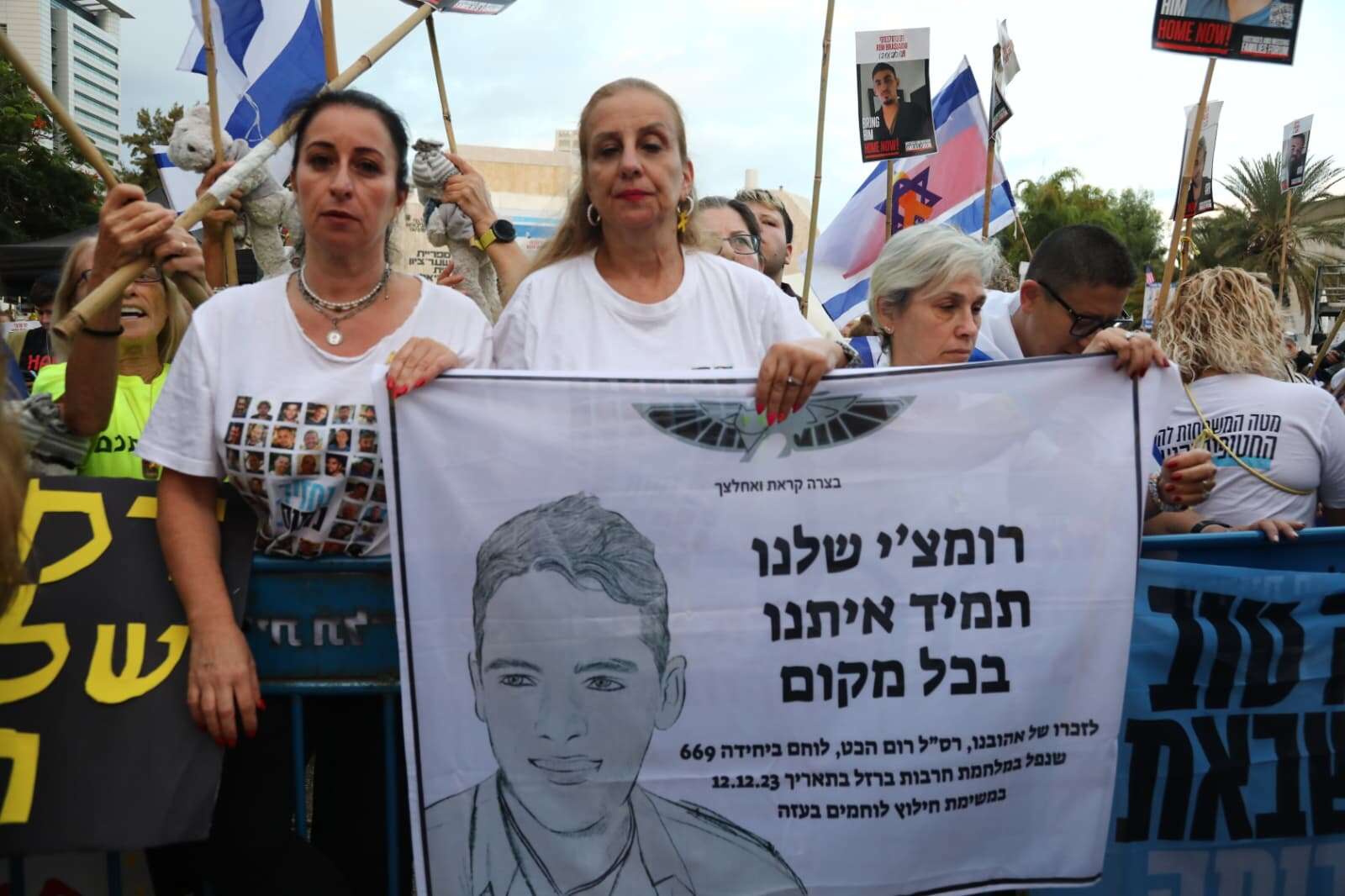
On one of the chairs sat an older man in a thin coat. Shai Mizrahi, in his 60s from Givatayim, had arrived at midnight. "I couldn't stay home. I listened to the news all night, tried to fall asleep, but decided to come here because I felt I had to be here when they come out. Maybe then my heart will calm down a bit."
Not far away stood Amit and Neta, both 22, holding disposable cups of coffee and staring at the screen silently. "We got here at four in the morning, straight from our apartment five minutes away," Amit said. "We couldn't sleep. There's something about this square, we've come here every Saturday, sometimes even during the week. It's like being with the families, with the whole country."
Neta added, "Every time a news broadcast begins, people hold their breath. This is a moment that won't come again. We're all here to celebrate with the families of those returning, and to support the families of the fallen."
At exactly 6:29 a.m., Gideon, the square's announcer, called out to the growing crowd: "Everyone—now!" Hostages Square, which for two years has symbolized grief, struggle and pain, looked different this morning. Breaths were held again, but this time in tense anticipation for their return.